

Why Stand-Up Comedy Is Booming in India The Rise of the Desi Comedy Special
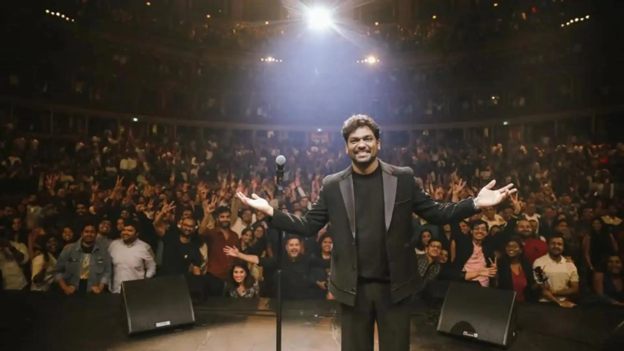
In New York's Madison Square Garden while talking in Hindi recounting memories about fathers and friendship. And that jump didn’t simply happen overnight or by accident, but was a tedious push that came with the wave of Youtube and Streaming platforms alongside the booming young audience and an evolving brilliance in crafting humor into an entertainment business. And today at the very top of all such shows lies the Desi Comedy Special!
Table of Contents
1. From Laughter Challenge to Stadiums
2. How Streaming Built the Special
3. The Live Economy in Numbers
4. What Makes a Desi Special
5. Why the Boom Happened Now
6. Risks and Headwinds
7. Opportunities and Challenges
8. What Comes Next
9. Conclusion
From Laughter Challenge to Stadiums
Indian Comedy’s steady evolution meant it ingrained deeper roots into the lives of poets, mimics and film comedians including the likes of Surendar Sharma to P L Deshpande and Johnny Lever, each delivering a new avenue for Indian Comedy to venture into. What’s the most loved artwork today basically began from a simple show - The Great Indian Laughter Challenge arrived on Star One in 2005 and laid the foundation of modern pioneers like Raju Srivastava and Kapil Sharma. While Television began building affection for comedy within Indian hearts, Youtube’s arrival in 2008 provided a platform for more young comedians to present their sets and gain slow but impressive audiences for themselves.
|
Year |
Milestone |
|
2005 |
The Great Indian Laughter Challenge begins on Star One |
|
2008 |
YouTube launches in India |
|
2012 |
Comedy collectives such as All India Bakchod and East India Comedy form |
|
2015 |
On Air with AIB, a comedy format sold to a streaming platform |
|
2016 |
Netflix and Amazon Prime Video arrive in India |
|
2018 |
Comicstaan debuts on Prime Video |
|
2025 |
Zakir Khan headlines Madison Square Garden; 60,000 attend four Delhi shows in two days |
How Streaming Built the Special
Global streaming platforms arrived a little late in India, mainly building their foundation through the safety nets of crime thrillers and bid-budget series that presented novelty to the audiences. The only caveat? That took time! Prime Video's head of Indian originals, Nikhil Madhok even once mentioned that it took roughly two and a half to three years for a written idea to make it onto the screen but at the same time, a stand-up special can achieve that within six months! The perfect edge that it needed to become the go-to option for investors and platforms while also reaching young viewers in a faster manner.
And since then, Prime Video ensured to house Specials with them today holding exclusive rights to over 70 stand-up specials across 50 renowned Indian comedians including Zakir Khan, Kenny Sebastian, Vir Das and Biswa Kalyan Rath. At the same time, considering the booming scope for writers and the wave of artists wanting to try comedy, Prime also presented Comicstaan, a comedy competition that began in 2018 and laid the foundation for some of the headliners that fullhouse shows around the world today.
The Live Economy in Numbers
The numbers below come from a December 2025 Business Standard analysis and are informal estimates, because there is no official measurement of the industry.
|
Measure |
Estimate |
|
Estimated live events in India, 2025 |
About 90,000, of which roughly a third were comedy |
|
Typical audience per show |
Grew from about 50 to over 5,000 in five years (BookMyShow) |
|
Total revenue from stand-up |
Roughly Rs 1,500 crore, about half of free-to-air television and about a third of what music earns |
|
Ticket prices |
From about Rs 150 to Rs 6,000 or more, depending on the act and venue |
|
Share of YouTube views |
Around a third |
For a rough estimate, Zakir Khan’s ‘Papa Yaar’ tour reportedly drew over 60,000 people in four Delhi shows, footfalls similar to a music festival! Notably, Zakir Khan also ran a 60-city tour, and BookMyShow reported that tier-two and tier-three cities embraced live comedy as enthusiastically as fans in the metros, a nod to the gaining popularity and acceptance for live comedy across Indian cities and audiences.
What Makes a Desi Special
It’s easy to often confuse Desi Special as a different genre or form of comedy writing. But in its raw foundation, it’s simply a special with a focus towards storytelling about shared experiences right from parents, bosses, relationships, hostel life, small-town expectations or even simply the pressures of an ambitious middle class kid. It’s simply just a nod towards writing that locals can connect with and comedians that deliver in packages of a story, a philosophical register and a subtle touch of poetry that often leaves you with more awe and gratitude by the time it ends.
And to some extent, the language of delivery matters too! Within the Indian Comedy Industry in the past decade, using Hindi or a balanced mix of Hindi and English has quickly emerged as the lingua franca of the genre. Yet it’s also important to note that even regional comedians including the likes of Bengali and Gujrati are gaining traction amongst producers and venues, a smart reminder that the scope for Indian comedy has simply just begun!
Why the Boom Happened Now
There were several factors that enabled the impulsive burst of Indian Comedy markets:
1. Cheap, fast content. A special costs much less and takes far less time to make than a scripted series.
2. Social media. Producers credit the boom in social media from 2018, and the pandemic, when people were on their phones constantly, for a new level of content consumption.
3. Brand money. Marketers followed the audiences that comics built online.
4. A new live circuit. Venues, ticketing platforms and tour producers such as TribeVibe, a BookMyShow subsidiary, turned comedy into a repeatable business.
5. Wider audiences. Amazon says the audience is no longer limited to the young, and that stand-up has become part of what people of many ages watch.
Risks and Headwinds
And while everything has seemed affirmative so far, the business is not without risks. Amongst the biggest risk that plagues the industry executives lies a simple feeling - being offended. Right from disrupted shows and venue raids to broken venues and police cases, the Indian Comedy Scene has witnessed it all in the past few years. Comedian Vir Das even labelled a traitor and a terrorist following a 2021 performance in Washington titled “Two India’s”, further leading to cancelled shows and waves of abuse and threat over the comedian's life.
Another concern also arrives in the form of Oversupply. With so many comedians competing in the scene and an endless list of competitions, comedy events and music festivals featuring comedians as guest appearances, the market prices tend to struggle with benefitting from a premium of demand. And if those concerns weren’t enough, India’s comedy scene blew much faster than its infrastructure, leaving a massive challenge of building good venues that could satiate the growing demand and popularity of the star artists, a reality that it still struggles to truly fulfill across leading Indian cities.
Opportunities and Challenges
|
Opportunities |
Challenges |
|
Regional-language comedy in Bengali, Gujarati and others |
Risk of controversy, complaints and police cases |
|
Streaming platforms eager for fast, affordable content |
Oversupply could push ticket prices down |
|
Strong live demand in tier-two and tier-three cities |
Lack of suitable venues |
|
Global audiences, with Indian comics headlining New York and other cities |
Reliance on a small number of stars |
What Comes Next
In 2026, the comedy scene continued reaching newer heights that one couldn’t simply imagine would’ve been possible a decade ago. Zakir Khan's Papa Yaar reached Netflix while Samay Raina also released his debut special, Still Alive, on YouTube in March, breaking records and becoming the most-viewed stand-up special on the platform. Soon after, Samay Raina extended his peak with the second season of his show India's Got Latent which arrived in June on both YouTube and Netflix blurring the boundaries of streaming rivalries that made platforms compete for the same comics and opening newer avenues for revenue for all the parties involved.
Conclusion
India’s acceptance and rise of the desi comedy special didn’t simply happen because of making stories with jokes, but because an industry found pathways to make their audiences see lives, perhaps their own being narrated on a stage. Over the past decade, the comedy scene has quickly emerged as the fastest blooming business and continues to break newer horizons, but at the same time also appears to be challenged by a fragile combination of a few stars, a tolerant environment and a steady supply of new voices. If the next generation of comics, working in more languages and in smaller cities, can keep that supply going, there’s truly no predicting what the scene could bloom into. If not, the Madison Square Garden night may be remembered as a peak.
Latest Posts