

Trumps Retaliation To Make America Great Again
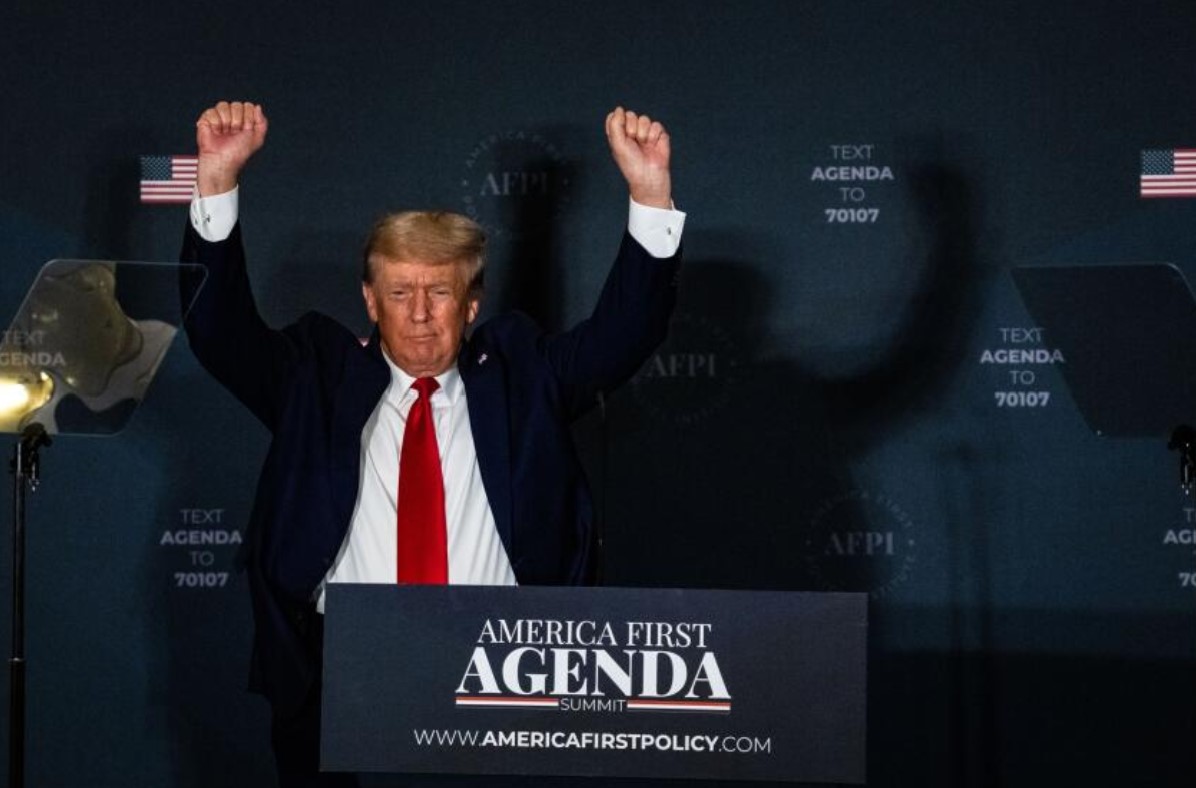
With over 66 international organizations withdrawal that includes 31 United Nations affiliated programs and 35 Non-UN entities, several global organisations focused on collectively working towards global issues such as environmental protection, labor standards and social diversity and special representation have been labelled as woke initiatives that are unimportant and in conflict with U.S. interests.
Implications on the Global Landscape
According to the White House Statement, “For United Nations entities, withdrawal means ceasing participation in or funding to those entities to the extent permitted by law, while ending American taxpayer funding and involvement in entities that advance globalist agendas over U.S. priorities, or that address important issues inefficiently or ineffectively such that U.S. taxpayer dollars are best allocated in other ways to support the relevant missions,"
As a result, this decision will force major global organizations to refocus and develop newer strategies while adapting to the significant decline in available resources, manpower and international collaboration caused by the absence of the U.S. With a direct consequential impact on their existing programs and scope for future advances and regular functioning, many bodies are set to experience a decline in their efficient output at least for the foreseeable future.
The Build-Up Towards This Wave Of Withdrawals
The U.S. withdrawal has long been part of the administration’s broader strategy of being less involved in multilateral institutions, especially the United Nations. Having previously questioned the accountability, cost and effectiveness of international bodies, the president has continuously reiterated his belief of such bodies failing to serve the interests of the U.S.
During the U.S. President’s first term back in (2017-2021), his administration had repeatedly threatened withdrawals or reduced funding by the U.S. towards major international agreements and bodies some of which included:
- The Paris Climate Agreement (2017) - highlighting economic concerns and sovereignty issues
- UNESCO (2017) - claiming an anti-Israel bias and management concerns
- The Iran Nuclear Deal (JCPOA) (2018) - criticizing it as the "worst deal ever"
- The UN Human Rights Council (2018) - declaring it as a "cesspool of political bias"
- The World Health Organization (2020) - withdrew during the COVID-19 pandemic following which the U.S. rejoined it under President Biden.
Having regained control a year ago, Trump’s second term foreign policy has slashed U.S Funding for the United Nations, Restricted engagement with the U.N Human Rights Council while also halting funding towards the Palestinian relief agency UNRWA while quitting the U.N Cultural agency- UNESCO.
Through this modern wave of withdrawals communicated by a memo from the White House and the U.S President, the United States plans to quit UN Women - Primarily worlds towards attaining gender equality and empowerment of women; UN Population Fund (UNPFA) - The United Nations Body focusing on family planning and providing care for maternal and child health in over 150 countries as well as major economic entities like the U.N. Conference on Trade and Development, the International Energy Forum, the U.N. Register of Conventional Arms and the U.N. Peacebuilding Commission.
The memo further claimed that these dozens of entities that the United States was seeking to depart were focused on promoting “radical climate policies, global governance and ideological programs that conflict with U.S sovereignty and economic strength.”
Agreements And Ideologies Being Withdrawn From
Environment and Climate-Focused Bodies
President Trump has been repeatedly observed to be dismissive towards the scientific consensus on climate change, even branding it as a hoax on the UN Summit last September and thus amongst the most expected yet consequential withdrawals lies in the domains of global climate agreements.
Within the 66 bodies being withdrawn from lies the United Nations Framework Convention on Climate Change (UNFCCC) as well as the Intergovernmental Panel on Climate Change (IPCC) which both focus on assessing and curbing environmental and climate-focused changes along the International Renewable Energy Agency, UN Oceans and UN Water which prioritize global cooperation on maintaining the planet’s resources.
This withdrawal in particular has shaken environmental groups and scientists around the world as it limits significant contribution from economical as well as application perspectives with the United States being a major emitter and influential figure in changes to the environment.
Human Rights and Cultural Organizations
Another important body experiencing major withdrawals are agencies and organizations focusing towards attaining equality and promoting equal access and support to nations and individuals from all around the world. The United States has continuously emphasized that various organizations and movements that focus on promoting gender equality, cultural diversity and individual rights often conflict with the administration's domestic policy priorities.
The United States withdrawal from cultural bodies such as specially representative organizations and global community frameworks often emphasize on progressive social values that directly clash against American sovereignty and traditional values causing a division rather than unity based on social agendas and while the withdrawals could help maintain American culture and beliefs, they could severely question frameworks that focus on addressing identity and representation across the globe.
Reception Of The Withdrawal
Within the United States, the withdrawals marked a new era and path that has previously been unexplored by both the Democrats as well as the Republicans but has now been welcomed with open arms by the U.S. Citizens. Trump’s withdrawal from international organizations aligns with a key promise by President Trump to Americans that focuses on stopping subsidisation of global bureaucrats who act against the Unites State’s interests, the move places America and Americans first!
While many continue to fear the future implications that such a withdrawal could bring for the United States as well as the global world, President Trump continues to preach his belief of the potential superpower that America can possibly become - through withdrawals and appropriate channelisation of resources in order to reach their maximum potential.
On the global levels, concerns have risen about the possible vacuum and future of global cooperation without the U.S but various giants like Russia and China have positioned themselves to take-up the leadership opportunities in the vacated international organizations. This could also possibly mark global shifts focusing on one-on-one relationships instead of multilateral forums while reshaping global governance for the years to come!
The Full List of 66 Bodies Being Withdrawn From
United Nations organizations
- Department of Economic and Social Affairs
- U.N. Economic and Social Council, or ECOSOC — Economic Commission for Africa
- ECOSOC — Economic Commission for Latin America and the Caribbean
- ECOSOC — Economic and Social Commission for Asia and the Pacific
- ECOSOC — Economic and Social Commission for Western Asia
- International Law Commission
- International Residual Mechanism for Criminal Tribunals
- International Trade Centre
- Office of the Special Adviser on Africa
- Office of the Special Representative of the secretary-general for Children in Armed Conflict
- Office of the Special Representative of the Secretary-General on Sexual Violence in Conflict
- Office of the Special Representative of the Secretary-General on Violence Against Children
- Peacebuilding Commission
- Peacebuilding Fund
- Permanent Forum on People of African Descent
- U.N. Alliance of Civilizations
- U.N. Collaborative Programme on Reducing Emissions from Deforestation and Forest Degradation in Developing Countries
- U.N. Conference on Trade and Development
- U.N. Democracy Fund
- U.N. Energy
- U.N. Entity for Gender Equality and the Empowerment of Women
- U.N. Framework Convention on Climate Change
- U.N. Human Settlements Programme
- U.N. Institute for Training and Research
- U.N. Oceans
- U.N. Population Fund
- U.N. Register of Conventional Arms
- U.N. System Chief Executives Board for Coordination
- U.N. System Staff College
- U.N. Water
- U.N. University
Non-U. N. organizations
- 24/7 Carbon-Free Energy Compact
- Colombo Plan Council
- Commission for Environmental Cooperation
- Education Cannot Wait
- European Centre of Excellence for Countering Hybrid Threats
- Forum of European National Highway Research Laboratories
- Freedom Online Coalition
- Global Community Engagement and Resilience Fund
- Global Counterterrorism Forum
- Global Forum on Cyber Expertise
- Global Forum on Migration and Development
- Inter-American Institute for Global Change Research
- Intergovernmental Forum on Mining, Minerals, Metals, and Sustainable Development
- Intergovernmental Panel on Climate Change
- Intergovernmental Science-Policy Platform on Biodiversity and Ecosystem Services
- International Centre for the Study of the Preservation and Restoration of Cultural Property
- International Cotton Advisory Committee
- International Development Law Organization
- International Energy Forum
- International Federation of Arts Councils and Culture Agencies
- International Institute for Democracy and Electoral Assistance
- International Institute for Justice and the Rule of Law
- International Lead and Zinc Study Group
- International Renewable Energy Agency
- International Solar Alliance
- International Tropical Timber Organization
- International Union for Conservation of Nature
- Pan American Institute of Geography and History
- Partnership for Atlantic Cooperation
- Regional Cooperation Agreement on Combating Piracy and Armed Robbery against Ships in Asia
- Regional Cooperation Council
- Renewable Energy Policy Network for the 21st Century
- Science and Technology Center in Ukraine
- Secretariat of the Pacific Regional Environment Programme
- Venice Commission of the Council of Europe
Latest Posts