

Why Gold is Teasing a Historic 5,000 High as the Fed Meets Today
Over the few days prior to the March FOMC meeting, gold has spent most of its time drifting between US$5,050 and US$5,200 (testing the US$5,000 level from above) in anticipation of the next statement from Jerome Powell.
How We Got Here: War Premium Meets Macro Rot
The latest episode of the safe-haven gold rally can be traced to difficult geopolitical conditions. The combined offensive by the United States and Israel against Iranian missile launch facilities, Iran's missile response, and the partial closure of the Strait of Hormuz resulted in an almost textbook flight to safety as one session in March saw spot gold prices surge past 5,400 on the strength of just war news. Analysts observed a “panic bid” for gold, as institutional investment dollars rotated from title technology and cyclical equities and into bullion and gold ETFs at virtually any price.
However, there is far more to gold’s recent movements than just missile activity. The rise in gold prices above 5,000 has been developing over a period of multiple quarters based upon organically negative yields, the highest level of central bank buying on record, and continuing concern about significant deficits in both the United States and Europe. Due to increased twin deficits and possible de-dollarization, major banks, like Bank of America and UBS, have made reliable predictions that gold will trade between 4,900 and 5,000 by the end of 2026. In certain longer-term scenarios, gold might rise to 6,000. The ongoing armed conflict has simply “compressed” a multi year fundamental thesis into several chaotic months.
The Fed’s 48-Hour Grip on the Gold Narrative
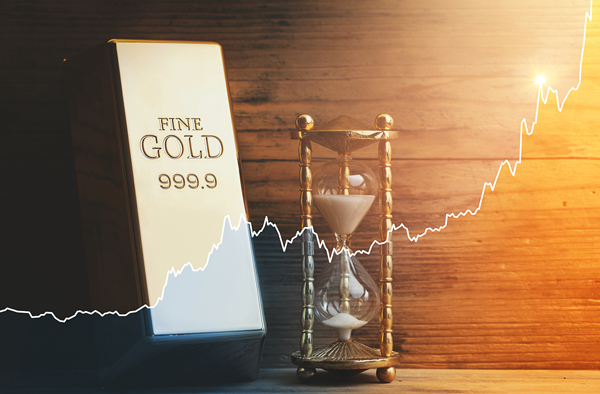
Currently, the Federal Reserve (Fed) meeting is dictating or defining what will happen with the financial markets, and as we've seen from past cycles, this has been quite simple: bearish surprises will increase both the value of the US dollar and real yields, causing the price of gold to drop sharply; bullish surprises will decrease both of these things and increase the price of gold to new records. With respect to FOMC March 17-18, the near-term outlook is that futures markets expect the Fed to hold interest rates in a range of 3.50-3.75%. Therefore, what will become the volatility catalyst will be the dot plot and Powell's commentary about inflation, crude oil, and growth going forward.
Investment professionals have noted that if the Fed remains hawkish in its outlook, e.g., showing fewer cuts for 2026 or defining crude oil driven inflation as "persistent" versus "transitory," we could see a classic "sell the news" response in the gold market with the price of gold consolidating back towards the lows of the $5,000 range or even below;. Conversely, if there is a dovish surprise, we could very quickly see another attempt at breaking through the January highs of $5,600 and move the market back to a $5,000+ narrative.
Structural Bull Case: Why 5,000 Isn’t Just Hype
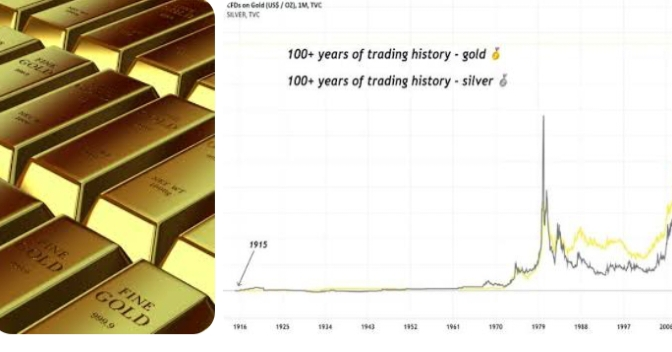
The fundamentals for gold being a safe haven continue to be strong despite all the noise from the Federal Reserve. Central banks remain net buyers of gold for over a decade, with emerging markets diversifying their currency reserves away from the dollar, setting new post-Cold War records in recent years. In addition, gold ETFs are showing significant inflows; approximately $19 billion flowed into global gold ETFs in January alone and most of these positions remain intact despite large intraday declines.
Additionally, the macroeconomic environment appears to set a very good foundation for higher floors with core inflation not budging, mounting public debt, increasing tariffs, and now having a conflict in the Middle East that keeps stagflation alive. This has resulted in houses like JP Morgan and Goldman Sachs being comfortable publishing base and upside price scenarios with gold in a range from approximately $5,000 to $6,300 by late 2026 using $5,000 as a midpoint rather than the top of a long-term cycle.
What a Business-Aware Investor Should Actually Do
If you have a treasury desk or manage your own investment portfolio, you may be wondering: "Am I too late to invest?" The question that would provide better insight into the current situation is, “What role will near $5,000 gold play as part of the portfolio, if this is a complete regime change rather than just an upswing?”
For corporate treasuries, this could mean viewing gold differently than simply a speculative investment, and instead thinking about gold as being part of a larger risk offset strategy with other investments (e.g., currency hedges, commodity forwards, and insurance against large geopolitical or economic shocks). For ultra-high net worth retail investors or digitally-enabled retail investors, this typically results in a measured allocation to gold (i.e., 1%-9% positions in physical gold, ETFs, and likely miner stocks) rather than attempting to buy parabolic moves at the peak.
The most important thing to remember is that the price of gold is inherently volatile and must be accepted as such. Even during this bull market cycle, gold’s price has experienced 3% to 5% daily price movements around the Fed announcement days or conflict-related news events (terrorist attacks), and analysts agree that the very sharp price declines associated with rebalancing or reconstituting indices will occur frequently along the way and not be a violation of the bullish thesis.
The Bottom Line: Signal, Not Just Shine
There are several reasons behind the increase in the price of gold. The primary reason for the increased value of gold is because there are a lot of people who want to buy gold right now for various reasons including protection against uncertainty; desire to have an asset with a long history of durability and value; and anticipation of a weakening dollar (as people believe that currency will be worth less than it is now). In addition to the increased number of buyers, there is also a growing number of sellers which means that the availability of gold is decreasing and therefore causing the rising price of gold.
In conclusion, the world is going through a period of uncertainty, and gold will continue to serve as a way for some people to protect themselves against that uncertainty as well as a way for others to invest in an asset that historically has been a safe place to store wealth, and the increasing price of gold reflects both of those trends.
Latest Posts