

WHO Warns Bird Flu Strain H5 Spread Escalates Across Wildlife Populations Health agencies increase international monitoring after confirmed viral outbreaks hit coastal ecosystems.
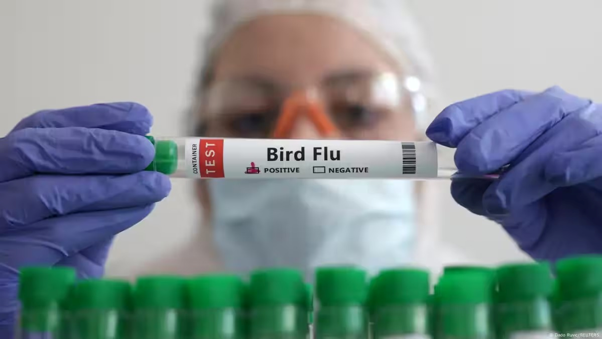
In 2026, the G5 Bird Flu Strain has been found on every continent including Antarctica and has affected more than millions of farm animals on the global levels. It was also recently found to be infecting dairy castles in the U.S, a jump in species that made it an alarming cause of concern, because that’s an evolution for the virus that no one anticipated.
And while many would worry that we’ve already reached the thresholds of declaring it as a pandemic - it’s important to note that human cases remain rare, and global health agencies including WHO and the CDC continue to assess the overall risk to the general public as low. Thus, at the moment Bird Flu Strain H5 is more of an agricultural and wildlife crisis with the need for remedies for it looming large every single day.
Table of Contents
- What's Actually Happening in Wildlife
- Current Estimates Of Human Health Risk
- How Health Agencies Are Responding
- Why Wildlife Spread Still Matters for Human Risk
- Conclusion
What’s Actually Happening In Wildlife
The current wave of the Bird Flu Strain traces back to a particularly aggressive lineage of H5N1, known to scientists as clade 2.3.4.4b, which has spread explosively through wild bird populations since 2020. Dr. Ed Hutchinson, a professor of molecular and cellular virology at the University of Glasgow, described the situation bluntly: "As a disease of wild animals, it's completely out of control. It's raging around the world, and there's no feasible containment method other than just watching it infect huge populations of animals."
Across the world, the toll on wildlife has simply been unthinkable. On the Antarctic coast, reports estimate the loss of nearly half of the world's female breeding population of southern elephant seals while South America has witnessed massive deaths within the sea lion populations. And most recently in June 2026, Australia reported its first-ever detections of H5 bird flu in wild seabirds, with five confirmed cases across Western Australia and South Australia by the end of that month. That detection closed the last geographic gap: H5N1 is now confirmed on every continent, including Antarctica, where it first appeared in 2023.
Current Estimates of Human Health Risks
While the wildlife and poultry losses seem massive around the world, exposure and human risk for the virus remain relatively low. In the first quarter of 2026, WHO tracked 13 avian and swine influenza cases in people globally, across a mix of strains — four human H5N1 cases, five H9N2 cases, and single cases of H10N3, H1N1v, H1N2v, and H3N2v. One of the H5N1 cases, involving a child in Bangladesh, was fatal, and most cases involved direct exposure to poultry or a poultry environment. After thorough and intense investigations by the WHO, it was established that the overall risk to the general population remains low, and none of the close contacts of any of the 13 case-patients reported becoming ill themselves.
Europe also tells a similar story. Between late November 2025 and late February 2026, more than 2,500 HPAI H5 detections were reported across 32 European countries, overwhelmingly in wild birds rather than poultry. Over that same period, 10 human cases were reported, none fatal, and the European Centre for Disease Prevention and Control assessed the risk to the general EU/EEA public as low, rising only to low-to-moderate for people occupationally exposed to infected animals or environments. In the US, the CDC has confirmed a total of 71 human A(H5) cases since February 2024, nearly entirely within the dairy and poultry worker committees with direct animal exposures.
What remains a consistent standout observation amongst these cases, the lack of sustained human-to-human transmission. Every human case identified so far appears to trace back to direct animal or environmental exposure, not to another infected person.
How Health Agencies Are Responding
Surveillance has ramped up meaningfully in response. Australia moved quickly to establish enhanced monitoring in the regions where its first cases were detected. European health authorities continue detailed weekly and quarterly reporting across 32 countries. Agricultural workers are also regularly monitored by the CDC to assess them for animal exposure while using the A(H5) data into its routine influenza surveillance systems.
Virologists have raised alarming concerns about the gaps in biosecurity across US Farms. There have also been reports backed by evidence, that the virus may be capable of traveling between farms on the wind, a medium that cannot be protected against with standard practises like fencing, disinfectant, and boot changes. Several experts have also pointed to inconsistent surveillance and reporting standards across US states as an area needing improvement.
Why Wildlife Spread Still Matters for Human Risk
On a larger level, the low-risk assessment assures us to be able to continue with our daily lives, but it also requires us to be vigilant and a huge reason why virologists are watching this closely. Every species that the virus spreads into, the jump it makes from sea lions to U.S Dairy Cattles, provides the virus with an opportunity to evolve, and researchers are unsure about the virus’s adaptability to attack new host bodies.
And it honestly doesn’t stop there. A single spillover or case of mutation isn’t dangerous as a standalone, but the amount of outbreak and possibility of undiagnosed or unreported cases remains a concern. And along with every mutation, a chance for better, stronger evolution grows, improving the virus’s ability to spread amongst stronger immune systems until it eventually reaches us humans. That’s a real, long-term estimate considering the current occurrence of human cases but surely something to watch out for!
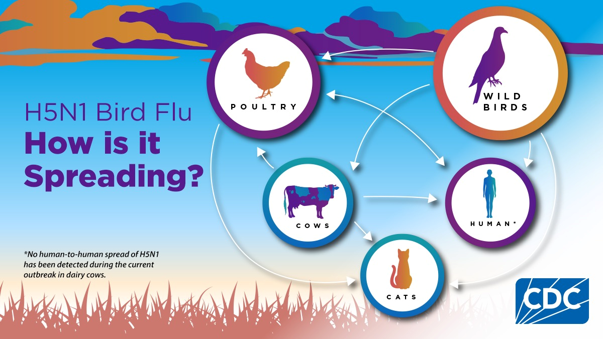
In the meanwhile, it’s important to not stop your life entirely, but take a few steps to prevent yourself from possible exposure or infection. The standard guideline applies -
1. Avoid direct contact with sick or dead wild birds or other wildlife
2. Completely avoid consumption of any unpasteurized “raw” dairy products
3. Take Extra Caution towards any abnormal die-off of local or agricultural wildlife that happens near you.
4. Individuals who are regularly exposed to poultry, dairy cattle or wild birds through their occupation, also run higher risks of exposure.
5. Attempts to maximize hygiene and sanitary practices while being updated with local health or agricultural notifications is of utmost importance.
Conclusion
The way the wildlife world has been struck is truly alarming. What began from a massive die-off of elephant seals and sea lions spiraled into multiple continents and across mammalian species reaching as far as the cattle and dairy farms of the U.S, to a magnitude that could never have been predicted before. It’s an actual ecological crisis that could also have severe implications on our health as well as the foods we consume, a major reason why it is garnering attention worldwide. The outbreak might not have influenced our daily lives just yet and could also possibly be contained before we actually witness it like a pandemic, yet WHO, other health agencies as well as the entire world continue to observe the situation closely.
Latest Posts