

WHO's New Clinical Management Guidelines for Ebola and Marburg Virus Disease
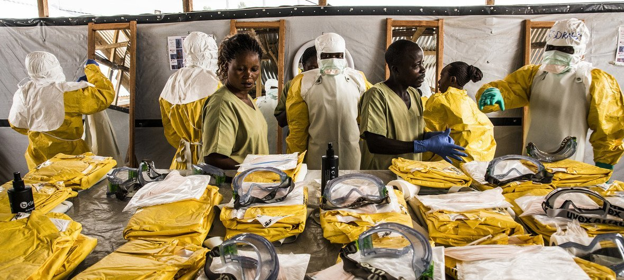
The World Health Organization set out to mitigate that very gap this year with its newest and most comprehensive clinical guidelines. And with the Democratic Republic of the Congo battling the latest Ebola outbreak, the timing of the guidelines has come at an important time!
Table of Contents
1. What WHO Actually Released
2. Why These Guidelines Were Necessary
3. What's Inside the 16 Recommendations
4. The Outbreak That Prompted Them
5. How Bad Is This Outbreak, Really?
6. Old Guidance vs. New Guidance
7. What Happens Next
8. Conclusion
What WHO Actually Released
The World Health Organization published its first-ever comprehensive clinical management guidelines covering a wide range of filovirus disease and others on the spectrum, a category that accounts for every Ebola Virus (Bundibugyo, Sudan, Zaire, and others) and the Marburg virus. Prior to the latest release, WHO’s guidelines have often focused solely on Ebola virus disease alone, leaving Marburg virus disease and several other Ebola species without proper guidelines, procedures or evidence-reviewed clinical direction.
The newest guidelines outline 16 evidence-based recommendations that have been developed by a multidisciplinary, geographically representative Guideline Development Group and built using the GRADE framework, a rigorous, internationally recognize standard for evaluating how strong the underlying evidence actually is behind each recommendation. WHO Director-General Dr. Tedros Adhanom Ghebreyesus described the guidelines "a perfect example of how WHO leverages science to better protect and care for people during outbreaks and health emergencies," while directly linking their release to the outbreak then unfolding in the DRC.
Why These Guidelines Were Necessary
The Marburg virus was first identified in 1967, and over time Africa has recorded 72 separate outbreaks of Ebola and Marburg disease, with case fatality rates ranging anywhere from 25% to a staggering 90% depending on the specific virus and the circumstances of the outbreak. And despite the prevalence and widespread outbreaks for several dangerous strains of the Marburg virus disease, Bundibugyo virus disease, and Sudan virus disease, scientists around the world continue to struggle in developing a licensed vaccine or treatment. And the lack of a vaccine is precisely what makes supportive care important for such infections.
Previous WHO guidelines have been focused on the foundations of best practices as described by experts instead of a systematic, evidence-based review, and focuses only on Ebola virus specifically. The new guidelines excel at closing both these gaps at once by expanding their coverage to every filovirus type while also having built recommendations after thorough, formal and transparent review of best available clinical evidence.
What's Inside the 16 Recommendations
The guidelines and its recommendations emphasize on early, aggressive supportive care, aiming to provide treatment and support to the patient before the condition intensifies or deteriorates. According to WHO and UN reporting, the recommendations include:
1. Rapid treatment of dehydration and shock : The guidelines emphasize fluid loss as the fastest-moving threats in filovirus infection and focus on minimizing it in patients.
2. Structured laboratory monitoring : The guidelines also encourage tracking a patient's condition and identifying complications early.
3. Prompt treatment of bacterial co-infections: The guidelines promote addressing co-infections in advance which can compound filovirus and enhance mortality risk if ignored.
4. Structured follow-up care for survivors: The guidelines also promote aftercare beyond hospital discharge, promoting continued monitoring to address lingering health complications.
Comprehensively, the guidelines aim to create a standardized, evidence-backed playbook for quality care and treatment, hoping that a standardized procedure secures recovery when an actual direct cure is not yet available.
The Outbreak That Prompted Them
The latest guidelines were released in a prompt and direct response to the latest DRC Ebola outbreak that rose to historic levels. The outbreak, caused by Bundibugyo virus was declared by the DRC Ministry of Public Health on May 15, 2026, marking the country’s 17th outbreak and the second edition of the Bundibugyo virus resulting in an outbreak in DRC following the previous one in 2012. The outbreak wasn’t simply the largest in terms of cases but also grabbed attention because of its speed of infection, surpassing over 1,000 confirmed cases within a tiny period of 40 days, as compared to the 235 days in DRC’s 2018 Ebola outbreak to reach the same milestone.
How Bad Is This Outbreak, Really?
|
Metric |
Figure |
|
Confirmed cases (DRC, as of Aug. 30) |
6,100 |
|
Confirmed deaths (DRC) |
2,950 |
|
Case fatality rate |
~48% |
|
Patients currently hospitalized |
814 |
|
Patients recovered |
1,383+ |
|
Affected provinces |
6 of 26 |
|
Affected health zones |
60+ |
|
Days from outbreak declaration to 1,000 cases |
40 (vs. 235 in the 2018 outbreak) |
The current Ebola outbreak in DRC has quickly become the largest outbreak in DRC history while also becoming the second-largest Ebola outbreak globally. The outbreak has also in the meanwhile crossed across borders with reported cases and deaths across Uganda while France, Germany have also reported a single imported case. The outbreak has also been classified by the WHO as a Public Health Emergency of International Concern and consequently, vaccination of health workers using the Ervebo vaccine began in late August, with plans of a Phase 3 trials, but the vaccine’s effectiveness against the Bundibugyo strain remains unknown, with no previous evidences of treating the strain with this particular vaccine and existing vaccines having been developed for a different Ebola strain.
Old Guidance vs. New Guidance
|
Previous WHO Guidance |
2026 Filovirus Guidelines |
|
|
Scope |
Ebola virus disease only |
All filovirus diseases (Ebola species + Marburg) |
|
Evidence basis |
Largely expert-defined best practice |
Systematic evidence review using GRADE framework |
|
Number of formal recommendations |
Not standardized across viruses |
16 evidence-based recommendations |
|
Marburg-specific guidance |
Limited |
Explicitly included for the first time |
|
Development process |
Varied by guidance document |
Multidisciplinary Guideline Development Group, PICO-framed clinical questions |
What Happens Next
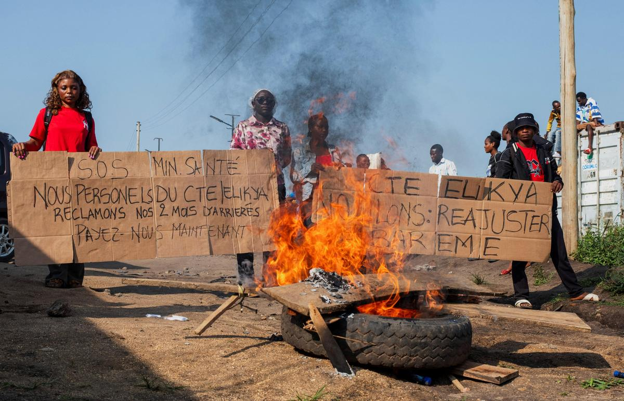
WHO has actively directed government and health authorities to draft the new recommendations into their outbreak preparedness planning strategies as well as active efforts in response. The current crisis in the DRC, as described by a recent CDC field report as being “in a state of uncontrolled expansion” while the situation is further complicated with armed conflict, population displacement and a strained health infrastructure across the region. This situation in particular at DRC treatment centres, has somehow become a practical test in real time for these modern guidelines and the actual comprehensiveness of clinical treatment and recovery.
Conclusion
WHO’s guidelines have been accepted as a welcoming step towards enhancing quality and level of care for patients, but the numbers emerging from DRC have raised doubts over its effectiveness as well as the struggle in their rightful implementation. Yet, in a situation where a disease continues to wreck havoc and a licensed cure continues to remain missing, guidelines that promote standardized, evidence-based supportive care are of greater importance, with the ability to enhance the possibility of survival over risks. WHO’s guidance seems to have been designed for such conditions that DRC currently finds itself in. And while health care officials invest their best efforts, the true applicability and impact of the guidelines remain a doubt.
Latest Posts