

Ukraine, Moldova, and Romania Seek UNESCO World Heritage Status for Trypillia Culture
Why Is the Trypillia Culture Unique?
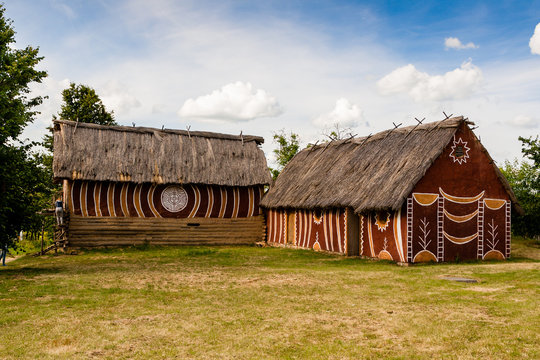
The Trypillians didn't live in scattered villages as previously thought. They constructed a planned settlement, which could support 15,000 people and was larger than any other settlement built in Europe at this time. Their claim for World Heritage of Neolithic finds is based on the large circular patterns of hundreds of houses (with two levels), which were burned and rebuilt approximately every 60-80 years, according to a religious ritual.
Archaeologists are still debating what this ritual means. Some believe that the Trypillians were 'regenerating spiritually' with this cycle while others think that this was part of a ritual to secure the best possible soil fertility. Nevertheless, the Trypillians were sophisticated farmers who cultivated wheat, barley and millet and also raised cattle and sheep. The Trypillia Culture ceramics that feature swirling geometric designs and figurines of mother goddesses indicate a sophisticated belief system and artistry that had not been seen in Europe until the advent of the Bronze Age cities.
The Tri-Nation Push—The Time is Now
The memorandum labels the "Cultural Complex of the Precuteni-Ariuşd-Cucuteni-Trypillia" areas as being in three modern nations; Ukraine (Trypillia), Romania (Cucuteni), and Moldova. Each Minister of Culture from the three nations has signed the memorandum and agreed to submit joint nominations to UNESCO by 2027-28.
Ukraine's Tetiana Berezhna said, "It is a common heritage that we must preserve." She mentioned that the sites offer significant insight into human urbanism during the time. The signing of the memorandum took place in Moldova at a conference at the National History Museum in Chișinău. Romania has Cucuteni sites that have already been designated as priority sites for protection.
The collaboration between the three nations avoids the political ramifications associated with the current situation between Ukraine and Russia. Due to war conditions in Ukraine, there is a risk of destruction for our archaeological sites, while the risks of climate change are threatening Romania's Cucuteni sites. If the three countries are awarded UNESCO status, then they will have the potential benefits of funding, knowledge and expertise for preservation, increased tourism, and world recognition as sites of cultural importance.
Archaeological Sites of Interest
- Ukraine: The Trypillia Heartland region
The largest prehistoric settlement in Europe is located in Nebelivka just outside of Kyiv and is approximately 300 hectares; there are over 1,500 houses (most made of clay and wood). Examples like the Talianki Site—over 24,000 clay houses were burned during three different building phases—may lead to new interpretations of population size and density, challenging the belief that hunter-gatherers lived in small bands.
- Romania: Center of Cucuteni Ceramics
The Cucuteni village is known for its outstanding ceramic production, which rivals later Minoan work. Sites in the Ariuşd area have now yielded evidence of the earliest Cucuteni phase (Precucuteni, 5050-4450 BCE) with three-room storage complexes.
- Moldova: Bridge Sites
The archaeological discoveries of Sergiyevca and other sites along the Moldovan border demonstrate the migration patterns from the Balkans to the north. They are smaller than the Trypillia settlements but are important links in the development of Cucuteni culture.
Preservation Challenges
- The Russian-occupied territories have several key sites for Ukrainian culture, and the likelihood of further shells hitting other sites is a concern. Recently UNESCO, acting upon Ukraine's request for assistance, added a new provision for monitoring and reporting on threats to the Ukrainian cultural heritage as a result of armed conflict.
- Temperature fluctuations and changing weather patterns have reduced the state of certain archaeological mounds/mounds in Romania due to Climate Change. We have seen that all three countries of Ukraine, Romania and Moldova have seen looting, as a result of armed conflict in the region, of several historical sites and the looting of artefacts from these sites.
- In addition to these threats, UNESCO's listing requires that each of the three nations also submit a Protection Plan to UNESCO for each site that they want protected as part of the UNESCO World Heritage Programme, and to apply for International Support and Sharing of Expertise.
Economic and Cultural Impact
- With the number of tourists visiting the Trypillia Mounds, the local economy has been emphasising Tourism for over 10 years, and with approximately one hundred thousand tourists visiting each year even though there have been two wars in the region over the last four decades. UNESCO will elevate the Trypillia culture alongside that of Stonehenge and Göbekli Tepe.
- Crafts developed in the Trypillia region continue to evolve, and the traditional pottery of the Trypillia Culture is still produced today, and sold to all countries throughout the world.
- Museums in Romania are planning to expand their depots and collections, and universities and schools are now teaching the shared History of the Trypillia people, thus assisting in building a unified Identity for their Culture.
Global Significance
The inclusion of the Trypillia culture as a UNESCO World Heritage site in the culture of the Neolithic World is a great benefit for the region of Europe and for the Countries of Ukraine, Romania, Moldova. The Trypillia culture represented a distinct type of society, one that we should consider when defining what a civilization is; they were not merely primitive tribes, but were in fact proto-Urban planners who developed sustainable economic systems, and were egalitarian by nature and created high quality manufactured goods.
Based on current patterns of climate variability and their potential relationship to the long-term decline of Trypillia and how climate changes may impact the population in the same way They also allowed us to develop a better understanding of some of the environmental risks that modern civilizations face in their Plans for Urban Density and Cultural Continuity.
Next Steps & Final Takeaway
Joint Dossiers will be compiled for UNESCO Review in 2026 and will be reviewed by 2028, if approved Trypillia Culture designation will provide UNESCO protection of our sites; increased tourism; and acknowledgment of our common Cucuteni-Trypillia Heritage as the world's first urban legacy of humanity.
Latest Posts