

US President Announces Phased Disarmament Framework for Gaza Conflict Strategic diplomatic talks outline international stabilization measures and troop withdrawal plans.
from the disarming, to withdrawing and then rebuilding and governing with a new regime, a journey often hidden from the breaking headlines of our daily news. This week, the Trump Administration announced that the region has begun taking its first step towards addressing those questions and plans, yet the process deals upon the trust between the involved parties, trust which neither have much left.
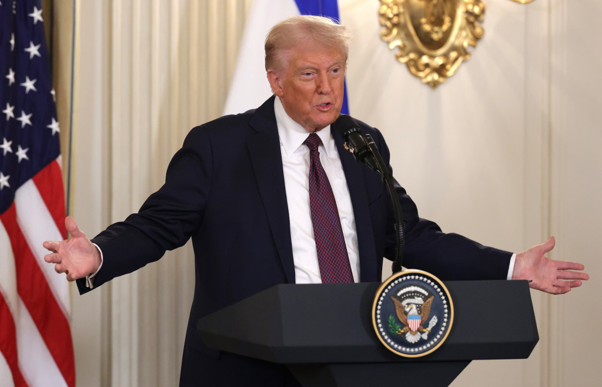
On Thursday, the U.S President Donald Trump announced the finalization of a phased framework plan that would involve disarming of Hamas and similar militia groups in Gaza, followed by Israeli forces withdrawal and the formation of an International Stabilization Force that would oversee redevelopment alongside the Palestinian police force. Trump called it a milestone towards ending what he described as a “3,000 year catastrophe”, and yet the question of this staggered progress looms large, with neither Hamas nor Israel having given any written or public statement or confirmations since the announcement.
Table of Contents
- A Dive Into Trump’s Announcement
- What Has Led Us Here
- The Phases, Explained
- The Reaction Of The Parties Involved
- What Yet To Be Resolved
- Why This Matters Beyond Gaza
- Conclusion
A Dive Into Trump’s Announcement
Trump announced that the agreement would be executed in structured stages: Beginning with Hamas and other militant group’s complete disarmament, followed by Israeli forces withdrawal from designated areas of Gaza. The Established International Stabilization Forces (ISF) would then hold responsibility for security of the Palestinian land while also working alongside the newly established Palestinian Police force, with the stated goal of preventing anything similar to the magnitude of October 7, 2023 attacks ever repeating again.
A senior Hamas official also confirmed to the BBC group that the militant group had agreed to a disarmament plan - an eye-opening statement, since no militant group in Gaza has ever previously agreed to fully disarm. While Israel hasn’t made any notable confirmation or statement since Trump’s announcement, Israeli officials have time and again reiterated their position - there would be no troop withdrawal until Hamas actually disarms, not merely agreeing to disarm in statements.
What Has Led Us Here
To thoroughly grasp these recent developments, it's important to rewind roughly ten months. In October 2025, Trump unveiled a 20-point peace plan to entirely bring the war to an end. The peace plan’s initial phase was negotiated in Sharm El-Sheikh, Egypt focusing on a ceasefire and a hostage-prisoner exchange, mainly the release of remaining Israeli hostages held by Hamas in exchange of Palestinian prisoners, paired with a partial Israeli withdrawal.
And to some extent, the plan was going strong. The first phase held out in broad strokes but the second half, the harder one involving Hamas’s disarmament, full withdrawal of Israeli forces and internationally supervised reconstruction had to be stalled for months. In its most recent changes, Hamas recently announced the dissolvement of its governing structure in favour of a "National Committee for the Administration of Gaza.” While the move received a mixed response globally, Israeli Defense Minister Gideon Sa’ar dismissed it as a mere trick, reiterating that as long as Hamas held onto its weapons, any civilian government would still answer to Hamas. Something that was also the foundation to the development of Trump’s most recent agreement for the region.
The Phases, Explained
|
Phase |
Core Elements |
Status |
|
Phase 1 |
Ceasefire, hostage-prisoner exchange, initial partial Israeli withdrawal |
Completed, October 2025 |
|
Phase 2 (current) |
Hamas disarmament, phased full Israeli withdrawal, deployment of ISF and Palestinian police |
Announced, implementation not yet confirmed |
|
Governance & Reconstruction |
Trump’s Board of Peace would work with a Palestinian Administration while receiving Funding to ensure sustainable Reconstruction and Development |
Framework outlined, timeline unclear |
Established earlier in 2026, The “Board of Peace”, chaired by Trump was initially established to manage post-war governance, reconstruction and security for Gaza and has also been the administrative body navigating through these agreements and would continue to ensure the agreement is smoothly completed and processed through.
The Reaction Of Parties Involved
The U.S President took to Truth Social, described the deal as paving the path for a new Palestinian government focused on proper management of Gaza and ensuring Israel also receive “the security it deserves” in the process. The recently appointed U.S Special Envoy Steve Witkoff described the agreement as a mark of transition “from ceasefire to demilitarization, technocratic governance and reconstruction” while also emphasizing on the importance of safe return of the final deceased Israeli hostage, as well as complete delivery of Hamas’s end of the deal.
Israeli sources on the other hand have provided a more guarded response. One Israeli source told CBS News that Gaza's disarmament wasn't even discussed when Trump and Israeli Prime Minister Benjamin Netanyahu met at the White House earlier in the week, and reiterated that Israeli Withdrawal would only happen when Hamas withdraws first.
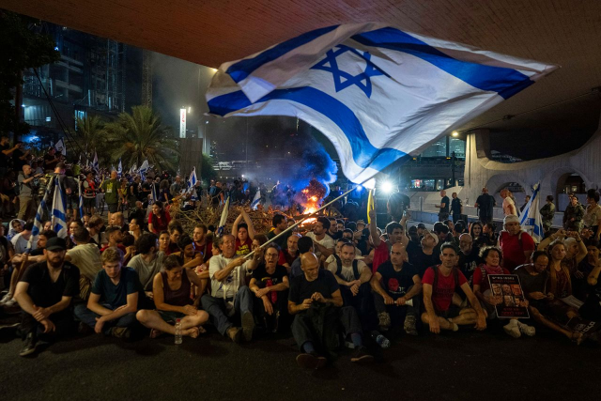
The land of Tel Aviv is actually witnessing the transition in its ground reality. Hostage families and residents have gathered at the Hostages Square near the Gaza border since Friday, pressing on the importance of safe return of its deceased hostage, a small yet significant reminder that far from the agreements and proceedings in suits, the concrete, ground reality and outcomes remain of greater importance.
What’s Yet To Be Resolved
- Undefined Schedule/Timeline: Trump’s Announcement and the structure of multi-staged plans clarified how the agreement could be seen playing out, what remains unclear is the question of when. The lack of a clear deadline or schedule raises questions in itself.
- No Independent or Procedural Methods of Completion Verification: Diplomats have emphasized on the importance of Hamas’s disarmament and Israeli verification before withdrawal, but the process and individuals performing the verification remain unknown.
- Mutual Distrust: While President Trump hopes that everyone complies with their part of the deals, Israel officials remain distrustful about Hamas delivering on their promises, as well as on the dissolving of their formal government, leaving gaps for potential falloffs during the phase completions.
- No Joint Confirmation: Despite multiple announcements and clarifications by the Trump and Board Of Peace, Israeli officials as well as Hamas hasn’t provided any clear agreement, leaving the terms of the agreement open for skepticism.
Why This Matters Beyond Gaza
It’s important to note that the Gaza deescalation isn’t happening in isolation. U.S President Trump also met the Lebanon president as Israeli forces began the first limited withdrawal under a separate agreement between the U.S and Hezbollah forces. This largely suggests that the U.S isn’t treating these regional conflicts as separate individual negotiations but a multi-front effort and this very approach could determine the future of these agreements, both regionally as well as on international levels.
Conclusion
Our history lessons are testament that wars rarely end with a single agreement, and this one looks unlikely to become an exception in any case. However what this announcement does testify is that while there might not have been a clear outcome, the process of finding one is truly and well in process. From a country that has suffered under continuous warfare for the past nine months, it’s finally a major step towards disarmament, withdrawal and verification that could possibly take it back to a state of peace and stability. The gap between a written agreement and a clear execution is where the situation currently sits and for the families waiting in the Hostages Square and the people in Gaza who hope to build their home again, even a written agreement is a sign of hope for the foreseeable future!
Latest Posts