

US Conducts Defensive Strikes on Irans Qeshm Island a Day Before Midterms as Irans Top Security Official Calls US Response to Truce Offer Not Convincing
And a subtle indication towards how different the military and diplomatic aspects of negotiation have remained throughout the conflict period. In the hours that followed, Mohsen Rezaei, secretary of Iran's Supreme National Security Council, also announced that Washington's answer to Tehran's conditions for ending the war and reopening the strait was "not convincing."
Table of Contents
1. What Happened on Qeshm Island
2. Two Accounts of the Strike
3. Iran's Response and Its Seven Conditions
4. The Diplomatic Track
5. Why the Timing Matters
6. Background: A War Now Eight Months Old
7. What to Watch Next
8. Conclusion
What Happened on Qeshm Island
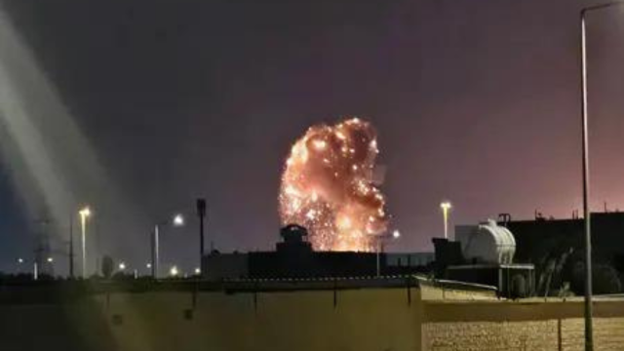
U.S strikes on Iran’s Qeshm Island were confirmed by American officials anonymously with a senior military official claiming that the operation was aimed at targeting Qeshm Island in southern Iran, following an incident where a US aircraft had undergone firing by Iran's Revolutionary Guard Corps. In a contrary report, American officials described the strike as a defensive measure that was limited in nature and didn’t intend to mark return to a major combat operation but simply focus on restricting Iranians from using surface-to-air missiles against US assets.
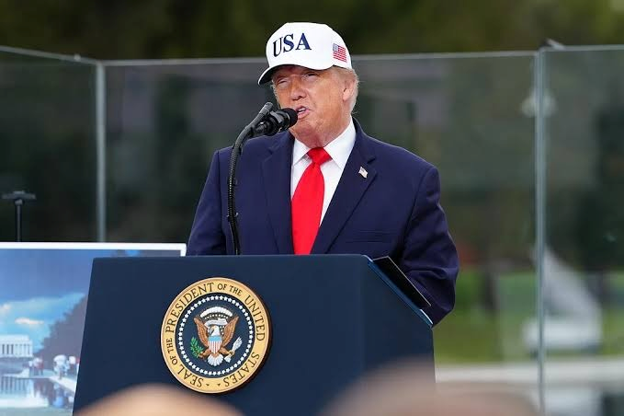
On Tuesday, during an interview with Fox News, President Donald Trump confirmed that the strikes had taken place on an anti-aircraft facility and while he did not want large-scale loss of life, he would be ready to act when necessary with plans in place for further strikes but no clear timeline for them to take place.
Two Accounts of the Strike
The strikes have provided two slightly conflicting accounts that each present a significant outlook towards the incident.Israeli media outlets along with the Wall Street Journal had also reported that the earlier strikes which were limited but a strong indicator were also deliberately unannounced as to limit hopes of resuming major operations. Iranian officials in response have confirmed and warned that Tehran would respond "in the region and beyond."
|
Question |
US account |
Iranian account |
|
What happened? |
Limited "defensive" strikes after an Iranian missile was fired at a US aircraft |
Strikes on Qeshm Island; explosions reported by state media |
|
Target |
Surface-to-air missile sites and an anti-aircraft facility |
Positions on the island |
|
Significance |
Not a resumption of major combat operations |
Iran says it retains the right to self-defence and will respond forcefully |
|
Prior activity |
Smaller strikes have taken place for weeks, kept quiet |
Not publicly detailed |
Iran's Response and Its Seven Conditions
Rezaei took to the social media platform X on Tuesday, November 3 to provide his reaction while announcing that America's response to Iran's rights and demands was not convincing, and that Washington must fully and explicitly address Iran's seven conditions and act on them, adding that only then would the Strait of Hormuz be reopened. Throughout the conflict and negotiation process, Iranian officials have described their demands in the following way:
|
Iranian condition (as reported) |
Status |
|
Waiver or lifting of US oil sanctions |
Not agreed publicly |
|
End to the US naval blockade of Iranian ports |
Not agreed publicly |
|
Release of frozen Iranian funds |
Not agreed publicly |
|
A broader ceasefire, including Lebanon |
Under discussion |
|
An agreed shipping route through the reopened strait, with Oman |
Part of Iran's proposal |
The Diplomatic Track
In order to obtain a favorable agreement, Qatar and to some extent Pakistan have both been holding mediatory discussions and negotiations with Iranian officials recently reporting that talks were intensive and that negotiators were in Doha while claiming that the negotiation outcomes strongly depended upon Washington’s response. Iran’s proposal, as it claims, focuses on reopening the strait within a matter of days when the right conditions are met and agreed with a clear willingness towards holding talks on its nuclear programme. As recently as last Monday, President Trump had also reported progress in talks, which further makes the strikes and Rezaei's rejection a significant turn of events. Away from the doors of diplomacy, an oil tanker was also reportedly attacked in the strait on Tuesday, with oil prices slipping in market reaction as a result of conflicting signals.
Why the Timing Matters
The strikes notably arrived just a day prior to the midterm elections, a data that U.S President Trump had previously hinted could mark the resumption of its war with Iran. Media reactions following the strike has strongly hinted towards contradiction with Trump’s earlier remark that the US would not strike Iran again before the vote while some outlets have also argued that a central command plan for strikes beginning as early as Wednesday, following the election, had been in place all along with claims of three American aircraft carriers having been already deployed in the region. At the domestic and global level, the war has also gained popularity and concerns amongst the civilians for its indirect impact on higher fuel prices and economic disruption from the closure of the strait.
Background: A War Now Eight Months Old
While the latest strikes might've just occurred, it's part of a larger conflict that has dramatically played since February 28, 2026. The conflict has also noticed a repeated pattern of US and Israeli strikes on Iran with multiple truces that have repeatedly been frayed as well. Throughout the conflict, a US Naval Blockade of Iranian ports and in return Iran’s restriction on shipping through the Strait of Hormuz has been the focal centre with consequences impacting the entire world. Notably, Qeshm Island has also been previously stuck during exchange and negotiations were underway making it a flashpoint amongst larger negotiations.
|
Date |
Event |
|
February 28, 2026 |
US-Israeli strikes on Iran begin the war |
|
May 2026 |
Exchanges of fire near Hormuz, including strikes on Qeshm, during a declared truce |
|
September 25 |
Iran presents a seven-day roadmap through Qatar, reportedly rejected by Washington |
|
November 1 |
Iran proposes reopening the strait within two days on similar terms |
|
November 2 (late) |
US strikes on Qeshm Island |
|
November 3 |
Rezaei calls the US reply "not convincing"; Trump confirms strikes |
What to Watch Next
How the conflict plays out will largely be shaped through how three questions are answered in the coming days. First and most important, whether Iran returns a retaliatory response, and if so, against whom? The second question focuses on whether Qatar’s mediatory personnel are able to provide a revised U.S. Response that Tehran can accept for meeting its seven conditions. And lastly, whether Washington continues to focus on its contingency plans following Midterm results or simply continues launching limited, quiet strikes until an agreement is achieved.
Conclusion
Tehran’s rejection of the US reply and the initial Qeshm strikes both mark an unusual display of negotiation unravelling at two unique forefronts and paces, through the diplomacy of mediators behind closed doors as well as through limited force at the sea. Both sides have reaffirmed their stances and beliefs of the strikes being simply defensive and reasonable, yet neither has made progress towards the reopening of the strait. And with the U.S Midterms having come to an end, the coming days could quickly forecast whether the issue moves towards diplomacy or elevated into serious escalation which officials have continuously warned about.
Latest Posts