

Trump Says Iran War Could End 'Very Soon,' Accuses Tehran of Stalling Until Midterms
Notably, revolving around the Iran-Israel and US war and the blockage of the Strait of Hormuz, the security premium attached to every barrel had deeply impacted oil supply as well as regional attacks and strikes over the past year. And once again, President Trump has offered a renewed timeline estimate of when the war could finally come to an end. It definitely isn’t the first time, and possibly could even not turn out to be the last either.
Table of Contents
1. What Trump Said
2. The Midterms Timeline
3. A Pattern of "Very Soon"
4. The Nuclear Weapon Claim
5. Linking the War to the Saudi Pipeline Attack
6. Iran's Own Position
7. Trump's Prior "Ending Soon" Timeline: A Comparison
8. Why the Political Stakes Are High
9. Conclusion
What Trump Said
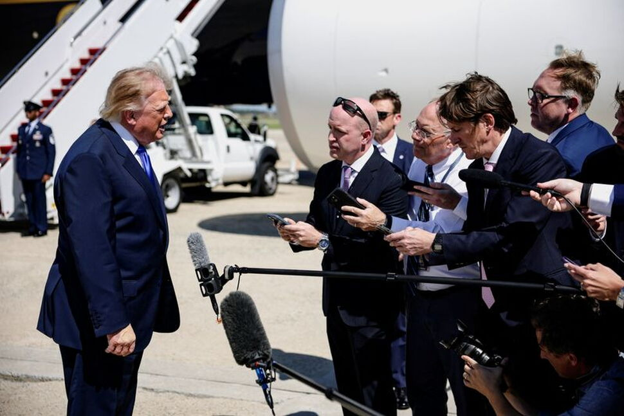
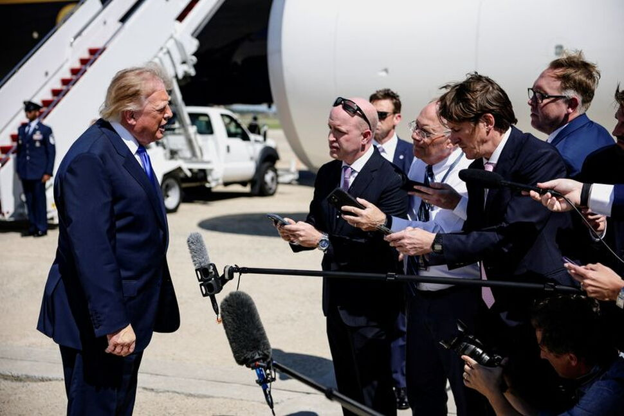
President Trump during his two-day visit to Dublin on Saturday, September 12 when speaking to reporters was asked whether he could put an end date to the ongoing conflict with Iran, to which he responded, "I think very soon, I think it'll be right after the midterms, actually," he said. He further went on to accuse Tehran of deliberately dragging the war for political reasons by claiming that, "They are trying to hold out as long as they can to complicate the election, but I think people are wise to it, because Iran cannot have a nuclear weapon. It's very simple."
Furthermore, the US President also took the moment to predict an economical fallout by stating "I would say shortly, and oil will come tumbling down when that happens", attacking the achievement of a resolution in the war to providing relief for the oil markets that has been disrupted and surging since months over the regional strain of the war.
The Midterms Timeline
Trump’s intentional attachment of foreign policy timeline into his domestic political calendar is a noteworthy statement. With the midterm elections happening in November, merely weeks away, Trump’s comments indicate that the war’s resolution will extend further ahead than the Election Day, and possibly concluding in its aftermath, a timeline that would require American voters to head to the polls with the war situation lingering and driving their votes, regardless of the final and favourable outcome.
A Pattern of "Very Soon"
For anyone who’s followed the War as well as the US President’s statements over the conflict, this isn’t the first time that the President has offered a prediction over the outcome. Going back as early as March 10,2026, a week into the conflict, Trump was seen reassuring investors that the war would end very soon, while also simultaneously threatening to drop a bomb at a much harder level if Iran disrupted Oil Supply. Soon after, during a press conference in Florida, the president again assured audiences that the war would end very soon and that it would mark “the beginning of building a new country”. Within that very addressal, Trump also claimed that the US military objectives were "pretty well complete," while also noting the US had deliberately "left some of the most important targets for later."
Over the past six months, President Trump has followed a very consistent pattern, pairing hopes of imminent resolution with descriptions of how the operation’s scope keeps expanding leading to extensions in the warfare. The latest iteration of extension until after the midterms marks the latest installment, a statement that many consider hesitantly based on the knowledge of what has happened before.
The Nuclear Weapon Claim
Trump has constantly justified the involvement of US Forces in the war based on the aim of preventing Iran from acquiring a nuclear weapon. In Dublin, he emphasized upon a claim that he has made constantly since the war began, saying Iran was merely “two weeks away from having a nuclear weapon” prior to US intervention, and claiming that if they would’ve become successful in the process, would’ve definitely blown up Israel, the Middle East as well as European cities and beyond with their newfound power, while trying to justify that the move was mere prevention from Iran attacking the US in the future.
Linking the War to the Saudi Pipeline Attack
Trump’s Dublin remarks arrive one day after the attack on the East-West Oil pipeline of Saudi Arabia that was led by drones and caused infrastructure damage, also leading to the pipeline getting shut as a precautionary measure. When asked about the incident, President Trump was quick to place Iran at the centre of the attack while saying "Well, I think they are. Probably, they are", a statement that arrives without any firm public evidence or discovery at the time of his comments. Iraqi authorities since then have also separately discovered that the drones were launched from Iraqi territory close to the Iranian border, while their investigation continues to identify the actual entity responsible for the attacks.
Iran's Own Position
Iran has consistently upheld its position and conditions with regards to the war since the beginning of the conflict. Iranian President Masoud Pezeshkian was quick to outline Tehran's terms as including compensation for the US-Israeli assault and "firm" international guarantees that Iran would not be attacked again in the future, conditions that the Trump administration and Israel have refused to accept so far. As things stand, there have been shimmers of diplomatic movement alongside the military escalation with Tehran officials reportedly having met with the Gulf states in Oman to discuss the Strait of Hormuz, ensuring that diplomacy and attacks on shipping and infrastructure due to the war are occurring simultaneously hand in hand.
Trump's Prior "Ending Soon" Timeline: A Comparison
|
Date |
Statement |
Context |
|
March 10, 2026 |
War will end "very soon" |
Made to reassure investors amid rising oil prices |
|
Mid-March 2026 |
War will end "very soon"; also called it "the beginning of building a new country" |
Florida news conference; claimed military objectives "pretty well complete" |
|
Sept. 12, 2026 |
War will end "very soon," "probably right after the midterms" |
Dublin press remarks; tied timeline explicitly to Iran "stalling" the election |
Why the Political Stakes Are High
Trump’s midterm comments arrive at a critical time for the United States and his position, as he struggles with achieving secure and high approval ratings, with the ratings and public opinions being influenced by his handling of the economy as well as the ongoing conflict with Iran. The United States has itself experienced inflated Gas and food prices with restricted movements across the Strait Of Hormuz, adding onto the economic pressure that Trump currently has to address. Amidst his many strategies and policies, the President has promised to award $5,000 if Republicans win the midterms, a strategy that indicates how closely the political approach has become conscious and tied to its economic fallout.
Conclusion
Trump’s Saturday comments may bring a renewed wave of hope and optimism about the war reaching a mutual conclusion or agreement, or perhaps could simply be another addition to the false assurance that the president has provided over the war in the past few months. And as things stand, considering the timing of the message, the announcement rather comes as a political strategy hoping to swing some votes in his favor. While Trump has time and again claimed that the war would be ending soon, his first comments began in March, and have continued until September, and the most recent announcement simply focuses the outcome towards a date where his political standing would no longer be impacted by the outcome.
Latest Posts