

Trump Is Weighing Federal Action on Flock Cameras as Legal Battles Mount Ahead of the Midterms
With a debate that has loomed heavy on the American administration for a significant period of time, legal battles are steadily finding their ground, more than ever with the November Midterms approaching soon.
Table of Contents
1. What Trump Actually Said
2. Why This Fight Started Long Before Trump Weighed In
3. The Court Battles Already Underway
4. Cities Choosing Sides
5. What Federal Action Could Look Like — Pros and Cons
6. Why the Midterms Make the Timing Combustible
7. What This Means for You
8. Conclusion
What Trump Actually Said
On August 17, 2026, a reporter asked Trump directly about the growing backlash against Flock Safety's license plate cameras and Trump didn’t specifically dodge or skip the question but he didn’t commit to it either. He provided a rather assuring yet calculated response in the form of “the matter is being studied, there are pros and cons to weight and an administration position would be made clear within a couple of weeks”.
And that was enough to make the headlines around social media and individual groups chats, not an official statement or document but simply a promise to look into the matter. And while many continue to raise their voices to request an official intimation or challenge the move in court, there’s nothing to challenge at the moment except simply the discussions and narratives being built around Trump’s statements over the past year.
Why This Fight Started Long Before Trump Weighed In
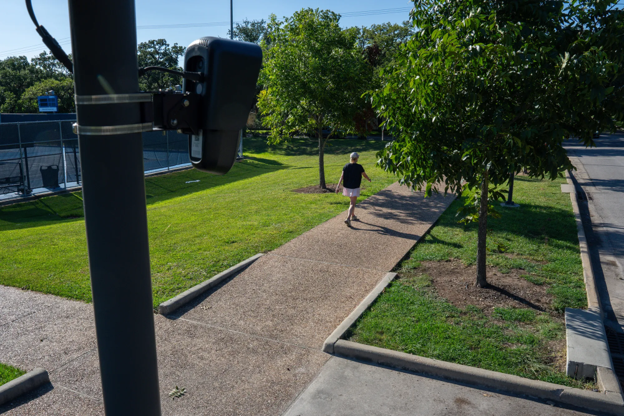
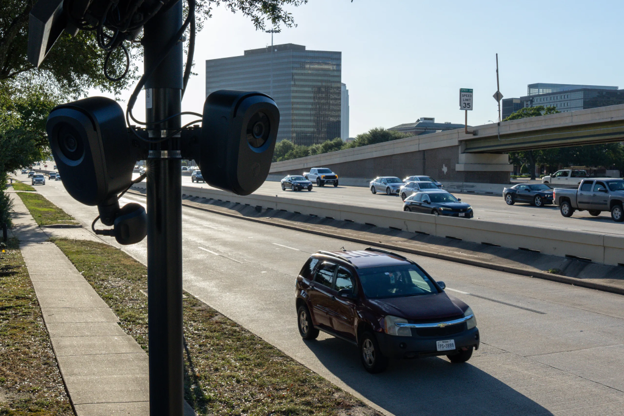
Flock Safety makes automated license plate readers, those small cameras that you notice on poles and streetlights that log the plate, color, make, model and other finer details like a dented bumper or a roof rack amongst every passing vehicle. After capturing this data, it uploads it into a searchable, nationwide database that is accessible to every police department with a Flock contract to access and make use of as necessary.
Currently, there are more than 100,000 cameras installed across 49 American states, which are believed to collect and process over 20 billion data points in a month, while being accessible across 5,000 police departments in the country. And throughout history, it has received a mixed review where supporters have described it as a game-changer for solving crimes and recovering stolen cars while critics believe that it’s an indirect location-tracking surveillance for every driver, regardless of being guilty or not.
And the matter has witnessed a subtle and steady increase in backlash from the public over recent time:
1. Officers in multiple jurisdictions have been caught misusing the database, including cases of using it to track ex-partners.
2. Investigators have found ALPR cameras clustered near sensitive locations such as abortion clinics, mosques, churches, immigration attorneys' offices, even a halfway house raising suspicion about who’s being watched and why.
3. Federal immigration authorities have reportedly tapped Flock data to locate undocumented immigrants, despite earlier assurances the system wouldn't be used that way.
4. The ACLU published a report this summer accusing Flock of misleading city councils about how much the cameras actually track individuals — including a heat-map feature that was denied initially, but later admitted as present.
In its most recent incident, in Oshkosh, Wisconsin, the city council debated before choosing to approve the application of a Flock contract in April, following assurances that the camera couldn’t build a track or movement pattern on individuals. However, the false claim was debunked within a day and residents were quick to protest, following which the council chose to reverse their decision and canceled their Flock contract.
The Court Battles Already Underway
For the actual picture, Trump’s promise has surely shifted a tiny part of the spotlight onto him and the Whitehouse, but the actual legal fight is currently happening across halls and police departments with actual legal proceedings underway at this very moment. Amongst them, the case of Schmidt v. The City of Norfolk has become a focal point of attention as residents argued that Norfolk, Virginia’s citywide camera network was rather indirectly conducting warrantless searches under the Fourth Amendment. A federal judge following a review of the case, sided with the city, while claiming that what was being captured was already visible on public roads and didn’t specifically target entire lives but is now under appeal and reshaping how the Constitution applies for these modern surveillance networks.
The Supreme Court, during a ruling for the Chatrie v. United States case in June 2026, ruled that “geofence requests”, or police demanding cellphone location data of an entire area or region was equivalent to a search with a warrant. And while that was a small win in itself, the decision didn’t consider or focus on license plate cameras and civil liberties attorneys, including those at the Institute of Justice believe that a similar logic could be applied to ALPR databases. With a list of ongoing lawsuits over camera networks across the cities of Norfolk and San Jose, the ALPR question is bound to find its way back to the Supreme Court in the near future!
Cities Choosing Sides
Away from the courtroom, dozens of local governments have simply made choices through their budgets. At least 82 jurisdictions have canceled Flock or competing ALPR contracts, or removed the cameras outright, according to tracking by privacy advocacy groups.
|
City / Jurisdiction |
Action Taken |
Stated Reason |
|
Oshkosh, WI |
Contract approved, then revoked within 24 hours |
Company misrepresented tracking capability |
|
South Portland, ME |
Contract canceled immediately |
Council alarmed by scope of movement tracking |
|
El Cerrito, CA |
Contract not renewed |
Cost and privacy concerns; saved city an estimated $315,000 over three years |
|
San Diego, CA |
Council pushback after public testimony |
Federal-level concerns about data misuse |
|
San Jose, CA |
Active lawsuit filed |
Warrantless mass surveillance allegations |
That's a genuine split screen: some departments treat Flock as an indispensable crime-fighting tool, while others are tearing the cameras down within days of installing them.
What Federal Action Could Look Like — Pros and Cons
Federal action or Trump’s intervention into the matter, the response could vary from being a narrow executive order outlining federal agency access to something as large as a national guideline for ALPR usage, or perhaps simply leaving up to individual fights in the states and courts. The matter has also become a larger issue, since it’s received equal support from both party lines, with Democrats pushing back on the ALPR expansion while Republicans and public unions continue to defend it, a significant part of why Trump described it as a pros and cons, instead of taking immediate sides.
|
Approach |
Potential Upside |
Potential Downside |
|
Restrict federal/ICE access to Flock data |
Addresses immigration-enforcement concerns; could ease city-level backlash |
Law enforcement groups may push back hard; enforcement is difficult across thousands of local contracts |
|
Set national standards for ALPR use |
Consistent rules instead of a patchwork of 82+ local decisions |
Federal overreach into local policing is a hard sell for a "law and order" administration |
|
Do nothing / leave it to courts |
Avoids picking a side in an issue that splits his own coalition |
Prolongs uncertainty and leaves the constitutional question unresolved for years |
Conclusion
When you isolate the matter from the larger headlines, what’s unfolding beneath is a much messier story, a technology that’s spreading faster than regulations being made to govern and Supreme Court rulings that are inconsistent across regions and a President, choosing to stand at the sidelines rather than picking a side just yet. And with the November midterms approaching, surveillance and privacy have quickly become a larger issue in addition to the existing legal fights over Trump-era election administration orders.
Latest Posts