

Trump Announces 6.6 Billion Public-Private Partnership With Anduril to Boost U.S. Submarine Production
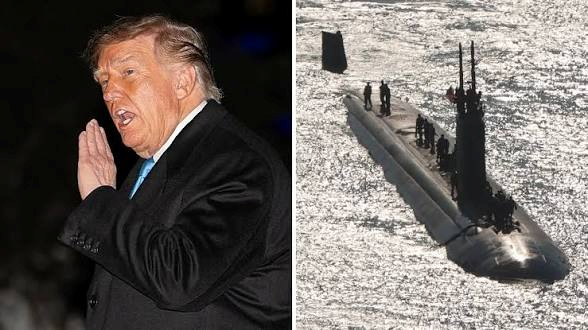
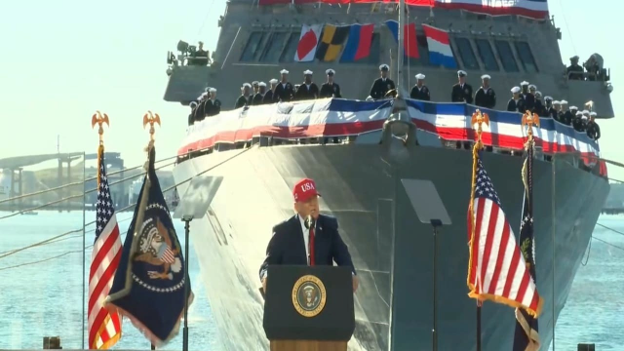
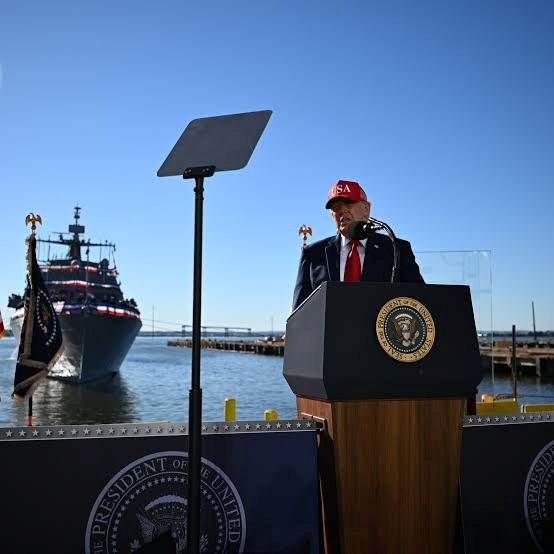
The project, unveiled October 6 at Sparrows Point in Maryland, will establish a new high-tech manufacturing facility called Arsenal-2, designed to produce critical components and large assemblies for the U.S. Navy's Virginia-class nuclear-powered attack submarines.
The initiative represents a significant shift in America's approach to defense manufacturing. Rather than relying exclusively on traditional shipyards, the government is bringing a newer generation of defense technology companies deeper into the country's industrial base. The financial structure is substantial. Anduril plans to invest approximately $3.7 billion in private capital, while the U.S. Navy has awarded the company a contract worth up to $2.9 billion. Together, the commitments total $6.6 billion. For Washington, the objective is straightforward: increase submarine production capacity at a time when the U.S. is trying to strengthen its maritime capabilities and address long-standing bottlenecks in the defense supply chain.
What Is the Anduril Arsenal-2 Project?
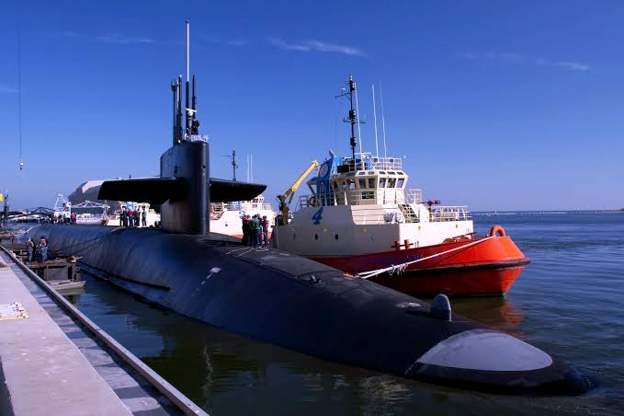
Arsenal-2 is planned as a new software-driven shipyard in Baltimore County, Maryland. Unlike a conventional shipyard focused primarily on assembling complete vessels, the facility will initially manufacture critical submarine components and large-scale assemblies. These parts will then be supplied to the two major shipbuilding organizations responsible for constructing Virginia-class submarines: General Dynamics Electric Boat and Huntington Ingalls Industries' Newport News Shipbuilding. Early production is expected to include components such as precision torpedo tubes. Over time, Anduril plans to expand into increasingly complex assemblies and potentially larger sections of submarines. That approach is important because the U.S. submarine industry does not simply need more finished shipyards. It needs more capacity throughout the supply chain.
A submarine is an extraordinarily complex manufacturing project involving thousands of components, specialized suppliers, highly trained workers and strict quality-control requirements. If one critical component is delayed, the problem can ripple through an entire production schedule. Arsenal-2 is intended to relieve some of those pressure points.
Why Does the U.S. Need More Submarine Capacity?
The announcement comes as the U.S. Navy faces significant challenges in expanding its submarine fleet. Virginia-class submarines are among America's most important undersea platforms. They are designed for missions including anti-submarine warfare, surveillance, intelligence gathering and land-attack operations. However, producing these vessels has become increasingly difficult. The U.S. submarine industrial base has faced workforce shortages, delayed materials, supplier bottlenecks and production delays. A recent Government Accountability Office assessment highlighted late material deliveries and limitations in the skilled workforce as factors affecting Virginia-class submarine deliveries. That creates a strategic problem. The Navy wants more submarines, but simply ordering additional vessels does not instantly create the industrial capacity required to build them. The solution therefore involves expanding the ecosystem around submarine manufacturing—including factories, suppliers, technology, workers and production infrastructure. That is where Anduril's new project enters the picture.
A $6.6 Billion Investment With a Different Risk Structure
One of the most notable aspects of the announcement is how the funding is structured. Anduril will provide $3.7 billion in private investment to develop the facility. Separately, the Navy has awarded the company a contract valued at up to $2.9 billion. According to Anduril, payments under the Navy contract will be linked to demonstrated production outcomes. The company has described the arrangement as one in which it assumes much of the execution risk rather than simply receiving government funding to construct a facility. That distinction could become important as policymakers look for ways to make defense procurement more responsive. Traditional defense programs can take years to move from contract awards to operational capability. By tying portions of the contract to measurable production results, the government is attempting to create stronger incentives for efficiency and timely delivery. At the same time, the arrangement puts considerable expectations on Anduril. The company will have to demonstrate that its technology-driven manufacturing model can operate effectively in one of the most demanding areas of defense production.
Why Anduril Is an Unusual Choice
Anduril is not a traditional shipbuilding company. Founded in 2017 by Palmer Luckey, the company became known primarily for autonomous defense systems, drones, surveillance technologies and military software. In recent years, however, Anduril has expanded into areas including maritime systems and underwater autonomous technology. The company has also been developing manufacturing infrastructure designed around software, automation and high-volume production. The move into submarine component manufacturing therefore represents a major expansion of its business. It also reflects a broader transformation taking place in the U.S. defense industry. The Pentagon has increasingly sought to work with technology companies that can bring software engineering, artificial intelligence, autonomous systems and modern manufacturing methods into traditionally hardware-heavy defense programs. Anduril's involvement in submarine production is perhaps one of the clearest examples of that strategy.
The Software-Defined Shipyard Concept
A particularly interesting element of Arsenal-2 is the company's plan to make it a software-defined shipyard. The concept involves using digital tools to manage production, track work, automate suitable processes and maintain detailed records of manufacturing activities. Anduril says its ArsenalOS industrial software platform will underpin the facility. The company has argued that digital manufacturing could make production more adaptable while improving traceability and helping workers perform complex tasks more efficiently. This is potentially significant for an industry struggling with an aging workforce and a shortage of specialized labor. Instead of assuming every worker arrives with decades of shipbuilding experience, a modern manufacturing environment can use digital instructions, augmented tools and automated processes to help employees become productive faster. That does not eliminate the need for skilled workers. Quite the opposite. But it could change how those workers are trained and how their expertise is supported on the factory floor.
Thousands of Jobs Expected in Maryland
The economic impact could extend well beyond defense manufacturing. Anduril expects Arsenal-2 to create approximately 3,100 direct jobs and support more than 11,000 additional jobs, according to reporting on the project. The facility is planned for the former Sparrows Point industrial area near Baltimore, a location with deep manufacturing roots. That makes the project economically significant for Maryland as well as strategically important for Washington. The development could create demand for engineers, welders, technicians, manufacturing specialists, software professionals, logistics workers and other skilled employees. It could also generate opportunities for companies supplying materials, equipment and services to the new facility. In that sense, the investment is not simply about constructing a factory. It is about rebuilding a broader industrial ecosystem.
What It Means for the Virginia-Class Program
The Virginia-class submarine program is currently built through a partnership between General Dynamics Electric Boat and Huntington Ingalls Industries' Newport News Shipbuilding. Arsenal-2 is not designed to replace those shipyards. Instead, the facility is intended to take on additional component manufacturing and allow more work to happen simultaneously across the industrial base. The Navy expects the facility could eventually add roughly 9 million labor hours annually, representing about a 15% increase in capacity for the Virginia-class program, according to U.S. Naval Institute reporting. That additional capacity could become particularly important as the Navy works toward increasing submarine output. The broader objective is to make the supply chain less dependent on a limited number of facilities and suppliers.
A Broader Defense Manufacturing Strategy
The Anduril announcement should also be viewed in the context of a much larger U.S. effort to rebuild defense manufacturing capacity. The global security environment has placed renewed pressure on governments to expand production of military equipment, ammunition, ships, drones and other systems. For the United States, the challenge is particularly complex. Maintaining technological superiority is one issue; having enough industrial capacity to manufacture those technologies at scale is another. A sophisticated weapons system is of limited value if production cannot keep pace with strategic requirements. That is why industrial capacity has become an increasingly important part of national-security planning. Arsenal-2 fits directly into that conversation.
When Will Arsenal-2 Begin Production?
The facility is expected to become operational toward the end of the decade, with initial operations targeted for around 2030. Construction is expected to move forward before then, with Anduril planning to begin development of the Maryland site. That timeline means the project will not immediately solve America's submarine-production challenges. Its importance lies in building capacity that can contribute over the longer term. There will also be significant execution challenges. Constructing a large defense manufacturing facility, recruiting skilled workers and meeting the Navy's demanding quality standards will require substantial coordination. The project's success will ultimately depend less on the size of its headline investment and more on whether it can consistently deliver high-quality components on schedule.
What This Means for America's Defense Industry
Trump's $6.6 billion Anduril submarine initiative represents more than a single manufacturing project. It is an experiment in how America builds defense infrastructure in the modern era. The combination of private capital, government purchasing, digital manufacturing and distributed production could become a model for expanding capacity beyond traditional defense contractors. For Anduril, the project marks a major evolution from its origins as a defense technology startup into a company increasingly involved in large-scale manufacturing. For the U.S. Navy, it offers another potential source of submarine components at a time when production capacity is under pressure. And for Maryland, it could bring thousands of jobs and new investment to a historically important industrial site. The ultimate test, however, will be execution.
If Arsenal-2 can deliver components faster, expand the skilled workforce and integrate smoothly with existing submarine shipyards, the project could become an important piece of America's strategy to rebuild its maritime industrial base. If it succeeds, the significance of the $6.6 billion announcement may extend far beyond Maryland. It could signal a new era in U.S. defense manufacturing—one in which traditional shipbuilding expertise and Silicon Valley-style software, automation and private investment increasingly operate side by side. For an American submarine fleet facing growing strategic demands, that additional capacity could prove to be one of the most valuable investments of all.
Latest Posts