

The Quad Is Back Four Leaders, New Rare-Earth Pacts, an AI Push and a 2027 Business Forum in Mumbai
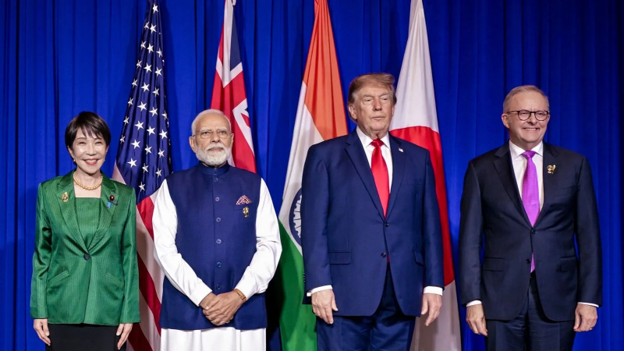
Had begun to appear more of a diplomatic attempt that failed instead of an active working partnership. Those failures came to a standstill on Tuesday as the four country leaders met in a hotel conference room in Manila, marking the first meeting in more than two years while leaving with a list of announcements and initiatives including a plan to bring business leaders to Mumbai early next year.
Table of Contents
1. Why This Summit Mattered
2. What the Leaders Announced
3. Rare Earths and the Unnamed Competitor
4. The AI Push and the Maritime Agenda
5. What the Mumbai Forum Means for India
6. Strengths and Doubts
7. What Comes Next
8. Conclusion
Why This Summit Mattered
The seventh Quad Leaders' Summit took place on Tuesday, November 17, at the Solaire Resort in Manila, on the sidelines of the ASEAN and East Asia summits. Being the first leader’s meeting since 2024 and the first being held outside the member country as well, the meeting included President Donald Trump who attended for the first time alongside Prime Minister Narendra Modi of India, Prime Minister Sanae Takaichi of Japan and Prime Minister Anthony Albanese of Australia.
The wait for another convening of the Quad wasn’t simply scheduling issues but a result of successive falling-throughs of planned meetings in India. The meeting previously scheduled in 2025 and 2026 had to be dropped due to disturbance in the U.S.-Indian ties and issues with dates being finalized for a Trump visit to India. Notably, the meeting also marked the tenth anniversary of the vision of a free and open Indo-Pacific, first articulated by the late Shinzo Abe in 2016 alongside raising skepticism towards the group’s relevance and practical implications.
What the Leaders Announced
|
Announcement |
What it involves |
|
Quad Business Leaders' Forum |
A first meeting in Mumbai in early 2027, bringing together business leaders, government officials and policy experts |
|
AI Accelerator |
More than $85 million to expand access to trusted AI ecosystems across the Indo-Pacific |
|
Maritime Surveillance Collaboration |
Better information sharing and maritime domain awareness |
|
Joint maritime exercise |
In 2027, patrol aircraft from all four countries will fly together for the first time in a Quad context |
|
Cybersecurity cooperation |
Enhanced coordination, citing a rapid rise in cyber incidents in the region |
|
Cable connectivity |
Support for upcoming undersea cable projects in the Indian Ocean |
|
Counterterrorism |
Condemnation of terrorism, including cross-border terrorism, and stronger cooperation |
Providing joint statements, the four country leaders reiterated their stance and focus on the Quad alliance as a representation of their strong opposition to destabilizing or unilateral actions that seek to change the status quo by force or coercion around the world. Additionally, they also voiced grave concern about economic coercion, including through arbitrary export restrictions.
Rare Earths and the Unnamed Competitor
The Quad's Critical Minerals Initiative, launched earlier by the foreign ministers, focused on coordinating investment, regulation and recycling to ensure that the four countries are not exposed to threats or coercions. Following the completion of the summit, President Trump confirmed that several new and critical rare earth trade deals had been signed, a precautionary measure to ensure that no mineral had become vulnerable to coercion by a single foreign supplier. The President refrained from releasing any exact details about what had been agreed or who was part of these agreements.
And while the statement and agreements might appear simple on the surface, the subtle message underlying it can be hard to ignore. Currently, China is amongst the dominating suppliers for global rare earth processing and minerals while also frequently using their positioning to impose restrictions in supply as leverage. China had also limited rare earth exports following last year’s trade dispute with Washington before agreeing a deal that restored U.S. access while also having restricted key critical mineral exports to Japan following tensions between Beijing and Japan since last year.
The AI Push and the Maritime Agenda
Amongst the most notable part of the agreements is the AI Accelerator, an idea that was first announced by Quad’s foreign minister in their previous meeting in Atlanta while also being endorsed again this time by the country leaders in Manila. Committed to coordinating and funding efforts to encourage trusted AI Access, deployment and technical assistance, the agreement according to President Trump was aimed at providing the nations with Quad’s values and interests, an opportunity to direct and control the future of the technology, a remark that has also been considered to reference China.
In terms of security agreements, the Quad also committed to the 2027 maritime exercise, a move that would see a U.S and other member patrol aircrafts to fly together under a Quad banner for the first time, while providing symbolic weight to the agreement of the countries. It is important to note that the Quad isn’t specifically a military alliance or partnership, but a larger joint exercise to enable more efficient information sharing and surveillance practises than before.
What the Mumbai Forum Means for India
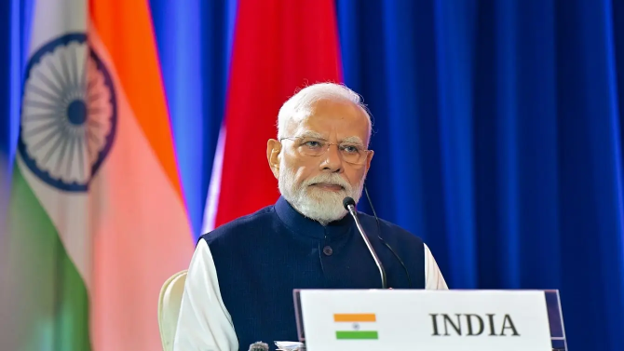
The business forum in Mumbai was amongst India’s proposals during the summit with Prime Minister Modi announcing it himself. The proposal aimed to place Mumbai, India’s financial capital at the centre of Quad’s economic agenda while also utilizing the forum meeting as an opportunity for Indian companies to build partnerships and form agreements with firms from the three other countries. Notably, the Forum also provides India another opportunity to become a host after having missed the previous two summits. Speaking about the Quad agreement and summit, Indian Prime Minister Modi described the Quad as a constructive and trusted partnership, basing the relationship on foreign ministers having met five times since January last year.
Strengths and Doubts
|
What supporters point to |
What skeptics point to |
|
A leaders' meeting finally took place after a two-year gap |
Trump announced the mineral deals without releasing details |
|
The agenda has moved from security statements toward funding, supply chains and business |
The statement avoided naming China, which limits its bite |
|
Trump prioritized the Quad before his talks with Xi Jinping, officials noted |
The $85 million AI figure is small next to what the region needs |
|
India has a concrete role in hosting the forum |
Ties between Washington and New Delhi had been strained |
What Comes Next
The Quad Summit might've concluded for now, but several others that follow are crucial to determine how the agreement plays out. U.S President Trump is due to meet Chinese President Xi Jinping later this week, while the Albanese is also meeting Xi, two important meetings that could largely impact how the Quad arrangements play out in practise in the future. Within the coming months, Indian Prime Minister Modi is also scheduled to meet President Trump in a bilateral meeting for G20 Summit in Florida in mid-December, if it takes place as planned before they would reconvene in the Mumbai forum in early 2027 for the first official Quad patrol-aircraft exercise.
Conclusion
Tuesday's Manila summit wasn't expected to deliver a breakthrough agreement or strategy, but simply provide an opportunity to regroup and plan the future and it did just that. The meetings brought the four leaders in the same room after two years and they walked away with a reignited spark to next meet in Mumbai early 2027 to further build onto the rare earth agreements for mineral trade and while analysts wait to see how efficiently the agreement delivers, the Quad is back to strengthen the four giants.
Latest Posts