

The Feds Hawkish Shadow Why U.S. interest rate fears are keeping global investors on edge despite today's recovery
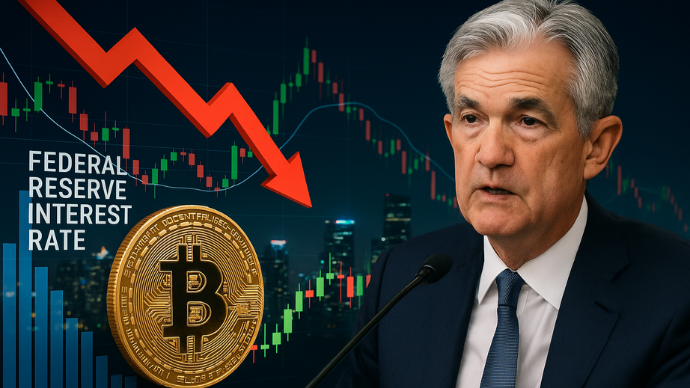
What the Fed Actually Said (and Didn't)
There was little movement in the Statement; it said the Middle East was "uncertain" with no added emphasis. The Summary of Economic Projections was slightly modified with nominal increases in both the forecast for growth and inflation, and the median path still assumes a cut would be made in 2026, but now there are 7 who do not see a cut (compared to 6 last time). Mr Powell refers to the FOMC dots as "directionally hawkish" while noting that the impact of the oil shocks arising from the conflict in Iran are not included in current models at this point.
There was no dovish pivot, but an incremental change towards “a little bit less cut” as well as some comfort in the continuation of present policy under circumstances where we continue to have “elevated uncertainty.” Financial markets received these comments loud and clear; expect patience rather than relief.

Why "Hawkish" Despite the Hold
Hawkish activity on the part of the Fed through March 2026 does not mean that rates will be increased in the near term. However, what is clear is that the likelihood of rates being decreased is now lower due to high oil prices driving down year-on-year core PCE, along with unemployment level remaining at or above expectations. Powell was clear that the Statement of Economic Projections (SEP) is rather ambiguous due to geopolitical uncertainty but he again expressed the Fed's data-dependent stance: Resilient jobs + sticky service inflation = "We'll have to wait a little longer."
Bond markets reacted instantly with 10-year treasury yield increasing 5-8 bp, yield curve steepening for 2s/10s, and strength of U.S. dollar also increased relative to EM currencies. Equity markets may have been relieved by "no hike" headlines; but fixed income guys know the truth!
Global Ripples: EMs and Carry Trades Feel the Pinch
The Fed's hawkish policy has negative effects on emerging markets. After the FOMC, the dollar strengthened significantly, which puts pressure on carry trades involving the Mexican peso and South African rand. Rising US interest rates result in wider yield differentials, leading to high funding costs of USD for leveraged EM carry trades that dominated flow in 2025.
The impact on India has been particularly severe. The Indian rupee fell below ₹86.50 to the dollar at an intra-day level, the lowest level since the crisis of 2023, as the yield on a 10-year G-sec rose to around 7.10%, a weekly increase of approximately 25bp. FPIs have begun to reevaluate potential for rate arbitrage since the Reserve Bank of India (RBI) has yet to raise interest rates above 6.25%; any outflow of ₹25,000 crore a week indicates that they are repositioning their portfolios defensively to invest in US Treasuries. Domestic corporations will face approximately $200 billion in external debt that will need to be refinanced, as EM spreads have widened by approximately 50 bp.
Stabilization of oil prices at approximately $105 per barrel has provided some relief, to the extent that imported inflation will be manageable. However, because the Fed continues to be patient on inflation, the premiums will remain in the embedded markets—the latest forecast for Core PCE was upward-drifting, further confirming that caution should prevail for now.
Chinese property developers will face approximately $300 billion in USD bonds maturing between now and 2027; similarly, Turkish companies confront nearly $100 billion of maturities, with a volatile lira. Both face difficulties refinancing these maturities due to the increase in business and investment risk from higher interest rates and inflated local currencies. Emerging Markets are being squeezed not only by the patience of the Fed, but also by the volatility of commodities.
Business Calculus: Fewer Cuts Means Higher For Longer
Treasury teams model Fed rate cuts in 2026 as necessary to the business:
- Debt refinancing: Lock-in floating rate this period; SOFR swaps are more attractive than Libor.
- Capex discounting: Higher terminal rate pushes DCF valuations down 5-10% across all sectors.
- Emerging Markets expansions: Delay unhedged dollar investments; focus on local-currency funding.
- FX risk: Foreign currency revenues will require aggressive hedging with options instead of forwards (due to volatility spikes).
Indian corporations with $200 billion+ of external debt are sensitive to $15 to $20 billion in annual interest expense for each 50 basis point change in USD interest rates. Staying ahead of repricing costs will protect margins.
The Recovery's Fragile Foundation
The equity market's bounce back is a result of short-term memories - S&P 500 back to 5,800 and Nifty hit 24,000 - while missing the signals from the yield curve and dollar's upward momentum. Only through dovish communication can a true re-rating occur, as continued hawkish undertones will reinforce defensive positions.
Positioning for the Shadow
According to knowledgeable investors, this is confirmatory of a longer period of interest rates remaining higher than before. Investors should focus primarily on high-quality credits, limit their exposure to emerging markets, focus on health care and staple products, and focus mainly on cyclical stocks in India. Investors in India have tended to stick to domestic cyclical stocks but with beta values greater than 1.00.
The Federal Reserve's hawkish stance continues because market participants perceive this to be the end of the tightening cycle, rather than cancellation of it. The current relief rally in financial markets allows investors time to adjust their portfolios to reflect a new interest rate environment where the new base rate will be 3.50%.
Latest Posts