

The Death of Wikinews A 21-Year Chapter Closes

Those of us who closely monitor various digital media business models will continue to view this closure as indicative of how critical it is for scale, community momentum and editorial value to be in synchrony with one another in order for any platform or publishing initiative to prosper.
Why Wikinews Lost Momentum
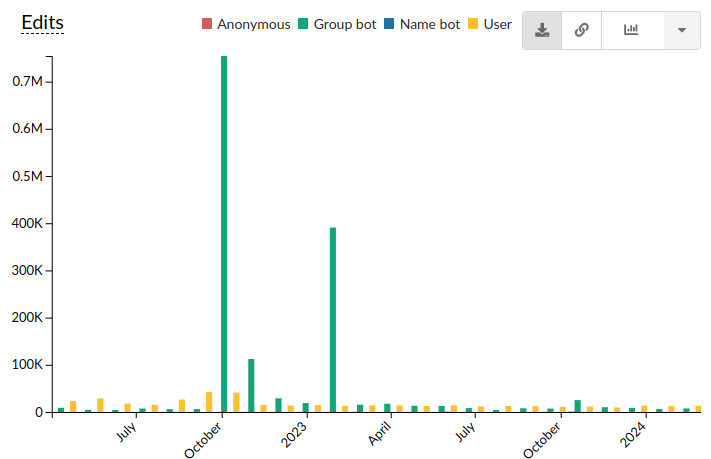
Wikinews was started in 2004, not from a desire to be ambitious, but rather to provide a place where volunteers could publish news in a non-biased and flowing format that was updated continually. While it was very successful at first, the project later found it reached a very small number of readers and had poor editor engagement. Competing against mainstream and social news groups for speed and distribution were difficult. The Wikimedia Foundation's own endnote on the project states it never lived up to its expectations and that it has been outshined by other news produced on the Wikimedia projects, especially the news on Wikipedia.
A Platform Caught in the Middle
Wikinews found itself in an uncomfortable position from day one. It did not have the speed of a real-time newsroom in terms of breaking news but was also not the type of content to be able to grow like an encyclopedia; because news requires timely, disciplined sourcing, and ongoing updates, which would be difficult to achieve under the all-volunteer model. This difference left the project vulnerable to users receiving updates about breaking news faster through search engines, social media feeds, and large mainstream publishers.
What the Closure Says About Open Media
The closure of one website isn't only an end to something active on the Internet. It highlights how difficult it is for a community-based news organization to have an advantage when competing against traditional news sources that benefit from fast turnaround times, reliability, and marketing/delivery networks. Wikipedia has been able to build a repute based upon cumulative impact, while a news story's impact will decrease if not processed and forwarded within hours. The transient nature of news products makes it more difficult to maintain a long-term volunteer based model for open-community news, regardless of how important its mission may be.
The Business Reality Behind the Decision
The shutdown gives us a lesson in product-market fit from a digital business perspective. Wikinews had a purpose, but there was not enough repeat user engagement, nor enough established user habits to warrant the need for ongoing maintenance of the platform. Much of the closure discussion focused on engagement and viability of the project, which is how many non-Wikimedia content platforms are ultimately driven out of business.
Timing is also key. When the media landscape is driven by platform referrals, changes to algorithm structure, and generative AI making summaries for users, a project that does not establish a unique value loop will quietly fade into obscurity. While Wikinews has name recognition, it does not have an established long-term audience. That's been the biggest hurdle for digital media content creators historically.

What Happens Now
The Wikimedia Foundation's recent closure notice states that all editions of Wikinews will now be in read-only mode. This means that all content remains publicly accessible for reference and download only, with no new editing or content creation permitted. While current articles will continue to exist in the archive after the project ceases functioning as a live news service, they will continue to be available as individual references and downloads.
This is an important distinction. By defaulting to read-only, Wikinews will shift from being an active publication (as it has been since its inception) to serving solely as a historical record of past articles (i.e., an archive). Although it is preferable to cease operation through a “graceful exit” rather than an abrupt cessation of operations, a read-only format is still a better outcome than simply ceasing to exist completely on the date of closure.
In addition, by allowing for a history of work and activity on Wikinews, read-only also allows readers to readily see how the work of those contributors can be used in making contributions in future projects.
The Bigger Lesson for Digital Publishers
This is a practical takeaway from the Wikinews closure for all brand-new media ventures, including publishers, and content teams -- mission alone will not create traction. A platform must have a compelling reason for individuals to come back to, contribute to, and trust on an ongoing basis.Wikinews, for example, was an open platform with a lot of user-generated content, but it didn’t have the network effect to help increase the frequency of contributor involvement over time and really didn’t establish itself as a community or set community-based rules for contributors to follow.
There is an important lesson here for businesses that are purely digital-first businesses. f your content model ultimately depends upon continued volunteer energy, unpaid moderation, or goodwill from your audience without a meaningful utility in your model, it will rapidly become a fragile model. In the case of Wikinews, Wikinews failed because the concept of a free community-driven news source was not without value; rather, it failed because the existing economics of how news is produced and consumed worked against that premise.
While Wikinews has ceased publication, the question it raised about whether or not collaborative media can exist in a world where attention is limited and news is provided at the speed of the digital media platforms is still highly relevant. In this case, the answer was no; however, the archive that Wikinews has created represents a meaningful and significant attempt to rethink how news can be produced going forward.
Latest Posts