

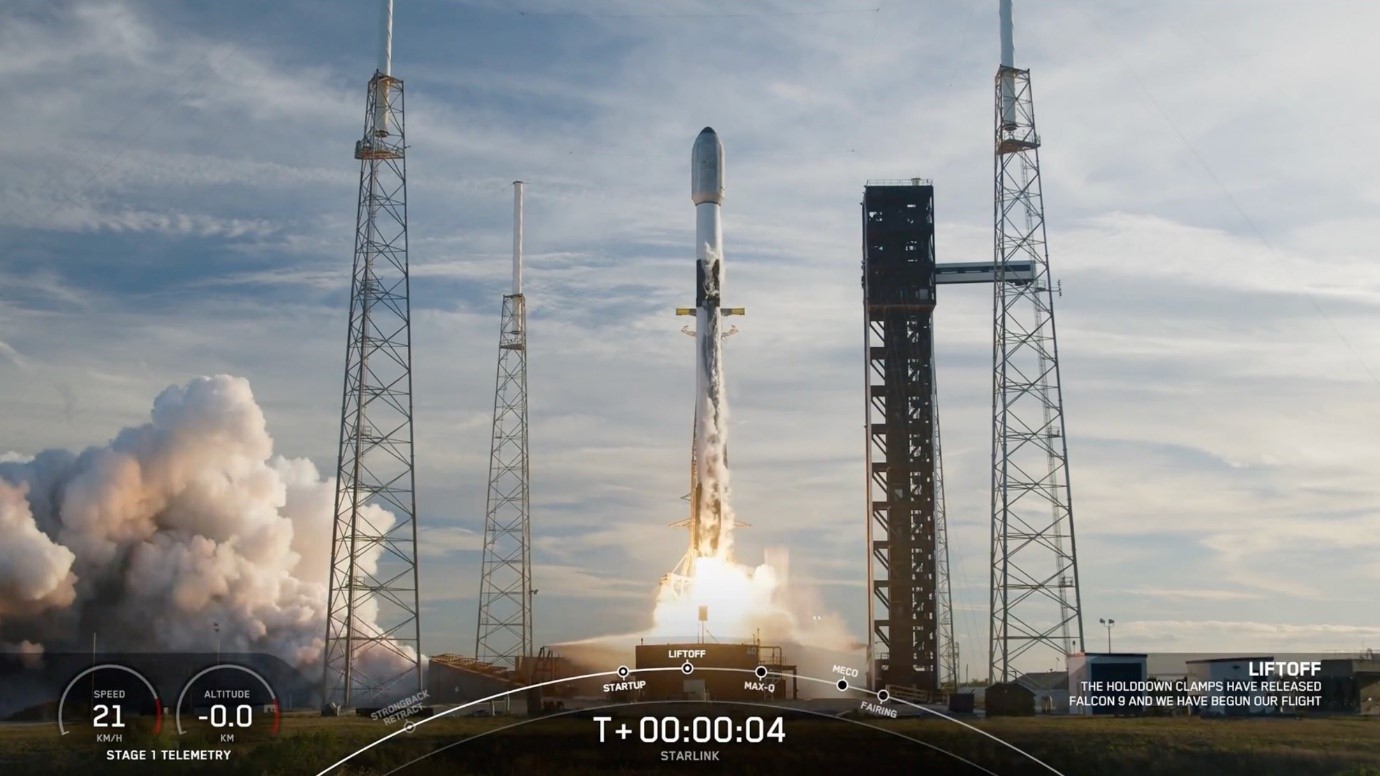
The 50th Milestone SpaceX Launches Massive Starlink Payload from Cape Canaveral

By reaching their 50th starlink payload milestone, SpaceX indicates both scalability and repeatability, but also reliability with a mature launch system which can be beneficial in a business sense.
Why this launch matters
Fifty launches is an indication of something other than proof of concept. The first phase of any space program's lifecycle revolves around proving a mission is viable. Once the program has achieved fifty launches, it transitions into the performance phase where the focus shifts towards maintaining a viable operation through efficiency, profitability, and scalability to an industrial level. Right now , SpaceX is at this point with their Starlink program . SpaceX has made launch frequency a competitive advantage part of their strategy .
This illustrates the fact that satellite internet connectivity, once considered experimental and unique, is growing into an essential piece of global communication infrastructure. As more satellites are launched, the vast network created will provide additional coverage and service levels making them increasingly less accessible to competitors.
Cape Canaveral as a launch engine
Cape Canaveral has become one of the busiest launch sites in the world, and SpaceX has created its own rhythm from that. This is important because the infrastructure needed to support frequently launching rockets is equally as important as the actual rocket itself. The amount of time to get each pad ready, the time it takes for each rocket to turn around, the level of confidence based on weather, and how well the range is coordinated all play a role in the frequency a company can reasonably fly.
For SpaceX, the cadence it flies is a business case as well as a technical one. An operational spaceport that can support multiple missions with very little friction gives the company a cost control and scheduling flexibility advantage. In the space industry, those differences can mean the difference between a platform that dominates and an innovative idea that never comes to fruition.

The business behind the constellation
Access to the internet isn't everything Starlink does. They are also creating a low-earth orbit constellation to meet the needs of consumers, businesses, mobility, government, and emergency response users. As the constellation grows larger, the service to customers becomes increasingly attractive, as coverage and latency will improve based on the scale of operations.
Because of this, every payload is critically important to the success of the program. Each launch adds capacity, redundancy, and geographical expansion. For SpaceX, each additional payload means increased potential for future revenue, increased market share, and increased negotiating power in the global telecommunications dialogue. For the rest of the market, each additional launch will create greater and greater pressure on the traditional satellite operators.
What this means for telecom and competitors
The consequences of these developments can be seen already. Legacy Telecommunication carriers are being challenged to rethink how they deliver service in rural areas, provide connectivity to boats at sea, provide INFLIGHT connectivity to consumers flying on aircraft, and prepare in advance for restoring communications after disasters. The business of Satellite Internet has been legitimized due to Starlink's rapid growth and will soon be part of the telecom industry's business strategy and not only associated with aerospace industries.
The significance of the fundamental shift in strategy is that SpaceX is not just creating new products; it is also executing successfully. Every launch of a SpaceX satellite network reinforces that this company is able to build, launch, and replace satellites within a schedule that the traditional satellite business could not accomplish. Once the velocity of a business accelerates, it becomes difficult to regain momentum if you fall behind.
The scale challenge
Certainly. Size creates its own kind of pressure and striving to launch more satellites means creating a way to deal with congested orbits, coordinating the use of the radio spectrum, and being responsible for the long term sustainability of these systems in orbit. At the same time, companies that launch many satellites must continue to stay ahead of scrutiny from government regulators and be prepared to answer many of the same questions that older systems face, as a satellite constellation grows larger there are more questions concerning how to manage space traffic, how to handle space debris, and how to fairly allocate orbital slots or orbital resources.
This is the less glamorous side of being successful. A company may be able to kick major goals and build a large business by moving quickly, but they must also demonstrate to the world they will continue to operate in a responsible manner. Each additional launch that SpaceX has completed has increased its competitive position, with the added impact of increasing the attention received from government regulators, competitors, and potential customers.
On the other hand, the 50th Starlink launch is not only significant because it marks the first successful milestone to reach, but because it shows that SpaceX has taken on a different approach to satellite deployment and is now functioning more like a high speed infrastructure provider. That is what makes this story so important for anyone with any interest in the future of the communication, logistics, and commercial space transportation industries.
Latest Posts