

The 2026 Digital Asset Shift Why Price Cycles are Officially Dead

Bitcoin ETFs currently have over $180B in assets under management, the settlement volume of stablecoins is comparable to that of Visa, and the daily trading volume of tokenized treasuries is approximately $10B on blockchain rails. This is no longer about economic volatility; it is about building infrastructure within the market to compete with traditional finance in terms of cost, speed, and access 24 hours a day, 7 days a week.
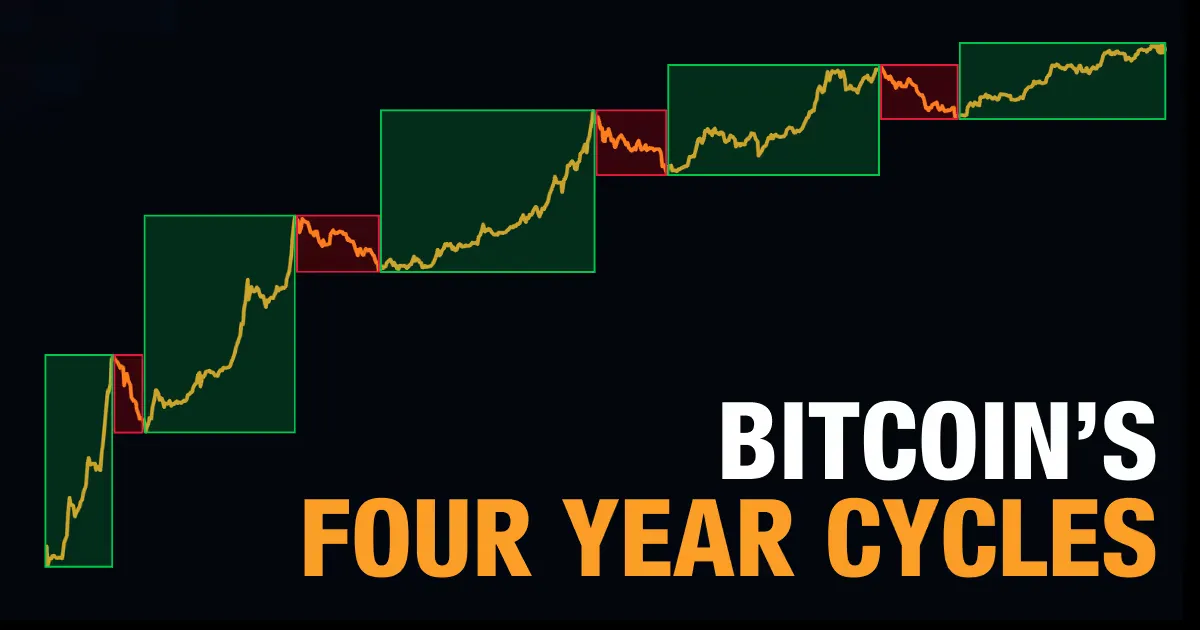
The Death of the Four-Year Cycle
Retail investors are no longer driving the narrative of Bitcoin halving/bull runs/peaking euphoria/capitulation/lather, rinse, repeat; instead, institutional players are using new business models and the math is different. With the approval of spot bitcoin ETFs by the SEC, the total amount of spot inflows amounts to approximately $60 billion (4% of BTC) since that time and represents permanent parking of that supply into those ETFs. MicroStrategy is now holding over 300,000 BTC as part of their general treasury reserves. Those are not "investors" looking to trade; they are "balance sheet allocators" looking to buy the dip and hold into the next cycle (when Fidelity/BlackRock provide their clients with lower levels of volatility, the "traditional rhythm" dies).
Similarly, stablecoins such as Tether process over $2.5 trillion in monthly transactions; that is larger than over 90% of national payment systems. USDT and USDC should not be classified as "cryptocurrency" but rather as global settlement layers that run while banks are not open. The traditional notion of speculating on price will become secondary once the plumbing you are using facilitates commercial business.

Utility Trumps Volatility
Digital asset utility creates a new baseline. Real-world adoption metrics have now outperformed charts; Tokenized Real World Assets (RWAs) reached a $15B market cap, with BlackRock's BUIDL fund managing $800M in US Treasuries on Ethereum alone. Corporate treasury cash management is being piloted by corporate treasuries such as Siemens and Swift on blockchain; this is not a form of speculation as it has institutional guardrails in place in the form of yield farming.
According to Gartner, enterprise blockchain spending is growing 45% year over year (YOY) to $25B. JPMorgan's Onyx settles $1B a day in permissioned tokens. Provenance in supply chains (IBM Food Trust, TradeLens) has secured recurring revenue streams independently of the price of Bitcoin.
Layer 2 Ecosystems such as Base and Arbitrum process 80% of DeFi volume while having gas fees below $0.01. Retail traders are migrating to utility; speculators are following them, attracted by the liquidity supplied by the use of tokens for use cases. The network effect continues to build, regardless of the state of the market.
The New Market Regimes
Three distinct digital asset market regimes are expected to exist by 2026, each determined by different factors:
- Regime 1: Settlement Infrastructure: stablecoins and layer 2s grow in line with global trade, with $8 trillion in cash moving across borders every year – blockchain will capture 2% market share of this by 2028.
- Regime 2: Programmable Yield: RWAs and DeFi fixed income compete with Money Markets. Yield on the $120 trillion global bond market yields 3-5%. Tokenised alternatives will offer similar yield profiles as these products but with instant settlement times.
- Regime 3: Store of Value: BTC and ETH will mature into something referred to as “Digital Gold.” Correlation to global equity markets will drop to 0.35. Pension Funds will allocate between 1-2% of assets to this as a means of diversification.
These regimes will be decoupled from one another. The Total Value Locked (TVL) in stablecoins will increase through bear markets; adoption of RWAs will occur at an accelerated rate through a period of rapidly rising interest rates; BTC volatility will converge towards that of Gold (15% annualised versus 60% peak).
Corporate Balance Sheet Revolution
A new shift can be seen with corporates using the corporate treasury and treasuries moving to assets in the Blockchain. For example, MicroStrategy was the first to do so, and now other firms are assigning a portion of their Treasury to blockchain-based assets for the following reasons:
- The returns on stablecoin lending (25%) exceed the returns on money market funds (4%).
- Eliminating counterparty risk — by self-custody, this eliminates the scenario of a Silicon Valley Bank scenario.
- With constant access to funds (24/7 liquidity), this allows the company to operate globally.
Walmart is currently testing stablecoin payments to vendors. ExxonMobil has begun accepting BTC for royalties on the Permian Basin. The elimination of both counterparty risk and price cycles will result in CFOs of Fortune 500 companies treating digital assets in their capital structure as working capital for their business.
Investment Implications for 2026
Price cycle traders will either pivot or become extinct. Smart money holders are positioned throughout the four architectural construct styles.
- Infrastructure– chainlink (Oracle monopoly), LayerZero (cross-chain), Gelato (automation). The revenue of these projects is generated through transaction volumes and not token value.
- Institutional on- and off-ramps to crypto – Circle (USDC issuer), Fireblocks (custody provider) and Zero Hash (fiat rails). ETF plumbing generates >$500M annually.
- Real-World Assets platform – Centrifuge, RealT and Ondo. $5 trillion addressable market by 2030.
- Regulatory Compliance Tools – Elliptic (travel rule), Chainalysis (CTF). Regulation creates barriers to entry.
The most successful thesis is to hold the pipes, not the commodity. You know this is true when JPMorgan processes $1 billion per day in public chain settlements, and the Coinbase retail exchange becomes 2nd to its institutional custody revenue.
Regulatory Clarity Seals the Shift
The USA's cryptocurrency regulations 2026 remove all barriers for cryptocurrencies. The House of Representatives passed FIT21 by 312-102. SEC approves ETH staking ETFs.
The Monetary Authority of Singapore continues to support Project Guardian. $50 billion worth of tokenized assets are being processed by the UAE's Virtual Assets Regulatory Authority. Global co-operation eliminates any opportunity for regulatory arbitrage, allowing for cross-border use of crypto-currencies.
The Bottom Line for Business
Once utility surpasses speculation, the asset cycle will end, as evidenced by 2026's $300 billion in institutional assets under management (AUM), $5 trillion in stablecoin volume, and more than 500 corporations running pilot projects. While bitcoin is still volatile, it no longer dictates the narrative around digital assets, as it has moved down more than 30% in value per month.
For digitally oriented firms, the plan is easy: integrate a blockchain-based settlement process, set aside 2%-5% of your cash reserves to purchase yield-bearing assets, and focus on developing compliant enterprises. Companies that consider crypto to be a form of infrastructure will win the next decade; while companies that try to use crypto for "pump-and-dump" schemes will only provide funding to keep their operations afloat.
Latest Posts