

Supreme Court Declines to Hear Ousted NLRB Member Gwynne Wilcox's Challenge to Her Firing by Trump
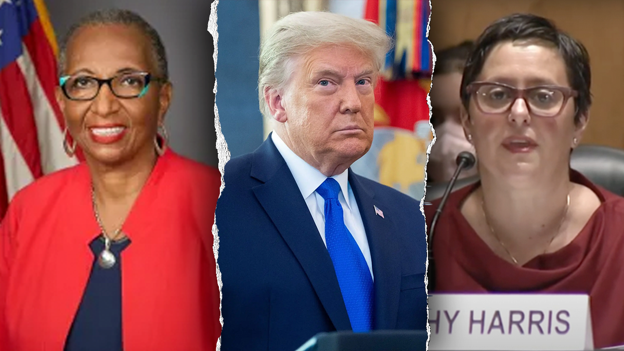
Gwynne Wilcox, an ousted member of the NLRB has been pursuing a legal hearing for being removed by the Presidential office from a position that arguably should not remain within the President's control. But the justices refused to consider her appeal and dismissed the case, marking an end to Wilcox's pursuit as well as pulling the curtains on a larger argument of who really controls the federal government's independent agencies.
Table of Contents
1. What the Supreme Court Did
2. Who Is Gwynne Wilcox
3. A Timeline of the Case
4. The Ruling That Changed Everything: Trump v. Slaughter
5. Public Perception Of The Move
6. Before and After: How Agency Independence Has Shifted
7. What It Means for Workers and Employers
8. Conclusion
What the Supreme Court Did
The U.S Supreme Court on Monday, October 19 refused to consider Wilcox’s petition, leaving a lower court ruling in effect that considered her removal from an NLRB position as a lawful use of presidential authority. In a brief and typical response of cases being declined the judges refused to provide detailed explanations but simply refused Wilcox the opportunity. And while the decision might appear abrupt or dismissive, it's built upon an earlier June ruling involving a Federal Trade Commission Member which has reshaped the legal argument of Wilcox.
Who Is Gwynne Wilcox
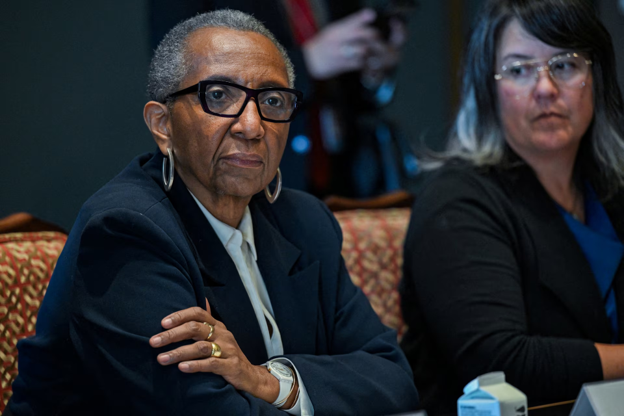
Gwynne Wilcox was appointed to the National Labor Relations Board by President Joe Biden and went on to become its Chair. She was the first Black woman to serve on the board and the first Black person to chair it. The NLRB is the federal agency that oversees union elections and decides unfair labor practice disputes between workers and employers, which means its members make decisions that touch everyday workplaces across the country. And while there might be different sides to the story, it's hard to undermine the fact that Wilcox was removed from a job that clearly had statutes stating board members could be removed only for specific reasons, a violation that she had been asking the courts for the past two years to be taken seriously.
A Timeline of the Case
|
Date |
Development |
|
January 27, 2025 |
President Trump removes Wilcox from the NLRB, about a week into his second term |
|
March 6, 2025 |
A federal district judge orders Wilcox reinstated |
|
April 9, 2025 |
The Supreme Court temporarily blocks her return while the case continues |
|
May 22, 2025 |
In a 6-3 order, the Supreme Court declines to restore her to the board; the three liberal justices dissent |
|
December 2025 |
A divided D.C. Circuit panel (2-1) rules that the firing was a valid exercise of executive authority |
|
June 29, 2026 |
In Trump v. Slaughter, the Supreme Court overrules the 1935 Humphrey's Executor precedent |
|
July 1, 2026 |
Wilcox files her petition asking the Supreme Court to hear the case |
|
October 19, 2026 |
The Supreme Court declines to take up her appeal |
The Ruling That Changed Everything: Trump v. Slaughter
A major underlying influence behind Wilcox’s petition being refused for Supreme Court addressal is the Trump v. Slaughter case that was addressed by Chief Justice John Roberts and received a 6-3 opinion split. During its ruling, the court backed President Trump over the firing of Rebecca Slaughter, a Democratic member of the FTC while overruling the previous Humprey’s Executor v. United States, 1935 which granted Congress’s ability to shield members of specific regulatory commissions from being removed at will.
The move was reasoned based on the idea that agencies like FTC often wield real executive power, such as writing rules and enforcing the law which requires governance and hence making them answerable to the President. Notably, during the ruling the court had also drawn limitations outlining that the ruling did not impact the discussion over tenure protections for a judge at non-Article III courts while also declining the administration’s appeal to remove Federal Reserve Governor Lisa Cook, with considerations towards the Fed’s previous positions. Considering that Wilcox's case also addressed the same question on a different agency, those following the appeal knew what to expect in the outcome.
Public Perception of the Move
Those in support of the outcome have argued that the Constitution vests highest level of executive power in the President and in turn, executives who also wield the same power should remain answerable to the elected candidate by the people. Acclaimed groups such as the Heritage Foundation, the New Civil Liberties Alliance as well as the Landmark Legal Foundation have expressed their approval and positive acclaim of Slaughter’s decision for its alignment with the Constitution’s foundational practise and for holding the federal agencies accountable towards the voters instead of allowing it to become a bureaucratic agency. On the other hand, critics of the move have expressed their dissatisfaction with the argument that agencies like the NLRB were designed to be free of day-to-day and electrical politics, a structure that becomes directly flawed under the new ruling. And while both camps argue about the implications of the move, the practical impact places far greater direct control within the President about who sits on these boards.
Before and After: How Agency Independence Has Shifted
|
Under Humphrey's Executor (1935 to 2026) |
After Trump v. Slaughter |
|
|
Removal of commissioners |
Only for cause, where Congress had set such limits |
Generally at the President's discretion for officials exercising executive power |
|
Political balance |
Statutes often required or encouraged mixed-party boards |
Board members can be replaced more quickly by each administration |
|
Court challenges |
Fired members could often win reinstatement |
Challenges like Wilcox's are now unlikely to succeed |
|
Exceptions noted |
Not applicable |
Federal Reserve and certain non-Article III courts treated differently |
What It Means for Workers and Employers
The final outcome of the case could present significant outcomes for different individuals affiliated in the process. For employers, a labor law or federal labor policy changing with every new administration and board appointment could bring faster and more dramatic shifts that require constant restructuring and adaptation while for workers and unions, the labor law swinging with each election could further pose threats towards working practises while also providing them with an opportunity to demand accountability from their employers. And while the ruling did not directly change or alter labor laws or the statutes outlined in the books, it has clearly depicted that the NLRB members as well as the General Counsel are liable to serve at the president's pleasure as well as showcasing how secure the people enforcing labor laws are in their jobs.
Conclusion
The current dispute might've garnered attention and become a dramatic saga for those following, but the end to such legal fights is often much more direct and abrupt than one would expect. The case might simply finish with an order, a docket number and a person who experienced a distressful two years, but beyond those visual impacts, the case could bring positive clarity towards the debated question of whether those with executive power and on federal boards are influenced by presidential power or mainly, by the President himself. As things stand, supporters believe there lies a correlation while critics argue that it could quickly result in loss of protection, both outcomes that could quickly and significantly play out on the decisions that the agencies undertake and the outcome that the case achieves in the future.
Latest Posts