

Super Tuesday 2026 The U.S. Primaries Begin
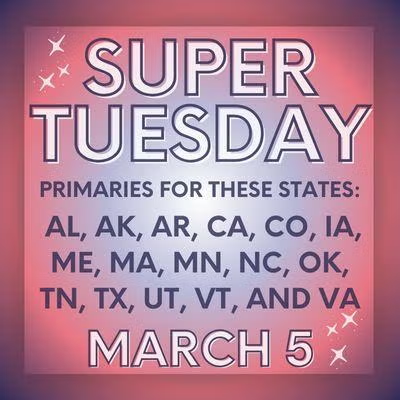
This is likely to give investors and decision-makers around the globe an indication of the type of economic & regulatory strategy that will be implemented by the largest economy in the world over the next four years.
What Super Tuesday Actually Decides
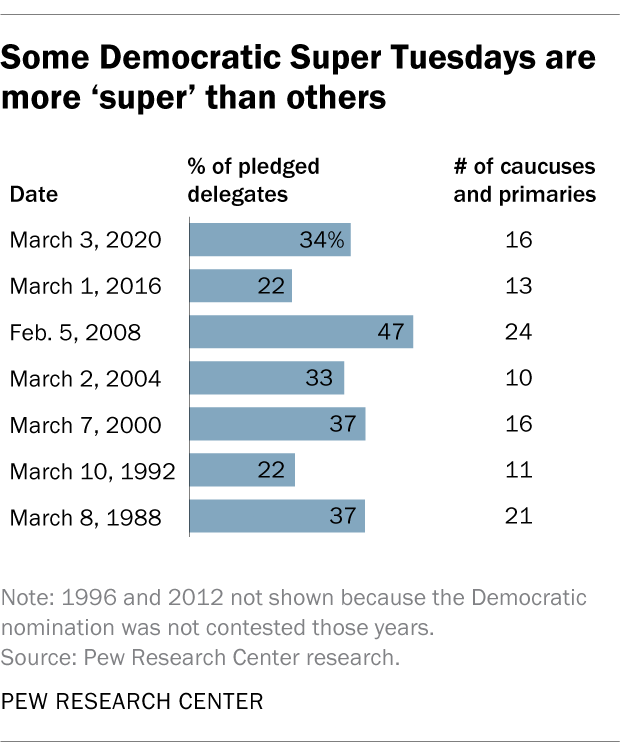
In practical terms, Super Tuesday acts like a high-speed filter on the candidate field. Poll stories and debate moments suddenly turn into delegate math, and parties move from a broad menu of options to one or two serious contenders. For businesses, this is usually the first night when it becomes reasonable to say, “We’re probably dealing with this policy style, not that one,” and begin mapping concrete scenarios rather than hand‑waving about “whoever wins.”
The results often push weaker campaigns to suspend operations as donors, media, and party infrastructure coalesce around perceived winners. That consolidation matters because it stabilizes expectations: bond markets, currency traders, and corporate planning cycles all start to absorb the idea that a particular tax approach, trade posture, or regulatory philosophy now has a front‑runner attached to it.
Policy Bundles Markets Start to Price In
The primary effect of Super Tuesday is how it pinpoints which candidate's combination of policies has enough momentum behind it to have a real effect on the subsequent primaries and general election. A candidate will generally have one of two policy combinations
1) has a low corporate tax rate and believes in limited regulation at home, and then asserts a tariff-heavy approach to trade; this will typically appeal to certain businesses and hurt int'l businesses that utilize global supply chains since they will need to evaluate their exposure to the risks posed by a potential return of tariffs and trade sanctions in addition to competing in an increasingly fragmented global market.
2) supports increased domestic tech/data regulation, green industrial policy, and multilateral trade agreements; this will provide clarity to companies that require, or would like, to have, clarity and certainty with respect to climate incentives and regulation, while also creating higher costs of compliance for businesses that will be under greater scrutiny from governments for their platform operations, as well as, potentially being subject to carbon border adjustment mechanisms, that could negatively impact manufacturers and heavier industry businesses.
The rhetoric surrounding the deficit and international toughness is also, at times, contradictory; a candidate will say they are going to cut public spending at the same time as they are promising to have a stronger military and impose additional sanctions or export controls. A candidate’s mix of policies will create uncertainty for companies in terms of domestic demand, public procurement, and the levels of friction that may exist with the movement of critical technology and/or energy across borders in the future.
Why Global and Indian Businesses Should Care
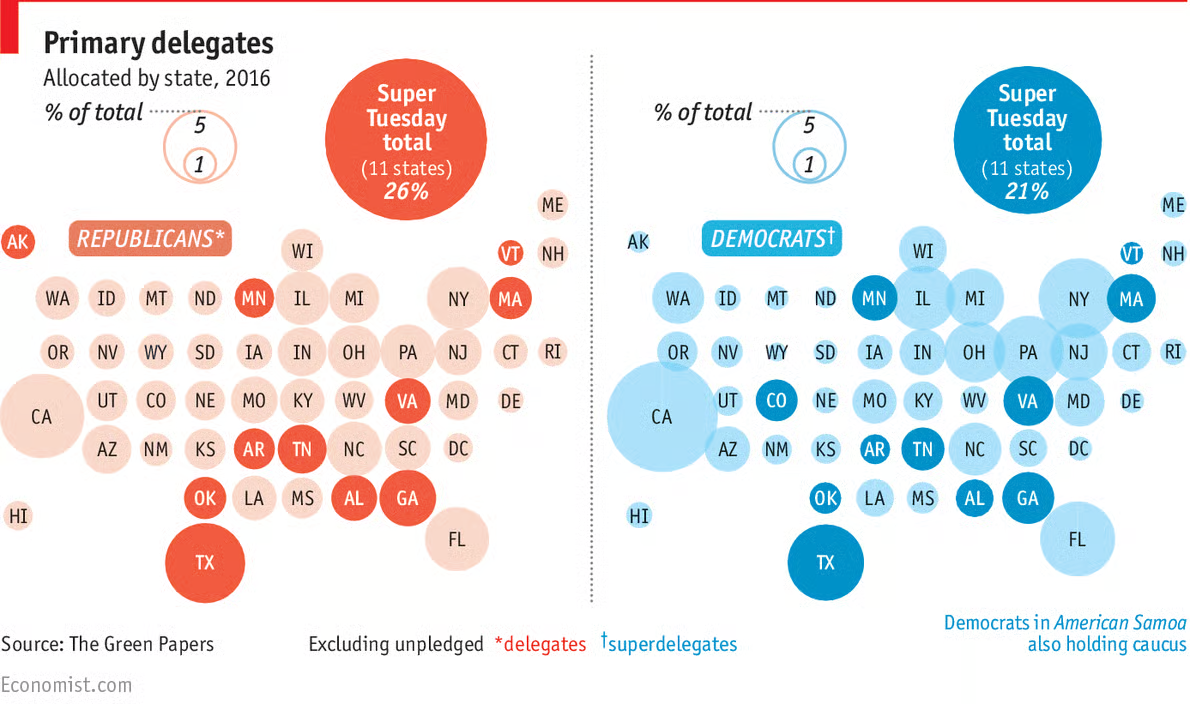
Even when a company doesn't file taxes in the U.S., American policy can affect its trade, finance, and technology as it is still an American company. When a candidate who is tapping into protectionist rhetoric has a strong showing on Super Tuesday, it could lead to fear that global supply chains will be more susceptible to change due to new tariffs and/or "Buy American" laws.
Existing exporters in Europe, Asia, or India that sell into the U.S. market will likely have to adjust their pricing, routing, or product mix to stay competitive, even before laws are enacted that create these tariffs and/or "Buy American" requirements.
Financial capital will follow the new candidate’s success on Super Tuesday. If the market reacts by predicting that the newly elected nominee will increase domestic yields, onshore more, and create more favorable conditions for U.S. capital; then there will be capital migrating out of emerging markets into U.S. assets very quickly.
This shift will influence borrowing costs, the value of U.S. assets, and create even more volatility in currency exchange markets throughout the world. This will create a ripple effect for many businesses engaged in capital intensive industries (e.g., high-tech, late-stage technology, and infrastructure).
Reading Beyond the Horse Race
While the media will focus on which states each candidate “won” and who “surprised,” the business-related insights indicated by the signals in their speeches (such as language and priorities) are more important than the vote count. For example, when a candidate speaks about China, the difference between calling China a competitor, a strategic rival, or an existential threat tells you whether or not export controls, sanctions, and tech restrictions are likely to increase. This information will affect decision-making related to semiconductors, telecommunications, artificial intelligence (AI), and clean technology for many years.
When candidates speak about AI, the way they characterize it, largely as an innovation race in which one must win versus as something that is a risk to be tightly policed, can determine whether the business climate in this area will be relatively open or whether there will be a regime of licensing and auditing advanced models.
Likewise, when candidates make statements about climate change, the way they frame their remarks to favour fossil fuels vs. renewable sources of energy also will indicate where the next round of incentives and penalties will be directed affecting many different industries including energy producers, automotive manufacturers, heavy industry, and agriculture.
How Leaders Should Respond This Week
Structured curiosity should be the response to Super Tuesday, rather than panic. Strategy and risk functions can help leadership create a series of short narrative memos that describe what the stated positions of a potential nominee mean for taxes, trade, technology, and the environment in the context of their company or organization.
Heads of finance can indicate how much of an impact actual combinations of tariffs, sanctions, or tax reforms may have on either margins or capital availability. New product development and compliance personnel can create a "watch list" of AI or data proposals that will come from the emerging candidates to avoid being caught off guard during the upcoming election.
Latest Posts