

Stripe Finalizes 7 Billion Acquisition of AI Gateway Startup OpenRouter

It's worth noting that this jump or increase in valuation doesn't simply focus on OpenRouter or the business markets, but also on where the money in AI is actually flowing. And it's not just building bigger models but also the infrastructure or the pipes that these models run through, something OpenRouter is known well for!
Table of Contents
- What Actually Happened
- What OpenRouter Does
- Why Stripe Wanted It
- The Bigger Acquisition Pattern
- Deal at a Glance
- What Changes for Developers
- Pros and Cons for the AI Ecosystem
- Conclusion
What Actually Happened
According to Bloomberg, which broke the story citing people familiar with the matter, Stripe has finalized an agreement to acquire OpenRouter for more than $7 billion, with the possibility of final purchase price shifting slightly before the deal is formally announced. While Stripe spokesperson continues to claim that the company doesn't comment on rumors or speculation, the development follows earlier Wall Street Journal reporting from July that the two companies were in early acquisition talks, and if the reports are true, the timeline from "rumored talks" to "finalized deal" were completed in just over a month.
What OpenRouter Does
OpenRouter can be understood as a simpler, singular doorway into a very crowded larger room. OpenRouter has quickly established itself as a premium choice amongst developers and their queries, as it handles model selection, failover and cost optimization behind a unified API instead of the developers having to choose between OpenAI, Anthropic, Google and dozens of other model providers.
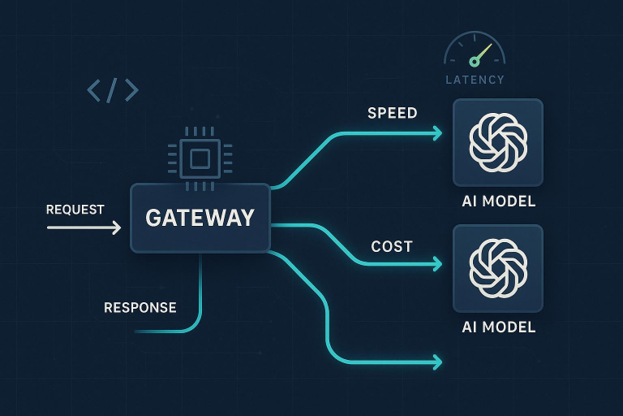
OpenRouter's CEO, Alex Atallah, has described the company's role in the AI stack as functioning the way Stripe itself does for payments — a single access point that removes vendor lock-in. The company is reported to have roughly 8 million users routed across more than 400 models, and has recently raised a $113 million Series B in May at $1.3 billion valuation, backed by Sequoia, Andreessen Horowitz, Menlo Ventures, and Alphabet's CapitalG.
Why Stripe Wanted It
The acquisition of OpenRouter can feel slightly out of the blue, but the strategic logic becomes clearer once you look at what Stripe already owns. In early 2026, Stripe closed its acquisition of Metronome, a usage-based billing platform built specifically to meter AI token consumption while also already holding OpenAI and Anthropic among its customers. And while Metronome answered the question of how AI usage gets measured and invoiced, it couldn't focus on where that usage was being routed in the first place. OpenRouter’s acquisition fills exactly that gap, granting Stripe visibility into both ends of the transaction: the routing decision and pathways as well as the resulting bill.
Stripe’s decision of paying roughly 50 times OpenRouter's annualized revenue may not be clear to everyone since it's not a typical bet on today's cash flow but a larger bet on position. OpenRouter controls the layer that decides which model handles a given query, and for that very purpose, it's destined to be set above every individual AI lab available to the public, regardless of which model is winning benchmark comparisons in any given month.
The Bigger Acquisition Pattern
Stripe has carefully and strategically spent the last eighteen months to build a full financial layer for the AI economy and this deal is simply amongst the latest in its list:
1. February 2025: Acquired Bridge, a stablecoin infrastructure company, for $1.1 billion — at the time, Stripe's largest deal ever.
2. June 2025: Acquired Privy's embedded crypto wallet infrastructure, which had already powered more than 75 million accounts across over 1,000 developer teams.
3. Late 2025: Jointly launched the Agentic Commerce Suite with OpenAI, letting AI agents make purchases without direct access to users' real payment credentials.
4. Early 2026: Closed the Metronome acquisition, folding usage-based AI billing directly into Stripe's product stack.
5. August 2026: Finalized the OpenRouter deal, reportedly its largest AI-related acquisition to date.
And when you combine everything that these companies do, Stripe is slowly positioning itself at every part of the transaction, right from routing, metering, billing, and payment, especially in a reality where the economy is run by autonomous AI agents rather than actual humans.
Deal at a Glance
|
Detail |
|
|
Acquirer |
Stripe Inc. |
|
Target |
OpenRouter Inc. |
|
Reported deal value |
$7 billion+ |
|
OpenRouter's prior valuation |
$1.3 billion (May 2026 Series B) |
|
Valuation multiple |
~5.4x prior valuation |
|
OpenRouter scale |
8 million users, 400+ models |
|
Reported by |
Bloomberg, citing people familiar with the matter |
|
Official confirmation |
Not yet issued; Stripe declined to comment |
What Changes for Developers
If you're someone who uses OpenRouter on a regular basis and are debating what this acquisition could imply, or simply weighing its alternatives, it’s worth taking a moment to consider the optics of the situation. A payments and billing company in stripe now owns the neutral routing layer that a large share of the AI-building ecosystem depends on for multi-model access. And there are few practical questions that arise at the moment: Will OpenRouter's pricing and provider-neutrality hold once it's inside a billing-focused parent company? and Will Stripe's own billing tools get preferential integration in ways that make switching away from Stripe's broader ecosystem harder down the line? And while none of these have answers just yet, you can expect steady and smooth transition before any significant changes begin to take real shape.
Pros and Cons for the AI Ecosystem
|
Pros |
Cons |
|
Tighter integration between routing and billing could simplify AI cost management |
Consolidation of a neutral routing layer under one commercial owner raises independence questions |
|
Stripe's scale could accelerate OpenRouter's reliability and infrastructure |
Developers relying on OpenRouter's provider-neutral positioning may see that neutrality tested |
|
Signals maturing infrastructure for the "agentic economy" broadly |
A $7B+ price for a company months removed from a $1.3B valuation reflects speculative, not earnings-based, value |
Conclusion
While the valuation will continue to vary around the $7 billion figure, the direction of the deal emphasizes on how within the AI community, it’s not the model that holds the most current value but the layer which decides which model gets used, how much it costs and who gets billed for it. Over the past two years, Stripe has sneakily assembled it’s own pieces of the layer right from stablecoins, embedded wallets to agentic payment and usage billing and with its acquisition of OpenRouter, it completes the layer by providing actual necessary traffic. And for developers who’ve depended on OpenRouter for a long time, the coming months will be a testament to the platform’s usability as well as whether it preserves the neutrality that made it a useful choice during its previous ownership!
Latest Posts