

Stock Market Crash Erases 7 Lakh Crore
The Perfect Storm: Global Cues Meet Local Pain
Tensions in western Asia were a major topic in the news. The U.S. made air strikes against Iran in concert with Israel over the weekend, leading crude oil prices (Brent Crude) to spike over $110 a barrel, increasing fears of inflation just when the Federal Reserve stated that it would take its time before making any cuts to interest rates. The FOMC's "hawkish" tone added strength to the US dollar and hurt currencies of emerging markets and all carry trades so that the Indian rupee traded intraday above 86.80/$US.
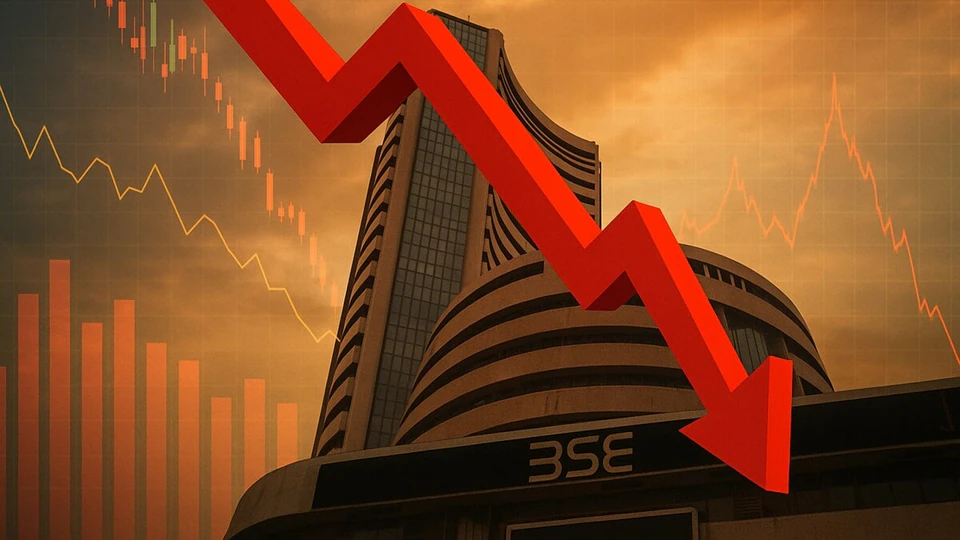
In India, there has been increased selling by FPIs who sold over ₹25,000 crores of high-pe, or midcap and traditional financials. When margin calls were issued to leveraged players, the NSE showed 2,192 losers vs 256 winners and the market cap of BSE fell from ₹463 lakh crores to ₹432 lakh crores in a matter of hours.
Sector Carnage: Banks, Autos, Realty Lead Losses
Nifty Bank lost 1,800 points, as HDFC Bank associated with ICICI Bank and Kotak Mahindra reacted negatively because of pressures on NIM (Net Interest Margin) due to the high cost of funds. Nifty Auto sold off by 1,400 points, primarily on crude-linked inflationary pressures for Maruti and Tata Motors. The real estate sector fell 3.5%, mainly due to interest rate sensitivity. IT lagged due to indications of slowing in the United States.
The midcaps experienced larger declines. The Nifty Midcap 150 fell 4.2%. Among the largest Nifty stocks to decline between 5% and 7% were Bajaj Finance, L&T, and Adani Ports. The only two sectors that maintained their positions amid defensive rotation were pharmaceuticals and staples.
What Broke the Camel’s Back
Three drivers converged:
- Oil shock reprise. The concern that Iran might retaliate had WTI at $100 per barrel, as in 2022 but the Federal Reserve will be less accommodative.
- FPI exhaustion. An accumulated ₹1.2 lakh crore has flowed out since January and margin pressures have forced systematic selling.
- Valuation reset. Nifty's price-to-earnings ratio fell from 26x to 23.5x as earnings growth expectations have been reduced because of global deceleration.
- Retail panic made the fall worse - DIIs absorbed ₹15,000 crore, but could do nothing to stop it.
Indian Business Impact: Margins Under Siege
Corporate entities were hit immediately by the stock market crash in India. Fuel surcharges lag behind spot ATF prices and are causing aviation margins to disappear. Inflation on raw materials like paints, tyres and plastics is expected to increase by 10-15%. Banks are bracing themselves for a lag in the transmission of external benchmark loans.
Exporters will receive some tentative relief from the rupee, but will be affected by decreased global demand for their products. Mid-cap promoters facing calls to pledge their shares are looking for ways to sell their companies for less than they are worth.

Recovery Roadmap: Three Signals to Watch
Markets detest uncertainty more than outright bad news. The ₹7 lakh crore market cap loss transforms from panic into opportunity when these three signals flash green:
Oil stabilises at or below $105 Brent
Established as a safe corridor, the Strait of Hormuz has cut the overall political risk premium built into oil markets. As oil comes back down to approximately $100/barrel, concerns around imported inflation diminish, the odds of an interest rate cut by the Reserve Bank of India improve, and cyclical sectors such as automotive, paint, and airline will have strong rebounds via smart money. Keep an eye on tankers tracked by various maritime data companies as well as Iranian rhetoric around shipping as the eventual healthy flow of shipping will serve as the primary catalyst for these types of moves.
FPI inflows reverse as dollar softens post-FOMC
The Hawkish Fed Shadow is an excellent opportunity to look for the best timing to re-enter. Once DXY starts to roll over, and G-sec yields stabilize below 7.10%, the foreign funds will flow back into the Treasury market from the U.S. Weekly FPI (Foreign Portfolio Investments) shows positive net flows particularly into quality large-cap businesses shows that this is the bottom, also ₹15000 crore (domestic mutual funds) have bought all of the new deluge of purchasing that occurred yesterday, and with the return of FPIs, we should see the completion of V-shaped recovery.
Q4 earnings demonstrate resilience
Despite the spikes in crude prices, Corporate India has shown that steady margins exist throughout, thereby creating tactical lists to buy. When the likes of HDFC Bank, Reliance Retail or TCS forecast flat to slightly growing EPS, the beaten down financial and IT names respond with a swift resurgence. Consensus builds into 14-15% EPS growth in FY27, and better than expected results drive further FOMO buying action.
Technical guardrails matter
The 200-day moving average of Nifty @ 22,500 and Sensex @ 72000 represent critical support zones. If these levels hold, this would indicate a tactical correction rather than a bear market or if they are breached, the levels of 21,500 / 68,000 would represent capitulation territory, where the true bottoms will be established. The current oversold levels of RSI on Nifty 50 and Bank Nifty support substantial likelihood for an imminent bounce.
Investors are positioned forward around these signals instead of predicting them. The dry powder allocation model has a target of 5–10% cash deployment at the confluence of these supports. The stock market crash roadmap favours patient opportunists who can take advantage of opportunities rather than panic selling reactively.
Portfolio Playbook: Defensive Positioning
Investors focusing on digital opportunities should utilize this as an opportunity to make tactical changes in their stock portfolio as we head into another structural Bull market. Look at defensives — Pharmaceuticals (like Sun and Dr. Reddy's), staples (like HUL and Nestle), and utilities (like CIL) — all with a price-to-earnings ratio of 12-15 times FY27.
- Look for strong fundamental companies in your stock portfolio. State Bank of India (SBI) and HDFC Asset Management Company also have strong earnings growth and stability.
- Consider investing in gold or cash equivalents as 10-15% of your portfolio in case there are negative or uncertain headlines.
- Keep 5-10% of your capital available to be able to take advantage of existing DII buying/complex market recovery for entry in the Nifty 22,500.
The DII buying pattern indicates that we could have a strong recovery if we have positive global headlines. Currently, midcaps are 15% behind large caps — taking your time to selectively buy into dips will provide you with the greatest reward.
Latest Posts