

Severe Weather Patterns and Heatwaves Cause Grid Strain Across Southern Europe
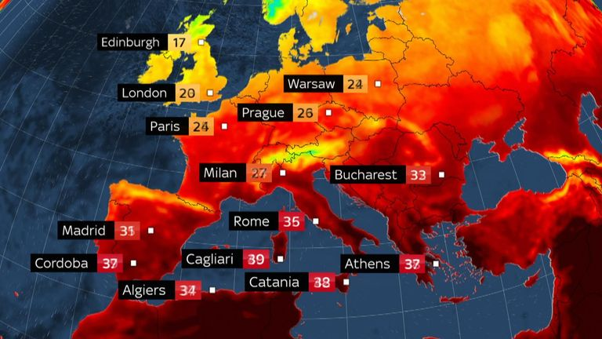
The continent experienced its third major heatwave of the year as rivers began to run low and dry, reactors produced more heat than before while grids found themselves unable to meet the demands that had risen for cooling. And while everything was put to the test, the result wasn’t a single dramatic blackout but a steadily growing revelation on how tightly interconnected and fragile modern power systems have become at the same time.
Table of Contents
- What Actually Happened
- Why Heat Hits Power Grids So Hard
- Who Was Hit Hardest
- The Emergency Response
- Pros and Cons of the Response Measures
- Country Snapshot
- What Comes Next
- Alternatives and Long-Term Fixes
- Conclusion
What Actually Happened
The Mediterranean region began experiencing temperatures pushing past 40°C in several regions in early August, with forecasters even warning highs of mid-40s in parts of Southern Spain and Italy. The region was quick to react, with France placing the majority of its mainland departments under heat alerts while Paris and Brussels ran shorter train schedules to prevent breakdown risk while hundreds of schools also were declared closed early across the region.
And the energy system felt the temperatures the most. On August 4, EDF cut output from roughly 12% of France's nuclear fleet because river water used for reactor cooling had grown too warm to discharge safely and extended a forced outage at one of its Chinon reactors. A single move that left ripples across the industry. Italian spot power prices along with German front-month contracts jumped to record high levels since the past three and a half years on the same day. Similarly, several southeastern European countries formally demanded rationing of Energy with Moldova losing roughly 130 megawatts of supply and drawing emergency power imports to keep itself running sustainably.
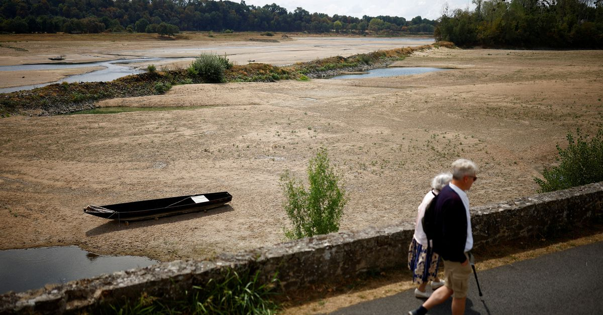
In fact, it wasn’t just France either. Romania’s Cernavodă nuclear plant also underwent a temporary shutdown due to low water levels while Bulgaria's Kozloduy plant began relying on emergency monitoring procedures as river levels hit record lows. And while air conditioning demand kept rising throughout the region, hydropower output experienced greater pressure than before.
Why Heat Hits Power Grids So Hard
The problem with Power Grids doesn’t simply stop at “the weather’s hot, needs more air conditioning”, but it affects the Grid’s working from multiple aspects including:
- Nuclear plants need cool water. Reactors like those in France and Romania rely on rivers for cooling, and both drawing in water and discharging warmed water back are subject to environmental temperature limits. When rivers themselves are hot, plants have to throttle output or shut down entirely.
- Hydropower needs full reservoirs. A dry, hot summer drains the rivers and dams that many countries lean on for flexible generation, right when that flexibility is needed most.
- Transmission lines lose capacity in the heat. Power lines sag and their carrying capacity drops as ambient temperature rises, meaning the same cable can move less electricity on the hottest days.
- Demand climbs precisely when supply is most constrained. Space cooling already accounts for a meaningful share of global electricity use, and every heatwave pushes that demand curve higher, creating exactly the kind of supply-demand mismatch that spikes prices and forces rationing.
Who Was Hit Hardest
The Heatwave in August mainly impacted Southeastern Europe with Bulgaria receiving an emergency 45 million cubic meter LNG delivery from Greece's Depa to stabilize its transmission system’s supply. Emergency reserves were also being used by Moldova for their grids. Amidst these shortages and emergency resources being utilized, Hungary stood out by controlling its demand-side flexibility as a voluntary demand-reduction program stabilized the country’s balance of resources without pressuring towards new generation capacity at all.
The Emergency Response
The European Commission convened its Electricity Coordination Group, gathering experts from member states and regional energy partners to review power supply security as the heat and drought combined. The expert’s assessment assured that there were no short-term adequacy risks but the conditions could remain tight for the coming few weeks. Through the assessment, solar generation had been proven to help reduce price pressures and highlighted the importance of storing the daytime solar surplus into the evening, to support management of cooling loads after the sun goes down.
Transmission operators also had an unusual complication to plan around: an August 12 solar eclipse, which would briefly and predictably cut solar output across the continent right in the middle of the crisis, requiring its own set of contingency measures.
Pros and Cons of the Response Measures
|
Pros |
Cons |
|
Cross-border coordination (LNG transfers, emergency imports) prevented worse shortfalls |
Response is largely reactive, addressing symptoms rather than root causes |
|
Demand-side programs (Hungary) proved cheap and effective |
Not every country has mature voluntary demand-reduction infrastructure |
|
EU-level monitoring caught risks before they became blackouts |
Nuclear and hydro remain structurally vulnerable to repeat heat/drought events |
|
Solar output cushioned daytime price spikes |
Storage capacity to carry that surplus into evening peaks is still limited |
Country Snapshot
|
Country |
Main Strain Point |
Response |
|
France |
~12% of nuclear fleet curtailed; Chinon 3 outage extended |
Continued output limits pending river cooling |
|
Romania |
Cernavodă nuclear plant forced offline |
Temporary shutdown, monitoring low Danube levels |
|
Bulgaria |
Kozloduy plant under emergency monitoring; grid supply tight |
Received 45 million m³ LNG delivery from Greece |
|
Moldova |
130 MW supply shortfall |
Emergency power imports activated |
|
Hungary |
Rising cooling demand |
Voluntary demand-reduction programs |
|
Italy/Germany |
Spot and futures power prices hit 3.5-year highs |
Market-driven price adjustment, EU monitoring |
What Comes Next
The Electricity Coordination Group’s statements are indicating clearly - this wasn’t a one-off but an actual preview of what's to come in the future! Warmer temperatures keep arriving with every heatwave and the infrastructure is being exposed right from river-cooled nuclear plants and drought-sensitive hydropower to heat-sagging transmission lines. And recent measures of moving fuel and managing consumption and demands have helped avert the crisis but also raised alarms for necessary structural changes to achieve larger storages, flexible demand programs as well as adapted Grid designs that don’t necessarily require rivers which stay cool.
Alternatives and Long-Term Fixes
- Battery and pumped-hydro storage — to bank daytime solar surplus for evening demand peaks, reducing reliance on thermal plants exactly when they're most heat-constrained.
- Demand-response programs — paying or incentivizing large consumers to reduce load during peak stress, as Hungary demonstrated at national scale.
- Grid hardening and dynamic line rating — upgrading transmission infrastructure to better tolerate high ambient temperatures.
- Diversified cooling sources for nuclear plants — reducing single-point dependency on river water where feasible.
Conclusion
From a larger perspective, what struck Southern and Southeastern Europe wasn’t just a single failure or heatwave but collapse of smaller vulnerabilities in its system from warm rivers, to dry reservoirs and sagging transmission lines resulting in continent-wide rice shocks and emergency measures. And the system might’ve been stabilized, maintaining itself with coordinated fuel shipments, solar support and demand-management but it has also raised questions towards the long-term suitability of Power Grids and with the continuous rise in temperatures every summer, there is something that needs changing at the pace of these temperatures.
Latest Posts