

Senate Passes Permitting Reform 62-33 With Schumer's Backing
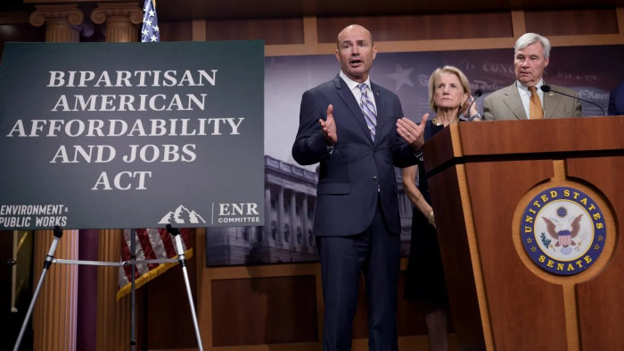
Last week, that reality finally changed as the Senate took powers into its own hands and passed the Bipartisan American Affordability and Jobs Act, known as BAAJA, by a vote of 62-33, a strong majority in Washington for a bill of this stature. And while the bill passed, it was sure to spark conflicts within the Democratic Party and if the current issues were a glimpse, its next destination, the House, may just be hit harder.
Table of Contents
1. The Vote
2. What the Bill Does
3. Who Voted Which Way
4. The Case For and the Case Against
5. Environmental and Tribal Concerns
6. The Road Through the House
7. What Comes Next
8. Conclusion
The Vote
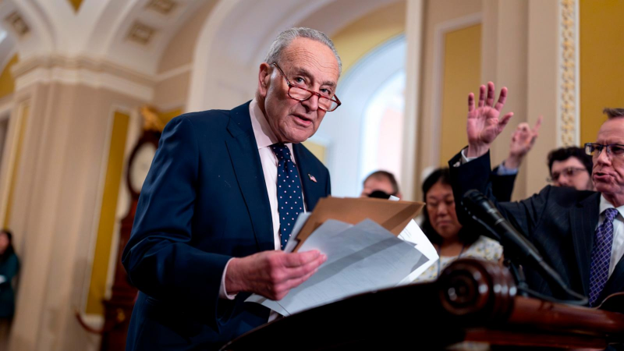
The bill was put to vote and finally gained Senate approval on Thursday following a 62 votes to 33 votes victory. The bill received support from Fifteen members of the Democratic caucus including the Minority Leader Chuck Schumer of New York and independent Angus King of Maine. Those opposed to the bill included two Republicans, Josh Hawley of Missouri and Mike Rounds of South Dakota, along with 31 other Democrats.
BAAJA was written by Republican Senators Shelley Moore Capito of West Virginia and Mike Lee of Utah, working with Democratic Senators Sheldon Whitehouse of Rhode Island and Martin Heinrich of New Mexico. The writers introduced the bill initially on September 30 following a negotiation round with the White House that concluded with the U.S. President Donald Trump’s support. Remarkably, the bill was also titled ‘a bill years in the making’ by Senate Majority Leader John Thune.
What the Bill Does
In its practical form, the bill extends into hundreds of pages outlining the finer details of the plans but at its core, the idea remains simple - Ensure that federal approvals are granted faster while making them more predictable and harder to undo. The bill also applies across multiple construction domains including transmission lines, wind and solar farms, pipelines, power plants, mining and oil drilling, along with housing and roads, a boost towards America’s larger growth and development picture.
|
Area |
What the bill would change |
|
Environmental review |
Faster and more predictable reviews under the National Environmental Policy Act, with one-year deadlines for certain permits |
|
Lawsuits |
Challenges must be filed within 150 days of approval, and only people who took part in the public comment period can sue |
|
Court remedies |
Courts would have less ability to cancel permits found unlawful, and agencies would get set deadlines to fix problems |
|
Transmission |
Broader federal siting authority over certain major power lines |
|
Clean Water Act |
Narrower state water-quality reviews and clearer timelines |
|
Project certainty |
It becomes harder for agencies to reverse permits already issued |
|
Data centers |
Large users would have to pay costs created by their high electricity demand |
Who Voted Which Way
|
Group |
Yes |
No |
|
Republicans |
Most of the caucus |
Hawley, Rounds |
|
Democrats and allied independents |
15, including Schumer, Whitehouse, Heinrich, Coons, Fetterman, Gallego, Hickenlooper, King, Klobuchar, Gary Peters, Reed, Rosen, Schatz, Slotkin and Warner |
31, including Merkley, Wyden, Schiff and Padilla |
|
Total |
62 |
33 |
The bill received a larger positive reception from Democrats, a significant base following the Democrats victory following its midterm gains that has promised it a larger majority in both chambers in January.
The Case For and the Case Against
For the larger picture, the bill received positive acclaim and support across multiple domains and sources while also being termed as an affordability measure that could be defining a legacy by addressing America’s most severe concern. Additionally, the bill also garnered support from giant industry groups like American Petroleum Institute and other renewable developers. Whitehouse, a Democrat, argued that it could also be considered as a climate and clean energy bill because it would speed up transmission and clean power
|
Arguments for |
Arguments against |
|
Faster approvals could lower costs and add energy supply |
Limits on lawsuits and court remedies could weaken enforcement of environmental laws |
|
Transmission reforms could let more clean power reach the grid |
It could speed up fossil fuel projects and data centers as well |
|
Data centers would carry their own electricity costs |
Critics doubt the administration will let renewable projects proceed |
|
It is a rare bipartisan deal with White House backing |
Some Democrats say they could negotiate a better bill when their party gains control of Congress |
However, from the left, the reception was far more critical than accepting. Food & Water Watch even claimed that Schumer voting in support of the bill was in itself enough evidence that he should be stepping down as the group's leader. The Natural Resources Defense Council also highlighted that the bill might present valuable grid reforms but also imposes limits on court remedies as it would imply that a court cannot invalidate a permit on the grounds of review laws being violated.
Environmental and Tribal Concerns
Amongst the most impactful challenges that contest the bill, lies the environmental and tribal concerns that it could present. Senator Jeff Merkley of Oregon while addressing the bill presented his concerns saying that the bill raised basic questions about the country's responsibility to the planet. Citing the efforts that the state had already expended in order to protect and safeguard clean air and water, the tilt toward fossil fuels in recent years, and the potential for new data centers along the possible deficits that follow with each.
Amongst others critical of the bill, Senator Ron Wyden, Oregon also sought to vote on an amendment that would restrict data centers from being built on public lands following the passing of the bill. Amongst Native leaders and advocacy groups, the bill has also presented risks of weakening tribal sovereignty while also putting cultural and sacred sites at risk, both sensitive issues that could become roadblocks in the bill seeking final approval.
The Road Through the House
In the recent past year, the House had passed a similar permitting bill and the BAAJA now knocks on its doors seeking acceptance. As per Roll Call reports, the bill has received permission from Speaker Mike Johnson to pass through his chambers and to some extent, even enough support to clear the votes of the entire house. And while that makes the picture easy to read, it's far more complex than it appears. The Majority Leader Senate has pointed towards the possibility of the bill passing while expressing concerns over whether it would pass as written, a warning that if gets stuck on the technicalities means the bill gets passed back to the Senate.
|
Obstacle |
Detail |
|
Divided Democrats |
Progressives oppose it on environmental grounds; moderates such as Scott Peters back it |
|
Ranking member's doubts |
Jared Huffman of California, who leads Democrats on the Natural Resources Committee, wants changes |
|
Minority leadership |
A spokesperson for Hakeem Jeffries said the bill falls short in several areas and will not be rubber-stamped |
|
Republican concerns |
Some House Republicans object to changes in the transmission and grid reliability provisions |
|
Calendar and attendance |
The lame-duck schedule is crowded and absences have been a problem |
What Comes Next
The bill hasn't received a clear estimate of when it would be announced or put to vote but a date roughly after the Thanksgiving recess appears to be likely. Within the House, arguments have taken place suggesting whether the bill arriving late would play to an unfair advantage as the Democrats could have greater leverage while Heinrich and Whitehouse have argued that there's no reason to wait since regardless of the House’s successful vote, the bill would still await Trump's signature.
Conclusion
The Senate’s vote was a sharp representation of just how easy forming broad coalitions can become when the arguments are centred around affordability, but also a strong reminder that the idea of building faster could have implications and different interpretations in different people. For a majority of its own, the bill became the gateway to unlocking clean power and cheaper energy while for others, it presents a strong challenge towards the legal tools that have long protected vulnerable communities and ecosystems. While the legislation has been drafted and passed at the Senate level, the House's decision would determine whether it proceeds unchanged for Presidential approval, requires changes and gets rewritten or simply begins to await the ascension of a new Congress.
Latest Posts