

Saudi Arabia's Oil Output Falls to Lowest Level Since 1990, Sending Brent Crude Above 107
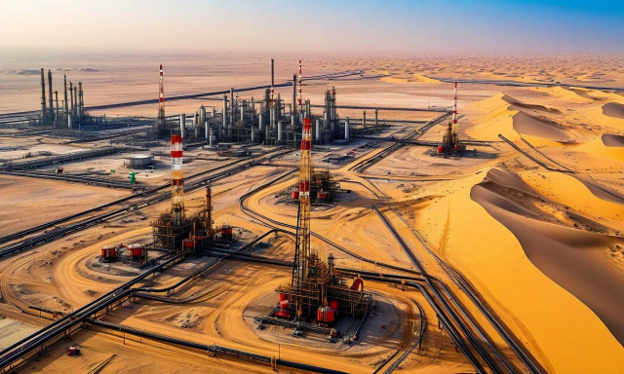
Not because it’s running out of oil or because it has shut its wells and stopped operations, but rather simply because it’s unable to get the extracted oil into ships and sent to countries around the world. And that very distinction, between producing oil but being unable to move it, has begun driving energy markets in a storm that couldn’t have been anticipated a year ago.
Table of Contents
1. The Numbers Behind the Headline
2. Why Production Collapsed So Suddenly
3. Two Chokepoints, Both Under Threat
4. How Oil Prices Reacted
5. The Discrepancy in the Data
6. Who Else Is Feeling the Squeeze
7. What This Means Going Forward
8. Conclusion
The Numbers Behind the Headline
Saudi Arabia informed OPEC’s secretariat that its crude oil production had dropped to 6.238 million per day, a sharp decline of 1.9 million barrels per day in August and an even sharper 23% decline from July. The current tally also marks the kingdom’s lowest reported output since 1990 during the Gulf War. Saudi crude exports fell even more sharply, declining to around 3.1 million barrels per day from 5.1 million in July, marking their weakest level since at least 2013, based on tanker-tracking data. Over the past few months, Saudi Arabia was witnessing increasing demands having produced 7.1 million barrels per day in June before further increasing up to 8.1 million barrels per day in July, and that very trajectory makes this particular drop even more concerning for the kingdom.
Why Production Collapsed So Suddenly
The decline in oil supply from Saudi Arabia is a direct consequence of the escalating conflict between US and Saudi’s neighbour Iran that has spread across the region since strikes began in late February 2026. Riyadh formally attributed the drop to renewed hostilities disrupting its export routes, and the timing lines up closely with intensifying Houthi attacks on Saudi shipping and energy infrastructure. In the past week, over 70 people were injured and major energy sites across Saudi cities were disrupted following Houthi Strikes, including Jazan's roughly 400,000-barrel-per-day refinery.
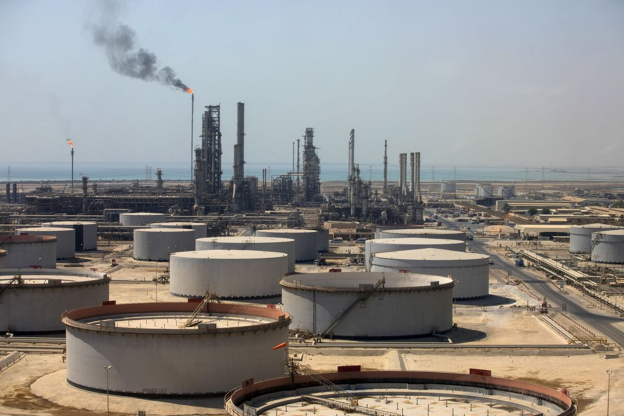
Since the beginning of the US-Iran Conflict, the Strait of Hormuz had remained a major region under conflict and in turn became impossible for the safe passage of oil carrying containers. Saudi Arabia had made attempts to work around this disruption and routed its crude supply through the Red Sea port of Yanbu, but the Houthis have now also implemented a blockade and have been launching strikes against tankers and facilities that attempt to pass through the Red Sea corridor as well.
Two Chokepoints, Both Under Threat
The situation is mainly of genuine importance and gravity, since it marks both export routes as under constraints, something that hadn’t been witnessed in prior Middle Eastern Oil Conflicts and disruptions. And while historically, both these routes served as backups to the other, the current strain over both corridors has left Saudi Arabia with minimal channels of transport, a firm reason that led to disruption in August’s price rise as well as disruption in global oil supply.
|
Route |
Status |
Threat |
|
Strait of Hormuz |
Severely constrained |
Contested between Iran and the US; vessel transits fell to just seven on one recent day |
|
Bab el-Mandeb / Red Sea (via Yanbu) |
Under attack |
Houthi forces claiming a port embargo and striking tankers and facilities |
How Oil Prices Reacted
Once Riyadh and Saudi Arabia had confirmed their figures, the markets reacted promptly with Brent Crude witnessing a 6.3% increase with prices reaching $107.63 per barrel on Thursday, while US benchmark West Texas Intermediate jumped to $102.48, another high for both after the previous spike in May. It was the first time Brent had broken above $100 a barrel since July, and prices continued climbing into Friday as fresh Red Sea tanker attacks intensified concerns about a prolonged supply disruption.
|
Benchmark |
Recent Level |
Note |
|
Brent crude |
~$107–108/barrel |
Highest since May 2026 |
|
WTI crude |
~$102.48/barrel |
Highest since May 2026 |
|
Saudi exports (August) |
~3.1 million bpd |
Weakest since at least 2013 |
The Discrepancy in the Data
While the market was quick to react on the figures, the actual scale of the decline continues to remain in a state of debate. Saudi Arabia’s own reported figures conveyed an output of 6,238 million barrels per day in August, while OPEC’S second source assessment from external analytical firms claimed Saudi’s output was at the 7.276 million barrels per day mark, a figure that wouldn’t be as alarming when month-over-month decrease is considered. Similarly, Tanker-tracking firms also provided slightly conflicting estimates for actual loadings, with Kpler claiming a mere figure of 1.5 million while Vortexa claimed a high of 3.2 million barrels per day in August.
And this raises concerns whether Riyadh and at large, Saudi Arabia is truly witnessing the “lowest output since 1190” or whether that claim is exaggerated, simply based on false reporting by Riyadh to the OPEC. And while various analysts and assessment estimates would vary in the exact figure, they all point towards a genuine and significant decline, a decline that requires attention regardless of the magnitude of the scale.
Who Else Is Feeling the Squeeze
While Saudi Arabia is grabbing headlines for its significant decline in Oil Supply and Production, it’s alone. OPEC has also witnessed a sharp fall across its overall crude output throughout 2026 dropping into the 16-19 million range, a steep drop from the 27.6 million barrels per day in 2025 while also undergoing periods of constant rebound and undercuts. The squeeze is arriving at a particularly sensitive moment for Europe specifically, given the continent's continued reliance on stable Middle East energy flows.
Amongst the most notable events that is bound to impact the energy market distributions, Russia also launched its first shipment from the massive Vostok Oil project in the Arctic, opening a new export route via the Northern Sea Route that Rosneft says could eventually supply the equivalent of roughly 730 million barrels of crude annually, a figure that could quickly reshape the Middle Eastern supply as well as Global Oil Rates and Routes.
What This Means Going Forward
The Current Disruption to Oil Supply being mainly caused by the US-Iran Conflict as well as the Houthi campaign makes it difficult to estimate any prompt or positive resolution to the disruption in the oil market as well. And as long as there is no harmony within the region, Saudi Arabia’s ability to move crude into the market will remain under distress while also binding oil supply around the world. This disruption due to regional escalations that have persisted well throughout the majority of 2026 marks a problem that’s much different than a typical OPEC production cut, and one that cannot simply be resolved through production management or policy implementations.
Conclusion
It’s easy to confuse yourself in headlines that report numbers and ideas like “Lowest since 1990”, but its important to understand this story as a constraint in the ability to supply, instead of constraints on production and output. The two chokepoints that control passage for the majority of the world, the Strait of Hormuz and the Bab el-Mandeb, becoming regions of conflict at the same time was something that Saudi Arabia couldn’t have anticipated and prepared for. While Riyadh might be relieved of it only running out of ways to transport and supply oil, and not struggling to produce it, it continues to remain under pressure until the regional escalations are halted and agreements are unannounced. And until then, the supply is expected to remain interrupted, and the market prices for per barrel are bound to keep rising to prices that the world hasn’t witnessed since the previous war.
Latest Posts