

S&P 500 Posts Best Day Since April as Oil Slides on Easing Iran Tension
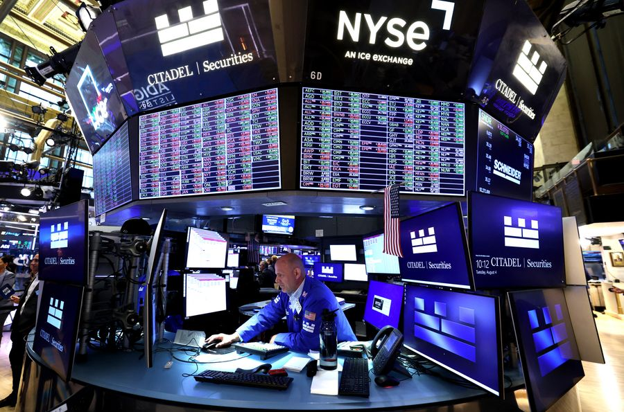
The market movement and surge however remained uneven, with chipmaker AMD rising by about 13% in the market while Nvidia, market’s second most valuable company, reached its lowest close since April following a 4.3% dip in the day.
Table of Contents
1. The Day in Numbers
2. Why Oil Fell
3. A Rebound After a Rough Week
4. AMD Up, Nvidia Down
5. What Analysts Are Watching
6. Conclusion
The Day in Numbers
All three major US indexes rose by more than 2%. The S&P 500's gain of 2.35%, up 173.08 points from Friday's close of 7,376.86, was its largest one-day percentage rise since April 8, when it climbed 2.51%. The Nasdaq Composite advanced 2.74% to 25,253.14, its biggest daily gain since July 30. Collectively, All 11 sectors of the S&P 500 finished higher, with advancing stocks outnumbering decliners by roughly four to one on the New York Stock Exchange. Notably, even after the jump, the S&P 500 remains below its 52-week high of 7,818.93 and is still down about 3% over the past month, a reminder that markets are unforgiving towards weak stretches as opposed to one strong session.
|
Index |
Close |
Change |
Percent |
|
S&P 500 |
7,549.94 |
+173.08 |
+2.35% |
|
Dow Jones Industrial Average |
52,389.75 |
+1,104.02 |
+2.15% |
|
Nasdaq Composite |
25,253.14 |
+673.71 |
+2.74% |
|
VIX volatility index |
20.02 |
Lower |
n/a |
Why Oil Fell
The strongest underlying force driving the markets this week remained Crude. President Trump’s claims on Sunday that ruled new strikes on Iran as unlikely while providing confirmation for encouraging progress in mediatory conversations to end the conflict both remained pivotal factors that created a relaxation for the markets. Following the dip, Oil emerged as the strongest sell-off with the US Benchmark, West Texas Intermediate settled after a 4.4% reduction ending the dip at $86.85 a barrel while the global value of Brent fell by 5.9% to $92.57, a lower level that hadn’t been witnessed over the past few months.
|
Oil benchmark |
Settle |
Daily change |
|
West Texas Intermediate (December) |
$86.85 |
Down 4.4% |
|
Brent crude |
$92.57 |
Down about 5.9% |
In the past week, Brent also dropped about 16%, its steepest weekly fall since the start of the pandemic, while falling from its notable high price of $115 late last month. As a result, US gasoline prices dipped below $4 a gallon for the first time since July. However, analysts continue to advise and practise caution as they await an official confirmation rather than reacting to hopes of a resolution, while attacks on ships near the Strait of Hormuz kept supply fears alive.
A Rebound After a Rough Week
Monday’s market relaxation also arrived following a brutal week that resulted in various stock and indexes plummeting to their worst scores since the past few years.The S&P 500's prior week was its worst since April 2025, and the Philadelphia Semiconductor Index fell more than 12%, mainly driven on worries that a Democratic Congress after the midterm elections could slow the build-out of AI data centres. The fall in Oil prices resulted in an enhanced number of investors buying into the market with the hopes of cheaper energy easing inflation as well as Federal Reserve numbers. Industrials and consumer discretionary stocks rose more than 3% each, and shares of Goldman Sachs and Caterpillar helped lift the Dow. Similarly, The semiconductor index surged close to 7% in the session, reversing a large part of the previous week's drop.
AMD Up, Nvidia Down
|
Company |
Move |
Reason cited |
|
AMD |
Up about 13% to $508.58 |
Oppenheimer upgrade to outperform with a $600 target; selection of its chips by Google Cloud |
|
Broadcom |
Up about 9% |
Sector rebound |
|
Intel |
Up about 4% |
Sector rebound |
|
Nvidia |
Down 4.2% to about $178.67 |
Board investigation into CEO Jensen Huang |
The most striking contrast was within the AI chip sector with AMD gaining the largest following an stock upgradation from Oppenheimer as well as being named as the official chips partner in Google Cloud’s new product announcement. Having faced pressure since the third-quarter report on November 3, AMD’s data-centre revenue has risen by 97% year on year levels while also achieving a predicted revenue growth of 80% by next year.
Nvidia was the only decliner in the semiconductor index. The decline followed Nvidia’s board announcement that confirmed a launch of investigation into co-founder and chief executive Jensen Huang, who according to reports had become connected to a foreign intelligence effort through an unfaithful relationship with a businesswoman. Nvidia’s day close came at its lowest level since April 7, with a predicted loss of $192 billion in market value. Analysts have remained clear, marking the decline as a reaction to the company developments as opposed to considering the decreasing demand as a signal of weak demand for chips.
What Analysts Are Watching
Analysts have already begun to await test results from Tuesday's October consumer price index report while commentators noted that the rally was powered by falling oil rather than lower interest rates, because bond yields did not fall much, leaving growth and technology stocks exposed to a hot inflation number. Reportedly, Fed Governor Christopher Waller is also believed to have planned for a larger rate increase with the idea of AI build-out being unlikely to slow, a stance that continues to reduce the chances of an interest rate cut. According to Wolfe Research, markets are likely to remain highly driven by news and need to hold key technical levels, noting the S&P 500 was trading just above its 200-day moving average.
|
Bullish reading |
Cautious reading |
|
Biggest daily gain in seven months with broad participation |
Weekly decline was the worst since April 2025, so one day is not a trend |
|
Oil and gasoline prices easing |
Oil drop rests on hopes of a deal, not a signed agreement |
|
AI chip demand evidence, such as AMD's data-centre growth |
Nvidia's leadership probe adds uncertainty to the market's biggest AI name |
|
Volatility index back near 20 |
Hot CPI or hawkish Fed comments could reverse gains |
Conclusion
Monday’s market results were a quick reminder on how quickly real-life development and shifts can relax or tense the markets which have remained strained for a long period of time. Stocks witnessed one of their best days over the past seven months, simply due to lower oil prices following a weekend of softer rhetoric on Iran alongside heavy losses of the week. And while it’s crucial to breathe a sigh of relief, the picture isn’t exactly clear just yet with oil’s decline having stemmed from hope rather than an agreement and the market being quickly impacted by the events of giant names like Nvidia. With the inflation data and diplomatic talks set to gain traction over the coming days, markets could quickly signal whether the rally is a turning point from its trajectory or simply a pause before it resumes the falling course
Latest Posts