

Research Finds Hidden Molecular Defect That Could Explain Recurring Flare-ups In Inflammatory Bowel Disease

And researchers from Australia have recently discovered that very instinct could be more biologically grounded than anyone has previously anticipated. So even when IBD appears fully under control, the gut cells themselves may already be quietly primed to break down again.
Table of Contents
1. What the Study Actually Found
2. Why This Challenges the Old Assumption
3. How the Research Was Done
4. What "Primed to Die" Actually Means
5. Why This Could Matter for Patients
6.What This Discovery Doesn't Do Yet
7. IBD by the Numbers
8. Conclusion
What the Study Actually Found
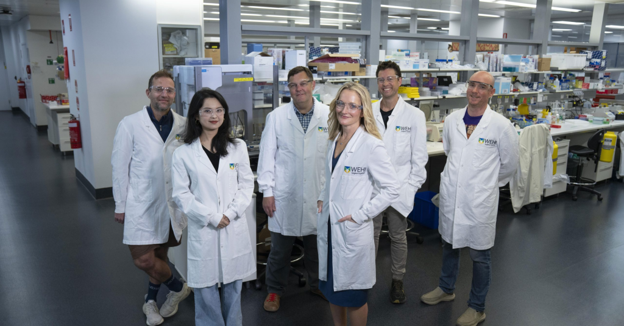
Recent research performed by researchers at the Walter and Eliza Hall Institute of Medical Research (WEHI) and Royal Melbourne Hospital in Melbourne has discovered an insight into the IBD that has deserted researchers over multiple decades. Focusing on studying persistent molecular defects within gut cells of patients diagnosed with the inflammatory bowel disease, the research has turned a cornerstone for IBD research. The findings, published in the journal Science on August 27, 2026, describe the defect as "smouldering", referencing its nature of maintaining itself as a low-level, ongoing vulnerability sitting beneath the surface of what looks, like clinical successful remission.
The researchers discovered that intestinal cells in IBD patients were primed for abnormal cell death, regardless of the presence of patients presenting few or no symptoms at all. Having tracked patients for more than two years, the researchers found that higher levels of this cell-death signaling were associated with a greater likelihood of relapse, suggesting the defect isn't just present during quiet periods, but may actually help predict which patients are more likely to flare next.
Why This Challenges the Old Assumption
For years, with limited knowledge, IBD research assumed cell death was a simple downstream consequence of inflammation, thinking that bowel cell damage and death happened due to the immune system actively attacking the tissue, instead of something being present independently of it. This study challenges that very assumption. When researchers examined gut tissue and identified no active evidence of the disease, they noticed that a cell-death defect was present anyway, suggesting it may be an early driver of the disease process itself, rather than simply a byproduct of visible flare-ups.
Professor James Murphy, a WEHI deputy director and study co-author, chose to describe the research’s unique perspective as describing a shift from the general practice of looking at the clinical problems and focusing on the symptom of severe gut inflammation. Their research, instead, takes another approach focusing on the gut tissue, especially those without active signs of the disease.
How the Research Was Done
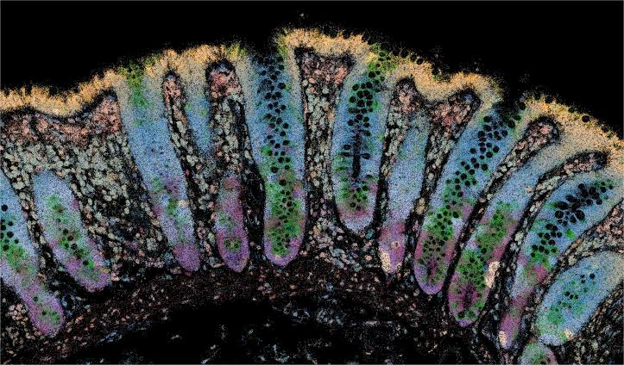
Amongst the premier strengths of the study, lies that fact that it was actually performed on human tissue rather than animal models, which often are poor in replicating how IBD behaves in people. The research team collected around 900 biopsies from 80 people, both with and without IBD, and used those samples to grow patient-derived organoids, which are small, lab-grown "mini-guts" that in turn also allowed the researchers to study the disease directly in human cells rather than inferring it from animal proxies.
What "Primed to Die" Actually Means
The study's title describes what the researchers call a "necroptotic-to-apoptotic signaling axis" underlying IBD, a molecular chain reaction connecting two distinct types of cell death that appears to sit at the root of the disease. Dr. Andre Samson, one of the study's co-authors explained the practical implication of the condition by claiming that once a IBD Diagnosis has been given, it doesn’t go away. Even if the symptoms become reduced, controlled or current treatments minimize its interference, the condition still persists and runs with a risk of relapse or flare up and this very persistence is common across those with active implications of the disease as well as those with simple previous diagnosis.
Dr. Jiyi Pang, another co-author, framed the finding as a foundation by stating "We now have the hallmarks of what underlies disease at the molecular level. Now the next question to discover is to test whether the hallmarks are therapeutically actionable and if they are capable of empowering us with the ability to match treatments to patients with considerations to the molecular level activity and behaviour of the disease to that particular individual.
Why This Could Matter for Patients
IBD, which includes both Crohn's disease and ulcerative colitis, has traditionally been a notoriously unpredictable condition that manifests uniquely from one patient to the next, making it genuinely difficult for clinicians to anticipate who's likely to relapse or respond well to a particular treatment. A molecular marker that tracks with relapse risk, if later developed into a practical clinical tool can enable doctors to identify higher-risk patients before symptoms return rather than reacting once a flare is already underway.
Dr. Aysha Al-Ani, a gastroenterologist and study co-author, framed the long-term goal in terms of what actually matters to patients living with the disease day to day. She stated that the method underlying IBD therapy focuses on reducing the recurrence and severity of flares amongst IBD patients, which should also hopefully result in reduced speed of progression and better quality of lives for the patients.
What This Discovery Doesn't Do Yet
It's important to be clear about what the research has delivered, and what still remains uncovered. The findings haven't led to a new diagnostic test, treatment or drastic change in how IBD is perceived or worked with, but managed to find molecular and biological evidence that measurable defects exist and appear while also reinforcing understanding of relapse risk amongst the patients. In turn, this finding can also direct future research to build toward more refined prognostic tools and therapies that focus on the underlying cell-death process itself rather than only suppressing inflammation once it flares.
Dr. Al-Ani also mentioned that she believes the research will pave the path for new avenues for different prognostic tools, while shifting towards more sophisticated and refined methods, an ideology that hints towards the results being a genuine early-stage, promising finding rather than a clinical breakthrough ready for immediate use.
IBD by the Numbers
|
Detail |
Figure |
|
Australians affected by IBD |
~180,000 |
|
Biopsies analyzed in the study |
~900 |
|
Patients studied |
80 (with and without IBD) |
|
Follow-up period tracking relapse |
2+ years |
|
Journal of publication |
Science (Aug. 27, 2026) |
|
Lead institution |
Walter and Eliza Hall Institute (WEHI), in partnership with Royal Melbourne Hospital |
Conclusion
The findings of this research carry a subtle yet significant sense of assurance, not because it provides a cure or relief but simply validates and supports the feelings that IBD patients have lived with for many years. Researchers have now managed to show, at the molecular level, a real biological foundation for their feelings, a discovery that is bound to impact the way research and treatments shape up in the coming years. And while it may take more research to bring greater changes, the research has laid the first foundation on a disease that has evaded researchers' understanding over multiple decades.
This article is written for general informational purposes and does not constitute medical advice. Anyone managing IBD should speak with their gastroenterologist about their individual treatment and monitoring plan.
Latest Posts