

Nvidia Soars 31% as Its Board Reinstates Jensen Huang as CEO Under Trump Pressure
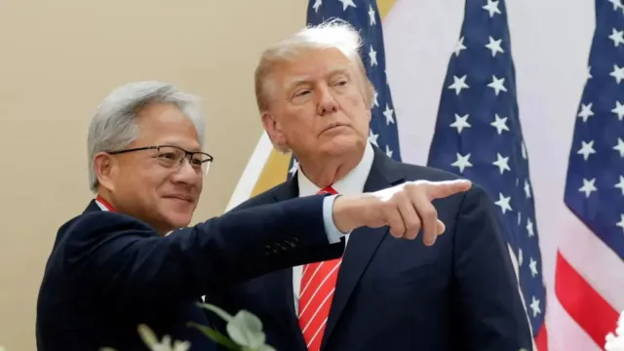
Huang, who had originally founded Nvidia in 1993 and contributed largely into making it the world's most valuable chipmaker, announced his return on Monday, November 23 with promises to start the new term fresh again. In a relief to investors on a historic scale, Nvidia also managed to regain roughly $952 billion in valuation, the largest in history in a single day. But far from the Nvidia boardroom, the American citizens and leaders received a different response, one that raised the bipartisan alarm, expressed determination over a promise of investigations and had a hearing already scheduled on the calendar.
Table of Contents
1. How the Reversal Unfolded
2. What the Board Said
3. Trump's Role
4. The Market Reaction
5. Congress Responds
6. What Remains Unresolved
7. What Comes Next
8. Conclusion
How the Reversal Unfolded
Huang's reversal moved too quickly for the Industry to position itself well. Huang, who had stepped down on November 8 following announcement of his extra marital affair had also been rumored to be involved with a woman whom US officials suspect of working for Chinese intelligence. Having resigned four days after his announcement, Nvidia appointed Chief Financial Officer Colette Kress as the interim CEO, a temporary appointment that had to witness Nvidia's stock plummet to nearly a third of its value from its November 6 close of $186.64
|
Date (2026) |
Event |
|
Nov. 8 |
Huang admits the relationship in a message to employees |
|
Nov. 12 |
Huang resigns; Kress named interim CEO |
|
Nov. 17 |
Board says it does not intend to reinstate him; Nvidia reports third-quarter results |
|
Nov. 22 (Sun.) |
Trump publicly urges the board to rehire Huang; Treasury Secretary Scott Bessent says on CBS that Huang is "on the outside now" |
|
Nov. 23 (Mon.) |
Board unanimously reinstates Huang; stock closes up 31.48% |
Notably, Chair Harvey Jones had recently confirmed the Nvidia board's acceptance of Huang's resignation while also claiming that the board had no plans to bring him back, a reality that quickly changed within a week. Huang on the other hand had always expressed willingness towards the possibility of a return, subject to board approval.
What the Board Said
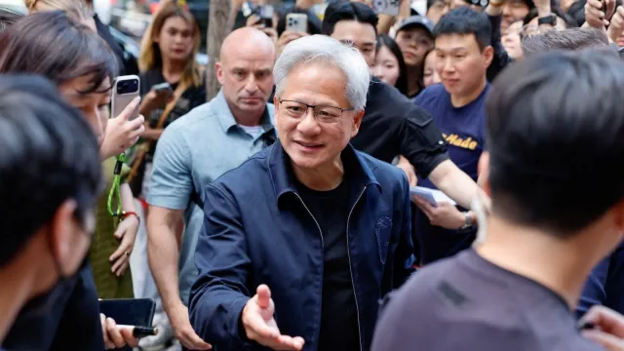
In a filing with the Securities and Exchange Commission, Nvidia said that the board had unanimously voted to reinstate Huang as President, CEO and Director with immediate effect. The filing also claimed that the decision was reached after multiple rounds of discussions that aimed to assess and verify his candor and ability to lead the company for the future. The filing also mentioned that it had received input from senior levels of the United States government and only decided to confirm the decision once it had the confidence that his return would not present any national security risk.
Jones also spoke along the lines of the filing, claiming that the board strongly believed Huang was the right person to lead Nvidia and that his re-appointment was made considering in favor of the best interests of the larger public including stockholders, employees as well as customers. Additionally, Jones also confirmed that he would continue as the Chair while the independent committee that was appointed for outside counsel would also continue their investigations separately till a conclusion is achieved.
Trump's Role
The president's involvement was unusually direct, and accounts of it differ in emphasis.
|
Source |
What it says |
|
Nvidia board |
It received input from senior levels of the US government and acted on its own unanimous vote |
|
President Trump |
He spoke "directly and indirectly" with the board and "convinced" it to act; he told CNBC, "I made the deal" |
|
White House and Trump statement |
Huan’s return would not pose a national security risk based on government investigation findings. |
|
CNN, citing sources |
Trump asked Vice President JD Vance to work with Huang and the board |
|
Semafor |
Trump dialed into a board meeting |
Addressing the reinstatement of Huang, President Trump called Huang a great patriot and a national treasure. Trump also assured that the administration has conducted thorough investigations before providing an approval to Nvidia while also claiming that a failure to re-appoint Huang would have rather led him to work for China.
The Market Reaction
|
Measure |
Result |
|
Closing price |
$165.05, up 31.48% from $125.53 |
|
Intraday high |
Up as much as 36.6% |
|
One-day gain |
About $952 billion in market value, a record for a US company |
|
Best day since |
May 2003 |
|
Trading volume |
About 772.5 million shares, roughly four times the three-month average |
Tuesday's announcement didn't simply soar Nvidia prices but also resulted in increase across Nvidia's suppliers, mainly across Asia. Nvidia accounted for about one-fifth of TSMC's revenue and nearly one-quarter of SK Hynix's last year, and the scandal and resignation had struck those companies the hardest. Glen Smith of GDS Wealth Management wrote that the reinstatement removes a key source of uncertainty from the AI trade, which had been suffering in recent weeks.
Yet the business itself was not the problem. Nvidia reported third-quarter revenue of $115.8 billion, up 103 percent from a year earlier, and raised its outlook for the next quarter above Wall Street's expectations, according to reports.
Congress Responds
The response in Congress was swift and crossed party lines, though Democrats led it.
Democrats:
1. Senate Democratic Leader Chuck Schumer vowed to use Democrats' full power to investigate.
2. Elizabeth Warren, who is poised to chair the Senate Banking Committee, called the move reckless and said Nvidia still owes Congress answers.
3. Ron Wyden said national security is for sale under this administration.
4. Robert Garcia, the incoming House Oversight chair, cited serious national security and corruption questions
Republicans
1. Senator Pete Ricketts said Huang's behavior does not support reinstatement and does not excuse him from testifying.
2. Representative Don Bacon believed that it would’ve been smarter for Nvidia to move on.
3. Senator John Cornyn asked whether the FBI had evaluated the claim of no national security risk.
4. House Intelligence Chair Rick Crawford joined a statement saying the board's review does not erase the national security questions
White House and supporters
1. The administration says its review found no risk and that Huang is exonerated
Warren added that the return makes it more urgent to pass bipartisan export control bills. Representative Raja Krishnamoorthi, a member of the House Intelligence Committee, said it remains unknown what information Chinese intelligence may have obtained.
What Remains Unresolved
Huang might've returned to Nvidia with a clear signal from the administration, but several questions still remain regarding the situation. Neither investigations of the government nor the Nvidia appointed counsel have been done publicly, and the recent government “input” presents doubts and uncertainty as well. In the meanwhile, Warren continues to question his role with the administration while also seeking suspension or reconsideration of Nvidia's export licenses for China and a thorough natural security review before moving ahead for the future.
What Comes Next
As things stand, Huang is scheduled to be questioned by three House committees on December 1, with regards to his relationship and concerns about Nvidia's chip exports. Democrats in the meanwhile, who are set to take control of both chambers in January, have broader investigations in their plans. Huang's return has since been marked with more concerns than cheers, mainly regarding regulatory and political risks that investigations could produce in the near future.
Conclusion
Away from the knits and grits of the corporate world, the stock market in the last two weeks demonstrated how significantly Nvidia’s value was tied to one person and how quickly the market value could take away and return. The board and the government provided similar statements crediting Huang as the right leader to take Nvidia forward, yet the speed of the reversal, and the open role of the White House have shifted conversations from matters of corporate reversals to national security and political influence at the same time. And those questions would not be resolved with market numbers or positive developments, but by investigation results and how Nvidia responds when it's put to the test.
Latest Posts