

Norway's King Harald V Dies at 89 His Son Becomes King Haakon VIII
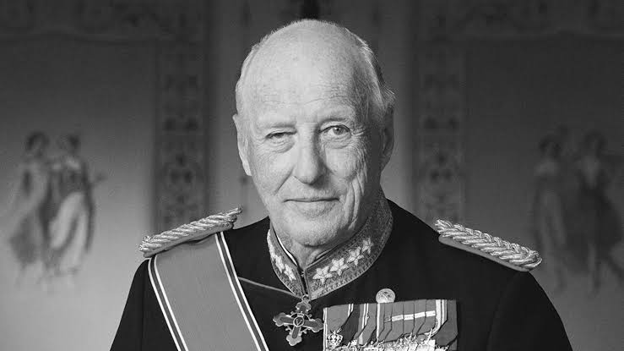
Table of Contents
1. What Happened
2. Glimpse Into King Harald’s Life
3. The Immediate Succession
4. What Comes Next: Oath, Mourning, Funeral
5. A Line of Succession Reshaped
6. A Monarchy Navigating Recent Scandal
7. Reactions From Around The World
8. Conclusion
What Happened
On Friday, August 28 at 6:35 a.m at the Oslo University Hospital’s Rikshospitalet, King Harald V passed away at the age of 89, after having reigned as Europe's oldest monarch for a period of just over 35 years. The Royal House of Norway announced in a statement, that the King’s health had declined sharply in the preceding days, before being hospitalized for a blood disorder that caused fluid buildup in his body, which later also developed into an infection. With the passing of King Harald V, his 53-year-old son immediately became King Haakon VIII without any necessary appointment, interim period, or ceremony required to trigger the transition as described by Norway's constitutional monarchy, one that never wants the position to sit empty.
Glimpse Into King Harald’s Life
King Harald’s life began in 1937, in Asker, near Oslo, while being born with the distinct honor of being the first Norwegian prince born on Norwegian soil since 1370. His life is more notably described more by wars, rather than his term on the throne. Norway in 1940 was invaded by Nazi Germany, when King Harald was at the tender age of three years old, forcing his mother to flee with him and his two sisters, first to Sweden, then by boat to the United States, while his father and grandfather went into exile in Britain alongside Norway's government-in-exile.
Following the death of his father, King Olav V, King Harald ascended the throne in 1991, and was officially consecrated at Trondheim's Nidaros Cathedral in June, in a ceremonial celebration following Norwegian traditional practises. Soon after his reign, Norway witnessed an oil-and-gas-driven economic boom that enabled Norway to gain financial wealth while King Harald led Norway towards a Monarchy-style that placed a symbolic role for the King while keeping the political power with Norway's elected parliament, the Storting.
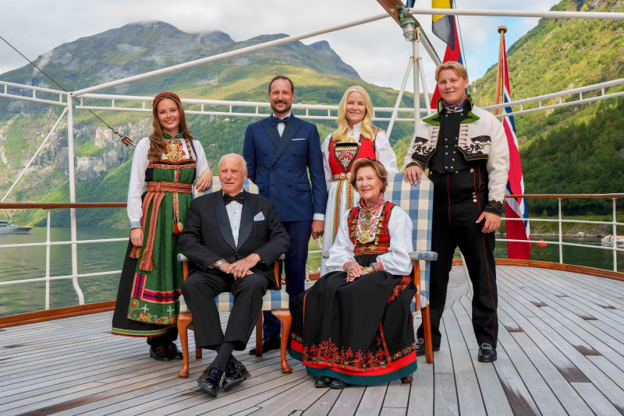
King Harald was also known for defying the practice of drawing potential brides from European nobility, and chose to marry Sonja Haraldsen, a long-time sweetheart and a commoner in 1968, a decision that brought him widespread support and position amongst the locals. Today, Harald leaves behind Queen Sonja, his wife of 57 years, along with two children and five grandchildren.
The Immediate Succession
Crown Prince Haakon became King Haakon VIII at the exact moment his father died, a standard practice and defining feature of Norway's monarchy. Unlike other monarchies around the world, mainly in contrast to that of Britain, Norwegian practice doesn’t involve any vacancy, notice period or separate coronation ceremony to formalize his ascension to the throne. Similarly, Haakon's wife, Mette-Marit, becomes Queen Consort, and the Norwegian Royal House's official website has already been updated with her new portrait to reflect the change. With his first public remarks as monarch, King Haakon paid tribute to his father in an emotional addressal that resonated the deep grief and touching connection shared within the royal family.
What Comes Next: Oath, Mourning, Funeral
King Haakon VIII on Tuesday, September 1 is scheduled to take a solemn oath before the Storting, pledging to govern Norway in accordance with its constitution and laws, the only formal practice that binds a new Norwegian monarch into his role. Currently, the Norwegian government has declared a period of national mourning running from Harald's death until after his funeral, without a clear timeline of how long the mourning period could last.
Memorial services honoring King Harald are being held at locations across Norway, separate from the eventual state funeral, which Prime Minister Jonas Gahr Støre has said will take place in the week of September 7. King Harald's body will lie in state in the Palace Chapel beforehand, allowing members of the public to pay their respects.
A Line of Succession Reshaped
Harald's death also quietly reshapes who stands next in line for the Norwegian throne. His granddaughter, Princess Ingrid Alexandra, now becomes heir apparent. Notably, her becoming the Heir Apparent makes her the first woman to hold that position in Norway in roughly 600 years, a reflection of Norway's shift to absolute primogeniture, where the eldest child inherits regardless of gender.
|
Position |
Before Harald's Death |
After Harald's Death |
|
Monarch |
King Harald V |
King Haakon VIII |
|
Heir apparent |
Crown Prince Haakon |
Princess Ingrid Alexandra |
|
Queen Consort |
— |
Mette-Marit |
A Monarchy Navigating Recent Scandal
King Haakon inherits the throne at a genuinely difficult moment for Norway's royal family. The Queen Consort, Mette-Marit's past contact with the late convicted sex offender Jeffrey Epstein was recently brought to light, bringing an uncomfortable negative spotlight onto the royal family. Soon after, King Haakon's stepson and Mette-Marit’s son from a previous relationship, Marius Borg Høiby was convicted of rape and domestic violence charges and consequently sentenced to four years in prison. A police investigation is also currently opened towards former Prime Minister Thorbjørn Jagland on suspicions of corruption.
And while none of these disputes directly involved the newly ascended King Harold, they weigh heavy on his shoulders as he begins his reign in the midst of real institutional strain alongside the personal grief of losing his father while trying to manage a monarchy that has already been strained between maintaining stability and navigating scandals.
Reactions From Around The World
King Harald’s passing quickly garnered tributes from around the world with Europe's remaining royal houses being the first to offer their condolences. Britain's King Charles said his family was mourning "a friend whose kindness, compassion and deep sense of duty echoed from across the sea and across the decades." Denmark's King Frederik and Queen Mary remembered Harald as "a fine man with a twinkle in his eye and a big heart." Norwegian Prime Minister Jonas Gahr Støre said simply that "a whole nation is in mourning," describing Harald as a figure who "helped us to see the best in ourselves — and in one another." Tributes weren't limited to political and royal circles. Norwegian national soccer team captain Martin Ødegaard posted his own condolences, describing Harald as "a wonderful king and a wonderful man with whom we all felt a close bond."
Conclusion
King Harald hasn’t simply reigned over Norway for thirty-five years like a typical Monarch, but has instead built the nation into a steady, symbolic center while establishing himself as the only Norwegian king that they could remember or connect with. What added greater significance in his journey was the fact that he built a legacy on a time when monarchs held no real political power, but built purely on mutual trust, respect and deep gratitude for each other. King Haakon VIII takes his oath next week not as a formality, but as the first real marker of what kind of monarch he intends to be, a test his father has always prepared for him to be ready for.
Latest Posts