

North Korea's Kim Jong Un Oversees Missile Launch, Pyongyang Claims Uses AI to Evade Defenses
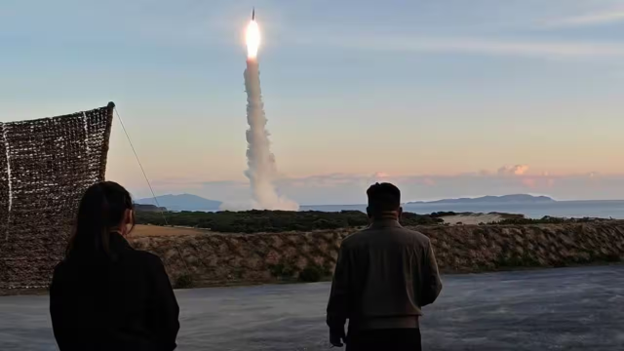
At the same time, South Korea’s Joint Chiefs of Staffs (JCS) promptly identified the launch originating from the eastern coastal Wonson area while estimating the missile had travelled over 700 kilometers (435 miles). The missile test arrives at a period of strain and concern in the region, following landmine blasts that recently occurred in late September, once again raising questions regarding North Korea’s missile threats and tension over the region.
Table of Contents
1. What North Korea Launched
2. The AI Claim
3. The Backdrop: Landmine Blasts on the Border
4. The AI-Guided Claim and its Genuineness
5. North Korea's Missile Program in Context
6. Key Facts at a Glance
7. Conclusion
What North Korea Launched
South Korea's Joint Chiefs of Staff reported detecting a single ballistic missile launching from the Wonsan area around 6 30 am local time on Saturday, October 3 which it tracked for over 700 kilometers before landing in waters outside Japan’s exclusive economic zone, a destination that was confirmed by the Japan Defense Ministry. South Korea’s military refused to believe that it was truly a short-distance missile but rather made claims that it was a longer-range weapon that had been tweaked to maintain a short-distance trajectory.
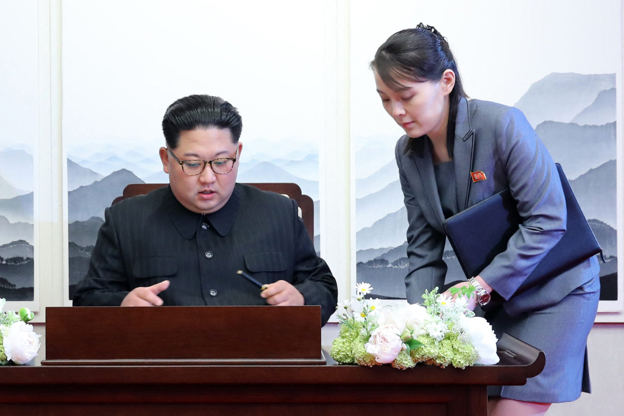
Kim Yo Jong, the sister of Kim Jong Un and a senior Workers' Party official, claimed that the missile launch was a regular strategic weapons drill that was focused on testing the efficiency of an intermediate-range missile with the North Korean Leader Kim Jong Un personally overseeing the entire operation. KCNA, North Korea’s broadcaster also provided a report on the matter while quoting the North Korean leader’s addressal of his troops that included him claiming they had "fully demonstrated their professional qualifications and counterattack posture," while also claimed that the North Korean military knew the exact coordinates of its landing, highlighting developed precision and confidence in the recent Pyongyang test. Reports believe that the weapon could be another addition or a part of the hypersonic strategic weapon system within Pyongyang while also nudging towards the possibility of such an low-altitude trajectory change missile being a part of North Korea's Hwasong-16Nahypersonic intermediate-range ballistic missile.
The AI Claim
During her addressal regarding the missile launch, Kim Yo Jong claimed that the missile was capable of altering its flight path at low altitude in what she described as a “wave-like” trajectory while further adding weight to the test by claiming that the ability to alter its flight path made the missile impossible to intercept while crediting unspecified artificial intelligence capabilities for enabling such extents of technical advancement within the missile-context.
Following the launch, reports from Japan’s Defense Ministry had reported an estimated distance of 680 miles covered by the missile while South Korean military’s reports predicted an estimate of more than 700 kilometers, a gap that Kim Yo Jong accredited as evidence that the missile had maneuvered its path outside original estimate to avoid being tracked or intercepted. She further pressed upon the ‘failure’ from both Japanese and South Korean military of tracking the missile from their actual origins while also claiming that they would continue to fail until North Korea relied upon the current “wave-like” trajectory.
The Backdrop: Landmine Blasts on the Border
The timing of the missile launch has gained greater attention, with the test occurring in the midst of rising tension over landmine explosions near the Korean border. On September 21, 2026 approximately 10 meters south of the military demarcation line separating the North and South Korean borders, mines were detonated while injuring three South Korean soldiers. Additionally, the missile launch also occurred just after Kim Yo Jong’s dismissal of South Korean demands that the North apologize for the mine blasts.
The AI-Guided Claim and its Genuineness
Based on the current developments and research in the field of Missile-Guidance, Artificial Intelligence hasn’t yet enabled weapons or missiles to become truly “impossible to stop”, but it definitely has made it easier for missile to use an adaptive path while making it difficult for defense systems to track and predict a missiles existing flight path, And with the lack of exact evidences over North Korea’s AI or technology being used, the claims remain claims for the time being. However, Pyongyang’s claims of their weapons being low-altitude and maneuvering their flight profiles remains consistent with their previous features that it has utilized in other weapons.
North Korea's Missile Program in Context
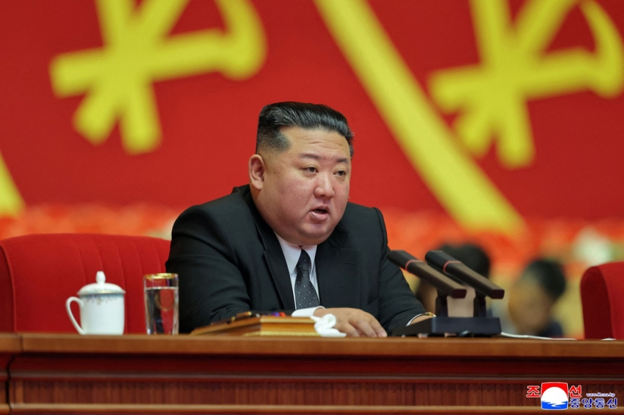
The North Korean leader Kim Jong Un has repeatedly been observed participating and overseeing missile launches over the last two years, having been previously present for tests of cruise missiles, hypersonic intermediate-range ballistic missiles and short-range systems. The United Nations Security Council Resolutions have reportedly barred North Korea and its weapon programs from conducting ballistic missile launches or nuclear tests, a ruling that has repeatedly been ignored in Pyongyang in recent years. Despite receiving sanctions and pressures from the United Nations as well as the United States for their claims, North Korea has emphasized upon the practices being “hostile policy” while suggesting the two parties to drop requests of denuclearization as a precondition for talks.
Key Facts at a Glance
|
Detail |
Figure / claim |
Source |
|
Launch date |
Saturday, October 3, 2026, approx. 6:30 a.m. local time |
South Korea's JCS, via UPI |
|
Launch site |
Wonsan area, North Korea's eastern coast |
South Korea's JCS |
|
Flight distance (South Korea's estimate) |
More than 700 km (435 miles) |
South Korea's JCS |
|
Flight distance (Japan's estimate) |
About 680 km |
Japan's Defense Ministry |
|
Missile type claimed by Pyongyang |
Intermediate-range strategic ballistic missile, tied to hypersonic weapon system |
KCNA / Kim Yo Jong |
|
Claimed special capability |
AI-assisted, low-altitude "wave-like" trajectory to evade defenses |
Kim Yo Jong |
|
Who oversaw the test |
Kim Jong Un |
KCNA |
|
Context |
Follows Sept. 21 border landmine blasts that wounded three South Korean soldiers |
Associated Press |
Conclusion
The October 3 Missile Test by North Korea is another addition to the two elements that Pyongyang has repeatedly relied on, a display of military capacity, handled directly by Kim Jong Un as well as the claims of holding a technological edge, in this case Artificial Intelligence showcasing that the weapon cannot be reliably intercepted. The South Korean military has refrained from confirming the AI claims while the discrepancy over the exact range of the missile remains debatable as well. With the launch taking place in the midst of growing tensions over the region alongside standoff in talks with Washington, the North Korean approach and practice of weapon testing looks unlikely to change soon. South Korea's military has not confirmed the AI claims, and the discrepancy between Seoul's and Tokyo's flight-distance estimates remains unresolved.
Latest Posts