

Nepal-Tibet Glacier Flash Floods A Disaster of Rising Deaths and Roughly 2,500 People Missing
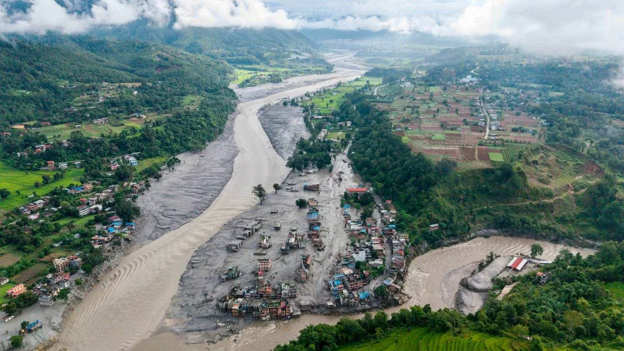
Five days has passed since, and rescue teams are still pulling bodies from the mud, rescuing people from flooded regions, while thousands of families sit with the uncertainty of ever meeting their lost loved ones or having a chance to rebuild their homes once again.
Table of Contents
1. What Happened
2. What Triggered the Collapse
3. The Toll, Region by Region
4. The Foreign Nationals Caught in the Disaster
5. The Rescue Effort Underway
6. Why This Keeps Happening in the Himalayas
7. How This Compares to Past Himalayan GLOF Disasters
8. How to Help
9. Conclusion
What Happened
At around 8:40 a.m in Nepal on Wednesday, August 26, a series of flash floods and mudslides erupted across a roughly 45-mile stretch of the Trishuli River, striking villages and towns across Nepal's Rasuwa, Nuwakot, Dhading, Gorkha, Tanahun, Nawalparasi, and Chitwan districts. The surging mix of water, ice and rock struck the border into Tibet, destroying the Gyirong Port Complex, the hub for trade and tourism between Nepal and China. The debris from the impact flowed further ahead up to 150 miles, as far as in the Indian territory.
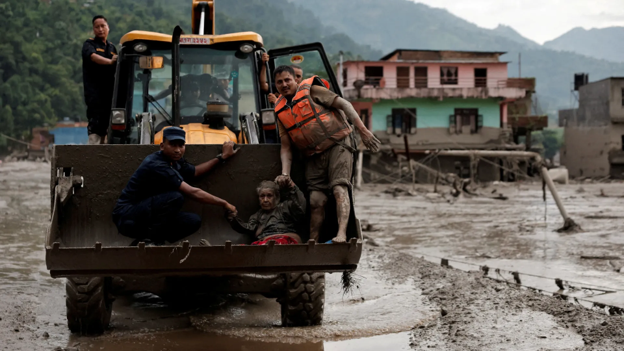
Aftermath images obtained through drone footage showed erased roads, buildings drenched in mud and ground floors entirely hurried under water. The impact also destroyed vehicles, many of which were found crushed and half-submerged. Survivor Accounts claimed that the water came in like a wall, without any warning or sign, allowing only a few panicky moments to get to higher ground and secure their safety.
What Triggered the Collapse
The disaster began high in the Himalayas, near Langtang Lirung inside Nepal's Langtang National Park. Satellite imagery reviewed by scientists shows that a large section of glacier broke away at an elevation of roughly 17,000 feet, then fell nearly 3,900 feet down the mountainside while carrying rock and sediment in its stride. That debris avalanche got dumped into Lhende River in Tibet, which created excessive pressure on the natural dam and broke through, resulting in a catastrophic flood downstream. The event was initially registered as a magnitude 4.4 earthquake, but the US Geological Survey was quick to revise the event not as an earthquake but the shockwave from the landslide itself, with a 5.2 magnitude.
The Toll, Region by Region
The numbers across the region have climbed sharply, in the days since the flood struck, and search teams continue efforts to clear debris fields and reach communities that were cut off entirely in the disaster's initial hours.
|
Region |
Confirmed Deaths |
Missing |
|
Nepal |
At least 734 |
Roughly 2,498 |
|
Tibet Autonomous Region, China |
At least 16 |
Roughly 546 |
|
Combined |
750+ |
~3,000 |
Nepal's National Disaster Management Authority has reported that at least 7,514 people have been rescued so far, including 227 foreign nationals, with 219 injured individuals having received treatment and discharged from medical care. The region is also witnessing distressed communication lines, and officials have been careful in not accounting the “missing” figures into the dead count, hoping they are simply unreachable at the moment.
The Rescue Effort Underway
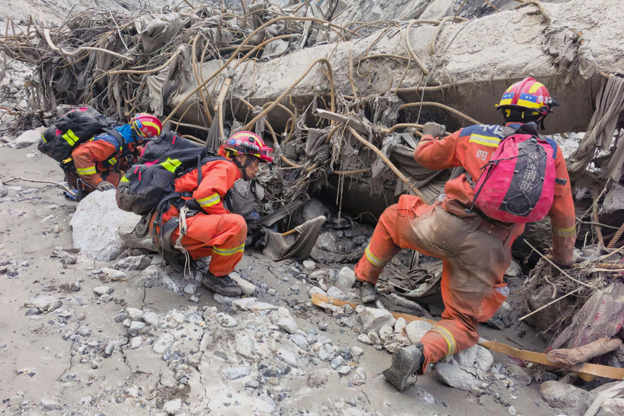
Nepal has promptly invested substantial resources as well as personnel to help deal with the situation. Prime Minister Balen Shah, during his addressal this week, claimed that security forces have rescued at least 573 people by helicopter alone, with additional aircraft on standby, and that more than 13,295 security personnel have been mobilized for search and rescue work including roughly 7,250 from Nepal Police, 4,200 from the Nepal Army, and 1,845 from the Armed Police Force. Displaced residents from Rasuwa, Nuwakot, and Dhading are being relocated to safer ground, with temporary shelter arranged in schools and public buildings for an estimated 3,500 people so far.
However, these efforts have also experienced disruption with both Nepal and China being forced to temporarily suspend rescue operations at multiple instances over fears of secondary flooding, especially due to ongoing instability in the debris left behind by the initial collapse, a firm reminder that the first flood receding doesn’t take away the possibility of danger from the region.
Why This Keeps Happening in the Himalayas
Scientists are being careful in correlating this event as a direct result of climate change. The conscious choice of practising caution is based on a well-established pattern: the Hindu Kush Himalaya region is warming considerably faster than the global average, and the number of glacial lakes across the region has grown past 25,000 as ice retreats. Alton Byers, a senior research associate at the University of Colorado Boulder, has described how the region's high-altitude permafrost (mixture of frozen soil and rock that has effectively held these mountainsides together for millennia) is thawing in ways that enhance the magnitude of such catastrophic slope failures, primarily due to the tumbling ice and rock mixing with loosened sediment and becoming a fast-moving slurry.
How This Compares to Past Himalayan GLOF Disasters
Glacial lake outburst floods, often called GLOFs, are a recurring and worsening hazard across the Himalayan region, and this week's outburst is more significant for its magnitude and level of impact.
|
Event |
Location |
Deaths |
Missing/Displaced |
|
August 2026 Nepal-Tibet floods |
Nepal, Tibet border |
750+ |
~3,000 missing |
|
August 2025 Tibet glacial lake overflow |
Nepal-China border |
9 |
Bridge and infrastructure damage |
|
2023 Sikkim GLOF |
India |
14+ |
100+ missing |
|
2016 Gongbatongsha GLOF |
Tibet/Nepal border |
Multiple |
Highway, hydropower plant destroyed |
The region had also witnessed a similar disaster roughly one year earlier, in August 2025 where a Glacial lake in Tibet overflowed amid high temperatures, causing nine casualties while also damaging a bridge connecting China and Nepal. In hindsight, the previous incident appears as a warning sign for the larger disaster that followed this year while also raising questions for it repeating in the future.
How to Help
Nepal's disaster response is currently being managed through its National Disaster Management Authority alongside the Nepal Army, Nepal Police, and Armed Police Force. The flood-stricken region is also receiving support from International aid organizations with an established presence in Nepal, including the Red Cross and UN agencies, who are actively involved in mobilizing relief for displaced families. Contacting any of the established relief organizations working directly in the affected districts while checking their socials for their plans and movements could be a wiser route for providing support instead of sending goods or funds informally into the region.
Conclusion
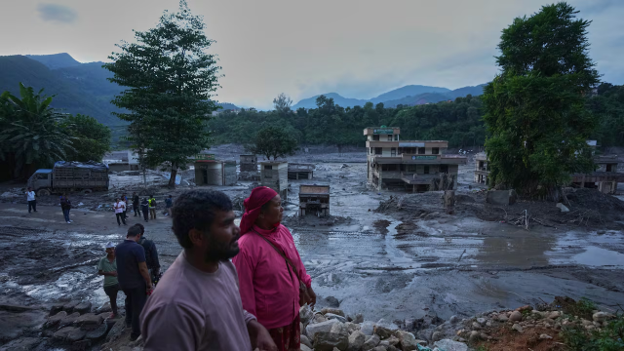
Nepal’s current situation is somewhere being described in numbers with hundreds dead, thousands missing and tens of thousands displaced from their ancestral homes and somewhere else being lived by families in Rasuwa, Nuwakot, and Dhading, standing outside what's left of their homes, waiting for a name on a rescue list are currently going through. Search teams continue their maximum efforts, clearing debris and managing the counts of those missing while also assisting those that have survived, but a larger question looms upon the region and citizens of Nepal. How much more of such warnings can Himalaya produce and how many such instances can the Nepalese resist, within the near future? Questions that, for now, remain unanswered.
Latest Posts