

Microsoft Quarterly Net Profit Surges 31% to 35.8 Billion
The company posted a record quarter that wasn’t just a strong number, or a tough growth record to beat - it was a statement that their rivals simply couldn’t compete with the investment and planning that was already in place!
Microsoft experienced a positive rise of 31% year-over-year in their net profit along with revenue climbing 18% to newer heights to a record tab of $90 billion, comfortably ahead of the $87.62 billion projected by the market giants at Wall Street. And while the tech world would focus on the benchmark of Microsoft’s net profit, Azure’s annual revenue crossing $100 billion for the first time is a silent sign that newer benchmarks are sure to be set very soon.
Table of Contents
- The Headline Numbers
- What Drove Microsoft’s Growth
- Business by Business Breakdown
- Microsoft vs. Google vs. Meta
- What It Means Going Forward
- Conclusion
The Headline Numbers
For the quarter ended June 30, 2026 — the fourth quarter of Microsoft's fiscal year 2026 — the company reported:
- Revenue: $90.0 billion, up 18% year-over-year
- Net income (GAAP): $35.8 billion, up 31%
- Operating income: $40.6 billion, up 18%
- Diluted EPS: $4.81, up 32% on a GAAP basis
- Operating cash flow: $55.4 billion
- Microsoft Cloud revenue: $59.3 billion, up 27%
Yet, that’s not even the whole picture. Total accountancy of the full fiscal year in Microsoft would showcase $331.8 billion in annual revenue, $133.7 in net income along with diluted EPS of $17.95 - each value experiencing a steep rise of roughly 18-32%. And for a company the stature of Microsoft, that level of growth doesn’t come this quick or easy, but a robust and well-planned AI Infrastructure ensured assured returns on investment.
What Drove Microsoft’s Growth
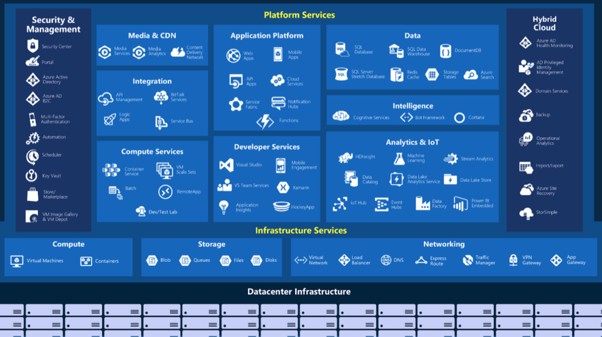
A detailed analysis of Microsoft’s sectoral developments in this quarter brings us to a clear number - a 43% growth and increase in earnings for Azure and other cloud services! Enterprises around the world have raced against time to deploy AI within their frameworks instead of piloting and going through experiments, and Microsoft’s Cloud Infrastructure has assured them of being in safe hands.
Microsoft’s CEO Satya Nadella framed the company’s quarter growth as a reflection of how companies think about AI economics, explaining the company’s focus on pushing the “cost-to-outcome curve” for clients to ensure they can turn their AI usage into measurable business returns. The statement didn't solely emphasize on the revenue, but two silent milestones that can never be forgotten - Azure surpassing $100 billion in annual revenue and Microsoft 365 Copilot crossing 30 Million paid seats, a reflection of how AI tools are slowly becoming everyday, paid-for workplace habits in enterprises.
Commercial remaining performance obligation — essentially, contracted revenue Microsoft hasn't recognized yet — rose 84% to $678 billion. And this number isn’t simply a financial value garnered from purchases of Azure and Copilot for this quarter, but a clear display of faith and investment in Microsoft’s future plans and development, potentially in the range of hundreds of billions of dollars in future spending.
Business by Business Breakdown
Microsoft reports results across three main segments, and this quarter, the pecking order shifted.
|
Segment |
Q4 FY2026 Revenue |
YoY Growth |
Notes |
|
Intelligent Cloud (Azure) |
$39.3 billion |
+32% |
Reclaimed the top spot after several quarters behind Productivity |
|
Productivity and Business Processes |
$37.8 billion |
+14% |
Microsoft 365 commercial revenue up 16%, seats up 6% |
|
More Personal Computing |
$12.9 billion |
-4% |
Continued to lag, as expected from prior guidance |
For many years and even recent weeks, Productivity and Business Processes have been the driving force behind Microsoft but this quarter has silently experienced a stark change! Intelligent Cloud - Azure and the AI Workloads that are working along it have quickly established themselves as the company’s new frontrunners driving revenue as well as plans for the future!
Microsoft vs Google vs Meta
If you’ve been thinking that Microsoft’s numbers aren’t as significant as their hype, you’re about to be proved wrong! Although the Alphabet and Meta also reported their earnings around the time, the difference amongst the three tech-giants is one for the history books! Meta’s shares fell after its results were below expectations, with free clash flow dropping more than 90%. Alphabet, on the other hand, also reported negative cash flow, its first since going public. And while it’s no secret that all three giants have been heavily investing in the AI sector, only Microsoft has been able to translate its spending into revenue while others are left wondering where they are going wrong while patiently awaiting their turns.
What It Means Going Forward
It’s easy for investors and tech-enthusiasts to be captivated by the quarterly revenue, however what’s important is to focus on the spending and investments as well! Microsoft’s AI infrastructure spending has jumped nearly 71% year-on-year to $41 billion in the quarter, a sign that this growth and revenue hasn't come cheap. The company has consistently bet enormous sums on the notion that AI demand will keep climbing at a pace at least similar and hopefully greater than their investment rate. And if the quarter profit is any indication,their bet is paying off very well!
And while many would believe that it’s only a matter of time before a sector with 71% year-on-year investment would give in to the meek growth of 18% in revenue, Microsoft continues to enjoy better valuations. Within the markets, Microsoft’s shares rose modestly during regular session, and continued their steep climb in the after-hours trading, a stark contrast to its rivals - Alpha and Meta who experienced a decline in their valuations at the same time.
Conclusion
At some point, numbers do start to feel abstract, $90 billion, $35.8 billion, $678 billion in future contracts but what’s clear to conclude is Microsoft’s brilliance. Microsoft took an early expensive gamble on cloud and AI infrastructure and kept investing time and again while fighting skepticism with calculative assessment and steady progress in the digital world. This quarter’s returns were just a glimpse of the rewards that they’ve been working hard to garner for many years! Whether the momentum holds on depends on whether enterprises keep converting AI Experiments into actual, paid tools at the pace Copilot’s 30 million seats suggest. For now, Microsoft’s profits have delivered a clear verdict - the AI Spending boom isn’t just an investment, but a prolific business.
Latest Posts