

Lula Wins Unprecedented Fourth Term in Brazil Runoff, 51.8% to 48.2%, as Flvio Bolsonaro Says He Won't Accept the Result
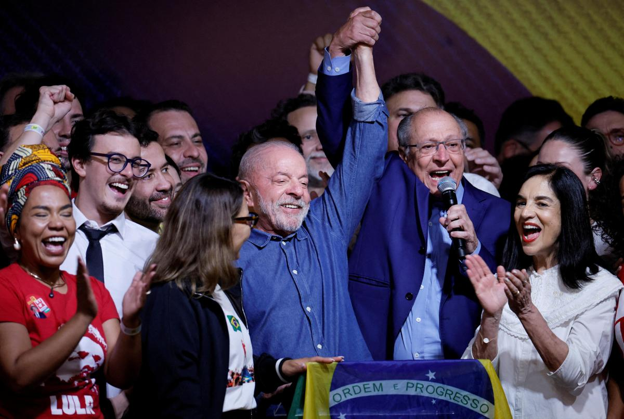
A number that might not seem that different but consists of a margin of more than 4.4 million votes. The results took a large majority of the Brazilians considering Luiz Inácio Lula having successfully recovered and reversed a first-round deficit, a feat that no other Brazilian candidate had managed since 1985. The result also jolted the Brazilian financial markets, a sharp majority of which was also betting on a Bolsonaro victory. Notably, shortly after the results were announced, Bolsonaro announced to his supporters that he could not recognize the outcome and plans to demand the courts to annul the vote, a move that has quickly begun another dramatic chapter in Brazilian politics.
Table of Contents
1. The Result in Numbers
2. From First Round to Runoff
3. Election Day: The Voting Extension Dispute
4. Bolsonaro's Response and the Legal Position
5. Reactions: Markets, Parties and Governments
6. What Happens Next
7. Conclusion
The Result in Numbers
Following the official completion and counting of all polling sections, the Superior Electoral Court in Brazil announced that the leading candidate Lula, 80 had amassed 64,256,232 votes, or 51.79% of valid votes while running from the left-wing Worker’s Party (PT). Additionally, the court also announced that his opponent, Bolsonaro, 45 contesting from the conservative Liberal Party (PL) had in turn succumbed to defeat with 59,826,041 votes, or 48.21% of the valid votes. With a sharp gap of 4,430,191 votes, Lula had clearly emerged victorious while securing his place for another term as the leading face of Brazil.
Notably, this also marks Lula’s another consecutive victory with an improved run off share of roughly nine-tenths of a percent over his opponent Jair Bolsonaro as compared to their previous clash in the 2022 presidential runoff four years ago. Following his victory, Lula is due to take office on January 5, 2027, with his appointment extending until 2030. Across the different regions of Brazil, Flávio Bolsonaro held onto the predicted lead in the states of São Paulo and Rio de Janeiro while Lula captured lead in both state capitals, which largely provided him with strength in voters to reverse the first-round result in the city of Rio.
|
Candidate |
Party |
Votes |
Share of valid votes |
|
Luiz Inácio Lula da Silva |
PT |
64,256,232 |
51.79% |
|
Flávio Bolsonaro |
PL |
59,826,041 |
48.21% |
From First Round to Runoff
The election results received a critical response as the first round that was conducted on October 4 had projected a slightly contrasting outcome. The first round had observed Bolsonaro finishing first with a 47.03% of valid votes to Lula's 45.16%, a gap that consisted of a lead of 2.2 million votes and forecasted a closely fought encounter during the runoffs. Prior to the election rounds, Flávio, the eldest son of former president Jair Bolsonaro had been announced as the lead running candidate for the runoff. Throughout the campaign, both sides heavily emphasized on social issues such as cost of living, crime and corruption as forefront concerns for the opposing party with Lula warning that a Bolsonaro government would reduce welfare spending and instead shift Brazil closer to US policies, i.e those of the US President Donald Trump.
|
Stage |
Lula |
Flávio Bolsonaro |
Leader |
|
First round, October 4 |
45.16% |
47.03% |
Flávio Bolsonaro |
|
Runoff, October 25 |
51.79% |
48.21% |
Lula |
The turnaround was unusual enough to be called historic in Brazilian political reporting. Since 1985, no first-round runner-up had gone on to win the runoff until Lula’s win on Sunday.
Election Day: The Voting Extension Dispute
The disputes that now surround the results and election outcomes initially began on the election day itself. During the election dates in Brazil, the southern region which consists of a large priority of right leaning voters experienced heavy storms and flooding, in turn impacting the voter turnout as well as accessibility in various regions. As a response, Bolsonaro’s campaign committee requested the TSE to make additional considerations for the 17 affected municipalities across São Paulo, Paraná and Santa Catarina by providing an additional limited two-hour extension for more voters to reach the polling booths.
On another account, Supreme Federal Court Justice Cristiano Zanin without consulting the full electoral panel, decided to announce an order extending voting nationwide until 7 p.m. The TSE noticed the ambiguity in the Justice’s decision and paused vote counting during the period while the Liberal Party also claimed that its monitors had been removed from counting areas. Following the results, Bolsonaro protested against the outcome which the electoral court responded with assurances that the extension in voting duration did not change the outcome of the election while also emphasizing on Bolsonaro's own campaign being the one requesting grant of additional time in the affected towns.
Bolsonaro's Response and the Legal Position
Addressing his supporters following the result declaration in Brazil, Bolsonaro was observed claiming that the results were unacceptable, especially considering how the election events had unfolded while confirming his plans to pursue legal action in an attempt to annul and repeat election results. Addressing the change of rules mid-vote, Bolsonaro claimed that the social party had indulged in unprecedented abuses of political and economic power prior to the official elections. Flavio’s brother Eduardo Bolsonaro was also observed urging foreign governments to be patient while requesting them to not recognize the result in itself.
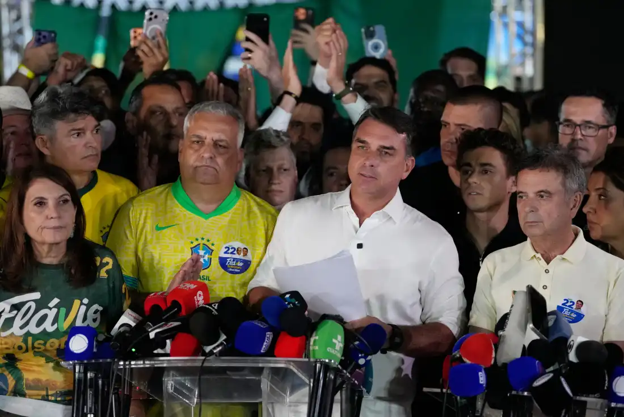
Within the legal threshold, the actual legal course is more difficult than being currently claimed. Bringing challenges to voting counts or outcomes before the electoral courts often requires documented proof that some irregularity or disruption played an influential part over the outcome of the election, a challenge that has neither been proven or evidenced for in the past few days. With a sharp margin of several million votes, the election result being successfully annulled remains a difficult feat while the possibility of investigations over pre-election social spending as well as allegations about the process continue to be levied by the losing council.
Reactions: Markets, Parties and Governments
The election results were a surprise, mainly within the Brazilian markets that had positioned themselves for a Bolsonaro win and in turn had to sell their assets to avoid excessive damage for its positioning. Lula would rejoin office in January with the country’s looming substantial public debt concern plaguing the headlines while the Liberal Party also looks set to form its largest bench in the Congress. Lula was quick to receive congratulatory posts and messages from leaders across Latin America. Notably, the Trump administration has consistently upheld their critical purview of Lula with the US State Department also being attributed to lead a campaign to help return the Bolsonaros to power, a subtle glimpse of power politics in action.
What Happens Next
As things stand, The Superior Electoral Court (TSE) looks set to continue with its standard procedures and formally certify Lula's election, with diplomas for winners due by December 19 while the official inauguration ceremony would be held on January 5, 2027. In the meanwhile, Bolsonaro continues preparing his legal recourse and petitions, yet being able to provide evidence of high standards as well as to generate a ruling in their favor appears to remain a huge challenge. Now whether the coming months observe an increase in disputes surrounding the results or simply reduce down to critical reception of the victory is something yet to be observed in the coming months.
Conclusion
Lula’s victory is quite a remarkable achievement in itself, a 80-year-old president who has successfully served his nation for three consecutive terms returns with a sharp majority to secure another term especially after overcoming a first-round deficit and a wider margin than in 2022. On the other side, the losing candidate simply refuses to concede as opposed to his party who has already accepted the count and began drawing plans for the future. The Brazilian courts have clarified that what remains contested amidst legal controversies is merely a narrative, instead of a contested result with the coming weeks being the deciding factors of whether the dispute changes into a countrywide divide driven by the opposition party or simply remains an element of the 2026 Brazilian Elections.
Latest Posts