

London Clears First Autonomous Robotaxis for Commercial Streets
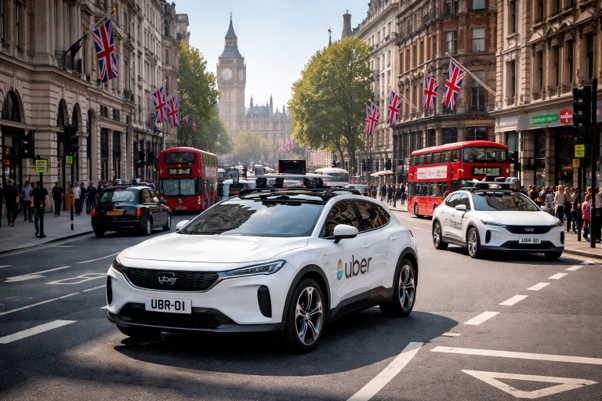
Over the past eight weeks, Uber received more than 100,000 sign-ups for a chance to book one of the first self-driving vehicle rides once the service is officially deployed later this summer.
And while that’s everything to be excited for, it’s important to be precise, since the idea of a “Robotaxi” could carry many assumptions, with the majority being much further away than what TfL actually approved this week.
Table of Contents
- What TfL Actually Approved
- The Important Nuance: Supervised, Not Driverless
- How Wayve's Technology Differs From the Competition
- The Race for London's Streets
- Public Interest and Union Pushback
- What Happens Next
- Conclusion
What TfL Actually Approved
The Approval from TfL revolves around its “triple-lock” requirement for private hire operations in London, the need for the booking operator, the driver as well as the vehicle, to each hold a valid license issued by the same authority. Uber already held its private hire operator license and this week’s license grant to the 15 Wayve’s modified vehicles fills the remaining piece, with the only remaining requirement - the accompanying driver to hold a valid permit as well.
TfL in its approval remained extremely cautious and reiterated on a single point - the vehicles have been approved as licensed PHVs, and not as “automated vehicles”. And while many would consider it a mere technicality, it has immense value. The PHV license asserts that the cars are being approved and integrated within London’s existing taxi and private hire framework, where a human driver must always be legally responsible as well as present for every trip, rather than classifying it into the separate category of driverless operation. TfL also mentioned that it would continue monitoring deployment and would immediately intervene, if it felt that passenger safety was being compromised.
The Important Nuance: Supervised, Not Driverless
This is definitely the technical detail that many would quickly skim past in the approval’s headline. As per TfL’s approval conditions, every trip must have a licensed private hire driver sitting in the driver's seat, present to supervise and provide support to the car when necessary, and with full power to gain manual control of the steering wheel if needed. The vehicles may drive themselves under normal conditions, but a human must remain legally and physically positioned to intervene at any moment necessary.
It’s also important to not confuse these with the fully driverless robotaxi services that are already running across parts of the U.S but it’s worth knowing why. Wayne and Uber have a separate, non-binding agreement with automaker Stellantis, which was announced at London's MOVE 2026 conference in June and moulded specifically at eventually deploying Level 4 fully driverless vehicles. I.e cars capable of operating without any human oversight within a defined set of conditions. And this week’s license doesn’t exactly translate to the final destination, but can be considered a crucial first step in a long journey of maturing technology as well as regulatory framework across London.
How Wayve's Technology Differs From the Competition
Wayve’s Technology follows a mapless and LiDAR-free system, using six exterior cameras and radar as compared to the dense, pre-built high-definition maps and laser-based sensors that most of its competitors utilize in their systems. Waymo, a competitor that also began testing on London roads in April 2026, runs a considerably more sensor-heavy platform and is focusing towards its own commercial launch later this year.
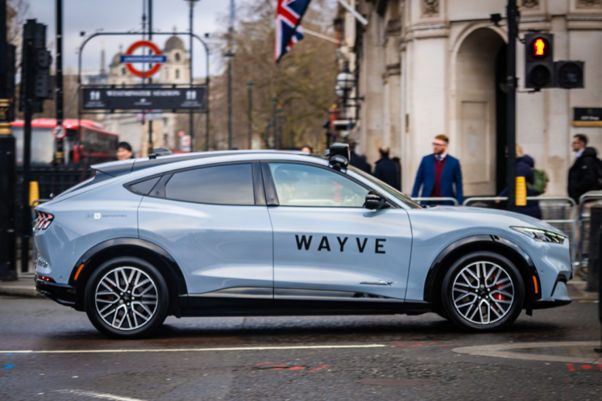
And the two giants are definitely racing for deployment while the debate towards their contrasting approaches catches traction in the autonomous vehicle field. Wayve’s approach of adapting to current terrains makes it more suitable to new cities and changing road layouts, without the massive cost of upfront mapping investment that Waymo’s approach requires. On the contrary, Waymo’s heavy-sensor technicalities blended with its pre-built maps leave lesser chances for error and enable it to focus greater precision throughout its regular functioning. And regardless of whichever approach turns out to be more reliable and widely acknowledged across the industry, London becoming the first market where mapless systems are utilized for paying passengers is set to become shockwaves in itself.
The Race for London's Streets
Uber and Wayve’s Approval this week focuses on making them the first, if not the only one racing for deployment on the London streets. Waymo has also been testing in London since April 2026 and working toward a commercial launch later this year. Similarly, Chinese autonomous driving company Baidu with its Apollo Go robotaxi service is also gearing up to enter the London markets. And if both of them manage to pull through, London is set to become the most competitive robotaxi markets, especially with three distinct technological approaches each operating within its city in the same year.
Public Interest and Union Pushback
The public interest in these developments has been evident with over 100,000 people joining Uber’s interest list in just eight weeks ahead of actual deployment, a huge number when you consider there have been zero actual deployments till date. However, the move has also received significant pushback from the GMB union, the representative union of London’s private hire drivers with a genuine concern that has long surrounded every autonomous vehicle rollouts, what happens to the livelihoods of professional drivers as the technology scales further, and perhaps even in the current state where a trained driver is necessary in every vehicle.
What Happens Next
Uber will soon begin to select members across its 100,000-plus sign-up lists and accept booking reservations for its 15 currently licensed vehicles. And while all companies would race to gain approval and keep up with both Uber’s developments as well as the UK government’s accelerated regulatory timeline, what remains a doubt is which operator manages to come out on top with their unique technology. And perhaps the destination isn’t also simply commercial deployment but the race to obtain an actual approval for driverless operation, without the mandate of a safety driver being required at all times.
Conclusion
TlF’s approval in London marks a real first step but also a carefully monitored, planned and bounded one. As things stand, Uber and Wayve have to comply with the guidelines, supervised trips, 15 licensed vehicles, a licensed human in every ride and a grant within the current private hire framework rather than a newly-designed driverless category. The bigger story is where the final motives lie, a driverless network of automated vehicles, backed by $1.5 billion in funding and some of the biggest names in the technology and automotive industrial domains. London looks set to officially witness the first impression of this carefully planned ambition, and whether the city is able to seamlessly integrate these automations while also progressing towards complete automation in the distant future, is something that awaits them in the future.
Latest Posts