

Israelis Vote in First General Election in Nearly Four Years as Early Projections Show No Clear Winner
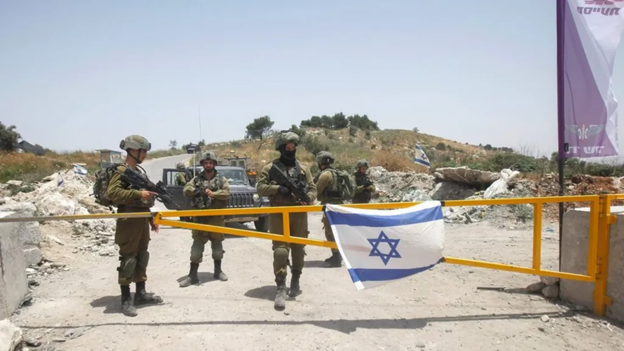
At the time of the polls closing at 10 pm, local Israeli time, exit polls broadcast across multiple channels claimed that neither Benjamin Netanyahu's bloc of right-wing and ultra-Orthodox parties nor the opposition bloc led by former military chief Gadi Eisenkot had managed to achieve the 61 seats needed to achieve the majority over the 120-seat Knesset. As the votes continued to count overnight, the momentum kept swinging between the two men and as a result,a prolonged period of coalition bargaining might be inevitable following the official result announcements on November 4.
Table of Contents
1. Why This Election Was Held
2. Election Day and the Exit Polls
3. The Main Players
4. What Each Side Is Saying
5. Paths to a Government
6. What Happens Next
7. Conclusion
Why This Election Was Held
Israel underwent electoral votings for the first time since 2022 with the general election becoming vital following extended periods of strain and disagreements within the reigning Prime Minister Netanyahu's governing coalition. The coalition was experiencing constant turmoil since May 2026, a period that involved constantly growing momentum for dissolution of the parliament as well as led to the formal dissolving of the Knesset on July 17, 2026. Within this duration, Israel had been slowly experiencing a distressed background filled with war, regional security concerns as well as dramatic protests on the cost of living as well as the future direction of the country. Throughout the electoral period following the disruption, Eisenkot whose party is Yashar has consistently campaigned on the notion that the government had lost public confidence and required change for a better future.
Election Day and the Exit Polls
The voting extended until 10 pm Israel time Tuesday, following which polling stations were asked to report their exit polls. Channels 12 and 13 were amongst the first outlets to publish their projections claiming a marginal victory of the Eisenkot's leading with 52 seats while Netanyahu’s bloc succumbed to defeat with 50 seats while on the contrary, the pro-Netanyahu Channel 14 projected 60 seats for the current prime minister’s coalition as against Eisenkot’s 43 seats. While vote counting continued overnight, updated projections began to shift momentum towards Netanyahu with Channel 12 revising its projections to 52 seats for the coalition bloc as against 49 seats for Eisenkot while another pollster projected Netanyahu's bloc at 51 to 52 seats and the opposition bloc at 49 to 51, with Likud being observed as the largest party. The poll projections also placed the Arab parties at roughly a combined total of 18 seats while early counts from 15 polling stations showcased Likud having secured about 26.5% of votes while Eisenkot's bloc placed second at about 19.3%, figures that could quickly conflict with the actual national result.
The Main Players
|
Figure |
Party |
Position after the exit polls |
|
Benjamin Netanyahu |
Likud |
Says right-wing parties won a decisive majority among the Zionist and Jewish public; calls for a right-wing government; cautions that these are only exit polls |
|
Gadi Eisenkot |
Yashar! |
Says the results show a lack of confidence in Netanyahu and his government |
|
Bezalel Smotrich |
Religious Zionism |
Dismisses opposition claims that the polls amount to a defeat for the bloc |
|
Yair Golan |
Democrats |
Tells supporters the public has "fired" Netanyahu |
|
Naftali Bennett |
Own party |
Told supporters Netanyahu has lost; exit polls gave his party 12 to 13 seats |
Notably, several smaller parties including those being led by Winter and Hendel have been estimated to fall short of the electoral threshold, an outcome that could be silently influential over the outcome of the election as it could potentially result in wasted votes which could’ve otherwise been determinants of majority for either bloc coalitions.
What Each Side Is Saying
While making an addressal at an election-night event in Jerusalem in the early hours of Wednesday, Prime Minister Netanyahu was quick to claim that Likud was clearly the largest party while arguing that the right-wing bloc had a clear majority among Jewish Israelis, a claim that remarkably chose to exclude roughly one-fifth of the electorate who are Arab citizens. While Netanyahu might’ve stopped just short of declaring an outright victory, his opponent Eisenkot left no stones unturned and urged the prime minister to accept defeat and step aside, a suggestion that was quickly downplayed by the Netanyahu camp. The disagreement comes down to arithmetic. Netanyahu's allies point to Likud's lead as the biggest single party and to the strength of his bloc among Jewish voters, while the opposition points to the loss of his previous governing majority. And with the possibility that both those statements are factually accurate at the same time, the election results could still largely swing in either party's favor!
Paths to a Government
|
Scenario |
What it requires |
Obstacles |
|
Netanyahu forms a right-wing government |
Reaching 61 seats by adding votes from small parties or if final counts shift his way |
Exit polls place the bloc around 50 to 52 seats |
|
Eisenkot-led coalition |
61 seats, likely requiring support from Arab parties or defectors from the right |
Arab parties and parts of the opposition disagree on cooperation |
|
Broad or unity arrangement |
Cooperation across blocs |
Deep personal and political hostility |
|
Another election |
Failure to form a government within the statutory deadlines |
Voter fatigue and cost |
With the votes fairly closely divided, observers and analysts have described stalemate as the most likely outcome which could result in Netanyahu continuing as the caretaker prime minister while the Knesset would convene with an opposition-led balance.
What Happens Next
The official election results are expected to be announced by November 4, following completion of vote counting from soldiers' ballots and special votes which can well influence the poll results by fine margins. Following the outcome, the president would consult with the party leaders and equip one lawmaker with the authority to form a government while clearly outlining a timeline for the same. As the final count moves closer, every vote right from those coming from thresholds and surplus-vote agreements between parties as well as the votes by the mix of Arab and Jewish individuals would all present significant influence over the election results with the possibility of seats being decided by the last votes and outlining the plausible path of achieve 61 votes of majority for a clear victory.
Conclusion
Until the election results have an official announcement on November 4, the current election results have produced an outcome that can neither be classified as a victory, nor be understood as a step forward. Current Prime Minister Netanyahu has largely indicated that he has the largest party, yet Eisenkot has presented a strong fight limiting his opponent from winning but also falling marginally short himself. Israel’s election outcome currently hangs by a thread while the coming weeks are predicted to be filled with negotiation and maneuvering to decide whether the country receives a new government or simply enters another round of deadlock.
Latest Posts