

Israeli Army Imposes Curfew on West Bank Town Amid Siege of Palestinian Families
The exact cause of this remains unknown and perhaps is still something to discover in the coming weeks but it’s certain that the torment is far from being over without official interventions, an intervention that might not be as simple as it seems.
Table of Contents
- What Happened in Qusra
- How the Siege Began
- The Curfew
- Two Accounts of the Same Operation
- The Human Impact
- International and UN Response
- How This Fits a Wider Pattern
- Timeline at a Glance
- Conclusion
What Happened in Qusra
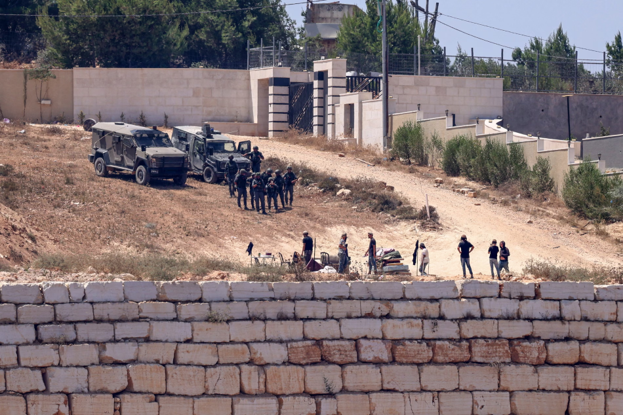
Qusra, a small town south of Nablus in the northern occupied West Bank was raided by Israeli forces on August 13. A curfew quickly followed with local shops and businesses being shut closer and heavy movement across the city according to multiple eyewitness accounts. The raid follows what locals describe as a four-day siege of three Palestinian homes on the town’s outskirts, in the region known as Ras al-Ain.
The three Palestinian homes were reportedly placed on house arrest, unable to leave or receive visitors and also cut from receiving supplies of food, water or even medicine. One Palestinian rights commission also claimed that occupiers had cut water and electricity lines to the homes and obstructed deliveries of food, water, and medicine, warning the situation could develop into a longer campaign meant to force the families out entirely.
How the Siege Began
According to Palestinian officials, the roots of this specific standoff go back roughly four months, to repeated attempts to establish an outpost in the Ras al-Ain area — land valued for its elevated, strategic position overlooking the surrounding area. One commission said attempts to raid and seize the homes led family members to take turns staying inside them just to prevent the properties from being taken over.
The more immediate flashpoint came the weekend before the curfew, when, according to reporting, Israeli settlers set up a tent and temporary structures among Palestinian homes in the area, and surrounded three houses starting that Sunday, cutting the families off from the outside world.
This is not the only recent flashpoint in the wider area. Days earlier, in the nearby village of Tell, Israeli forces demolished the home of Farouk Ramadan, a Palestinian man killed on July 24 while, according to reports, confronting an attack by settlers on his village — a separate incident, but one that's been cited locally as part of the same rising tension.
The Curfew
On August 13, a curfew was implemented followed by troop deployment that included wide mobilizations of infantry, military vehicles as well as bulldozers, a substantial sight according to majority eyewitness accounts while also leading to closure of businesses and travel limitations for the locals in the region. Local activists were quick to react and were observed gathering goods and water supplies near the site the very next day, in attempts to provide the supplies to the besieged families while being obstructed by soldiers blocking the access road.
Two Accounts of the Same Operation
Palestinian officials and rights monitors have described the events as a siege carried out by settlers, with the army's raid and curfew being an attempt to halt or worsen the developments rather than allowing a hopeful resolution while asserting that Israeli forces have effectively occupied Palestinian homes and are using them as makeshift military posts. One local commission alleged that Israeli forces had seized sixteen Palestinian homes in Qusra and turned them into military posts.
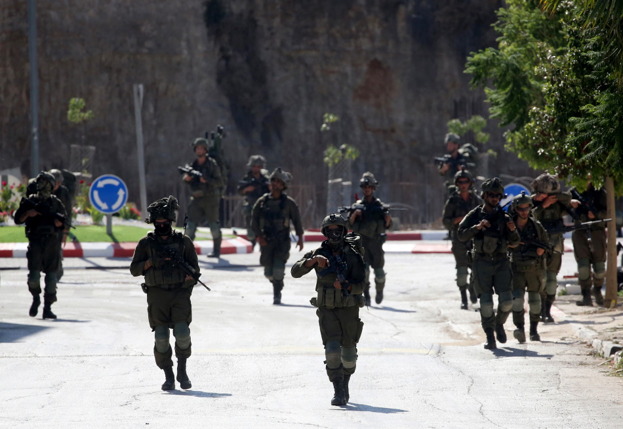
Israeli military sources, by contrast, have described a different operation claiming it as an attempt to end the settler encampment, instead of enforcing it. According to that account, troops ordered several Palestinian families to evacuate as part of an operation intended to remove a settler outpost from the village, while the army said it was deploying forces to protect residents and prevent further serious incidents. Families reportedly resisted those evacuation orders.
The Human Impact
The report and conditions for the families trapped in Qusra are being shared by their relatives who are far from Qusra, but connected to the besieged homes. A relative from Toledo, Ohio described to a US network about his family house,being on a hilltop his relative had been cut off from water and electricity in order to vacate and capture the residence. Similarly, many Palestinian families across the West Bank maintain ties and sometimes ownership, across the diaspora, meaning a local land dispute could be playing out in phone class to other relatives all across the world.
International and UN Response
The UN’s human rights office, OHCHR, has appealed directly to Israeli authorities seeking help to free Palestinian families that were trapped in their homes by settlers for days in their intense campaign to seize the land. The UN has also placed the Qusra situation within a broader pattern that they’ve been noticing across the West Bank, with extended military closures affecting refuge camps in Tulkarm, Nur Shams, and Jenin, which has lead to displacement of over 34,000 Palestinian refugees since the first military operation back in January 2025.
How This Fits a Wider Pattern
The United Nation’s monitor and rights group have been documenting frequent settler-related incidents across the West Bank while Israeli military operations continue across refugee campuses further up north. While Qusra wasn’t an isolated incident that raised question marks, it could become a template for the right ways to resolve such standoffs, either through negotiated de-escalation, military intervention against the outpost, or a prolonged siege and will likely shape the future of such disputes unfolding in the region for the months ahead.
Timeline at a Glance
|
Date |
Event |
|
~April 2026 |
Repeated attempts reported to establish a settler outpost in Ras al-Ain, Qusra |
|
July 24, 2026 |
Farouk Ramadan killed in nearby village of Tell while confronting a settler attack |
|
Sunday, Aug 9, 2026 |
Settlers reportedly surround three Palestinian homes in Qusra |
|
Aug 11, 2026 |
Israeli forces demolish Ramadan's home in Tell |
|
Thursday, Aug 13, 2026 |
Israeli forces raid Qusra, impose curfew, order shops closed |
|
Friday, Aug 14, 2026 |
Activists attempt to bring supplies to besieged families; families still confined |
Conclusion
The current sequence of events are simple, a curfew has been imposed on Qusra while three Palestinian families were isolated and restricted from movement or having visitors while global bodies have now taken a stand being alert. What’s yet to be clarified is who bears responsibility for this siege and what was the actual goal for it to happen. A settler-outpost removal, military’s own framing or extension of the pressure campaign being used by Palestinian officials while the UN monitors. A truth that remains to be unraveled once the tension recedes over the region.
Latest Posts