

Israel Announces Plan To Hand West Bank Settler Policing to New Civilian Police Force
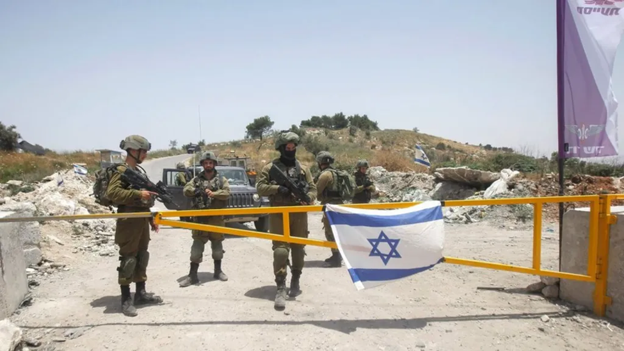
While both the perceptions focus on Israel's defense minister directive to draw up a plan moving responsibility for policing Israeli settlers in the West Bank from the military to a dedicated civilian police unit, the actual underlying mechanism as well as gravity of this move is unique in its own ways!
Table of Contents
- What Was Announced
- The Immediate Trigger: Qusra
- How the Announcement Is Being Read
- Who Said What
- Why the Legal Framing Matters
- What Happens Next
- Timeline
- Conclusion
What Was Announced
On Friday, August 14, Israeli Defense Minister Israel Katz instructed the IDF to prepare a plan transferring all civilian law-enforcement authority over Israeli communities and residents in the West Bank from the military to the Israel Police. He followed up on his announcement on Monday, August 17, providing a timeline of two weeks for the IDF to present that plan while framing it as “a matter of institutional role clarity”. Israel Katz also argued that the police already perform civilian enforcement across the State of Israel, while reiterating the notion that the military is best focusing on counterterrorism rather than indulging in matters of civil policing.
The West Bank has been under Israeli military administration since 1967, meaning the IDF has traditionally held authority over law and order there, including for Israeli residents of settlements. Police jurisdiction inside Israel proper and military jurisdiction in the occupied territory have functioned as two separate systems; and this plan would move a significant piece of the second system into the first marking a significant structural shift for the region. According to Katz's office, the Defense Ministry indicated the police would establish a dedicated new force specifically to handle these civilian matters, rather than folding the responsibility into existing police units.
The Immediate Trigger: Qusra
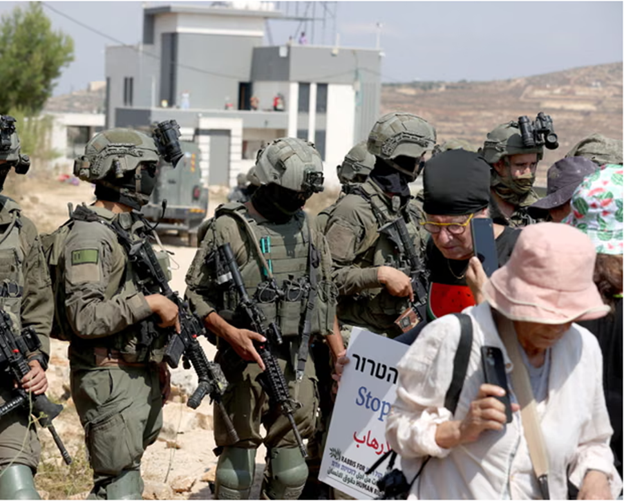
The announcement and handing over to the New Civilian Police Force can be considered as a consequential result of direct criticism of the military’s handling of the days-long standoff in the West Bank town of Qusra, where Israeli settlers surrounded three Palestinian homes and imposed curfew which brought the forces under public spotlight and scrutiny. Katz himself pointed to that episode as the proximate cause, stating that the army's role is to combat Palestinian terrorism, and not focus on chasing hilltops or interfering with civilians daily lives, a reference to the loosely organized young settlers often blamed for outpost-related violence.
How the Announcement Is Being Read
The announcement is being read differently mainly due to divergence within credible sources, and it’s important to evaluate both interpretations rather than picking one.
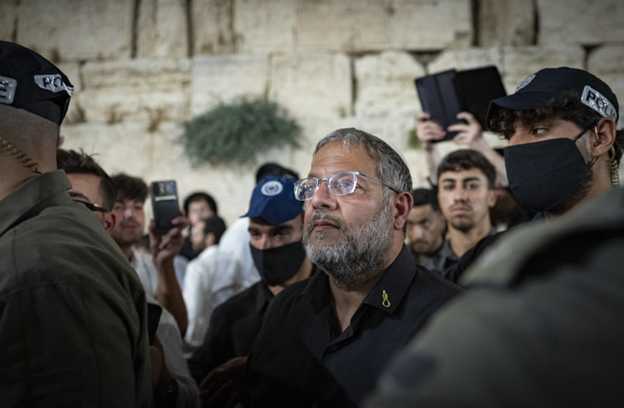
In-Frame : Israeli National Security Minister Itamar Ben-Gvir.
The administrative-reform reading, advanced by Katz and welcomed publicly by settler leadership, approaches the announcement as a sensible division of labor: civilian law enforcement belongs with civilian police, freeing the military to focus on its core counterterrorism function. National Security Minister Itamar Ben-Gvir, who’s responsible for overseeing the police, called the move a significant step toward Israeli sovereignty in the West Bank and pushed for the transfer of all remaining authority from the IDF to police.
The annexation reading, advanced by Palestinian officials, some Israeli and international analysts, and reflected in outlets including Al Jazeera and Middle East Eye, is based on the perspective that shifting civilian jurisdiction from military to police administration effectively extends Israeli domestic legal structures over the West Bank, a substantive step toward annexation regardless of the formal label’s being used to hide it under.
Many individuals have also argued that the move legally erases the borders between Israel and the territory, since it stops treating the West Bank as land under military occupation in practice. Similar analysts also fear that following such a move, the police jurisdiction would fall under Ben-Gvir, a minister commonly known for large-scale demolitions of Arab homes inside Israel. And both these perspectives raise grave concern about how the new force would treat Palestinian residents rather than just Israeli settlers. There have also been reports by Middle East Eyes claiming that the announcement wasn’t coordinated in advance with either the military or the police and even Ben-Gvir was unknown to the development, raising suspicion of the announcement being a political move within Israel's governing coalition as a straightforward security policy.
Who Said What
The announcement also received a variety of international receptions with the U.S. Ambassador Mike Huckabee, a longtime supporter of Israeli settlements, had described the Qusra settlers' actions that preceded the announcement as a horrific act of terror meant to intimidate and harass this family and called those responsible "Israeli terrorists". Palestinian leadership and the UN human rights office condemned the underlying Qusra siege as criminal and aimed at forced displacement, and Palestinian officials have separately condemned the police-transfer plan itself as a violation of international law. Some Israeli human-rights organizations and mainstream settlement figures have also sought to distance the broader settler movement from the specific tactics used at Qusra, even while supporting Katz's institutional reasoning.
Why the Legal Framing Matters
Under international law, an occupying power is expected to administer occupied territory through the mechanisms of military occupation, which carries specific legal obligations distinct from ordinary domestic policing. Analysts arguing the move constitutes creeping annexation say that folding West Bank civilian enforcement into Israel's standard police apparatus blurs that legal distinction in practice, regardless of what territory remains formally unannexed on paper. Those defending the move as purely administrative argue that policing authority and territorial sovereignty are separate questions, and that a police unit doing this work doesn't by itself change the West Bank's legal status.
What Happens Next
As of this writing, the IDF has been instructed to present a formal plan within two weeks of Katz's August 17 statement, which could be useful to infer that the details of how such a force would be structured, funded, and empowered are not yet public. How far the plan actually advances is described by close observers as dependent on coalition politics, budget allocation, and competing priorities within the Israeli government, several of which remain unresolved even after the initial announcement.
Timeline
|
Date |
Event |
|
Aug 9–13, 2026 |
Settlers besiege three Palestinian homes in Qusra |
|
Aug 13, 2026 |
Israeli forces raid Qusra and impose a curfew |
|
Aug 14, 2026 |
Katz instructs the IDF to prepare a plan transferring West Bank civilian enforcement to police |
|
Aug 17, 2026 |
Katz announces the IDF will present that plan within two weeks |
Conclusion
There may not be enough substance to consider the announcement as substantial or significantly consequential, but the two-week timeline for a formal plan is bound to clarify the concerns that are already being raised regarding the move. Whether the framed plan consists of a practical reassignment of policing duties or is a substantive step towards extending Israeli civilian control over occupied territory, is something to uncover in the coming weeks. With both perspectives garnering claim and criticism alike by credible voices across Israel as well as around the world, the plan by the IDF would be awaited to understand what the future truly holds for Israeli civilians.
Latest Posts