

Intel Plunges 28.6%, Its Worst Day Since 1974, on Weak Q4 Guidance, Dragging the Nasdaq Down 2.86% and Cutting About 12 Billion From the US Governments Stake
The drop in share price nearly wiped roughly $140 billion in market value while also dragging the Nasdaq Composite value down by a significant 2.9%, making it Nasdaq’s worst session since June as well. The U.S government also witnessed the surprise with a sharp reduction in their stake dropping by around $11 billion to $12 billion.
Table of Contents
1. What Happened on Friday
2. The Numbers Behind the Guidance
3. Why the Outlook Disappointed
4. The Market Fallout
5. The US Government's Stake
6. Analyst Reaction
7. Bull and Bear Cases
8. What to Watch Next
9. Conclusion
What Happened on Friday
Intel reported its third-quarter results following market closing on Thursday, a report that quickly led to over 20% fall in Intel shares within moments of after-hours trading. Friday witnessed a further acceleration in the stock sell-off with the stock falling as low as roughly 30% down at one point before adjusting back to a value marking 28.6% loss, with stock price falling from $92.07 to $65.76. The plunge became Intel’s steepest sell-off at the closing price of a single day, with its 30% fall on July 5, 1974 coming in second while the 26% plunge on August 2,2024 dropping down to third. Remarkably, the stock continues to remain more than 70% up for the year, having nearly quadrupled from the January price to its record peak on June 22 and having dropped down nearly half of its spike value.
The Numbers Behind the Guidance
Within the number metrics, Intel experienced a strong third quarter, having garnered a reported revenue of $16.5 billion, up by 21%, and adjusted earnings of 52 cents a share, a healthy lead over its own projected guidance of 38 cents. Intel’s Data Center and AI revenue climbed about 78% to $7.3 billion, with management describing server processor demand for AI infrastructure as the strongest in 15 years. However, Intel also witnessed a 5% fall in its client computing revenue where it settled around the $8.1 billion mark. Behind the sell-off and market reaction to its numbers was Intel’s very own forecast. Intel projected its fourth-quarter revenue to $16 billion while market analysts had placed expectations at roughly $17 billion, a sharp drop off from its actual performance at the $15 billion mark. It also reported adjusted earnings of about 25 cents per share and a gross margin of around 38%.
|
Measure |
Q3 2026 result |
Q4 2026 guidance |
|
Revenue |
$16.5 billion (up 21%) |
$15 billion to $16 billion (consensus about $17 billion) |
|
Adjusted EPS |
$0.52 (guidance was $0.38) |
About $0.25 |
|
Non-GAAP gross margin |
44.1% |
About 38% |
|
Data Center and AI revenue |
$7.3 billion (up about 78%) |
Supply-constrained |
|
Client computing revenue |
$8.1 billion (down 5%) |
Weak, PC slowdown expected into 2027 |
Why the Outlook Disappointed
Market Analysis from multiple sources reported roughly three foundational factors that led to an undermined guide and outcome. The primary factor being the slump in the PC markets that are experiencing decrease in demand as well as competition for memory chips with the AI data centers absorbing memory supply and simultaneously raising costs for memory chips as well. Intel’s own projections forecast the market to shrink by 12% by the end of 2026 as well as with a further 10% in 2027, with the fall lasting at least half or more of the next annual year. Secondly, a recent fatal Industrial accident at Intel's Kiryat Gat site in Israel on October 14 also resulted in the death of two employees and halted production of server chips on its roughly 10-nanometre process, which Intel estimates will cost about $300 million of revenue in each of the fourth quarter and the first quarter of 2027. Lastly, the market is also struggling with a limited supply of Xeon server chips, with demands unmet and growing concerns over Intel’s production capacity and supply constraints that could’ve caused led to the sell-off as well.
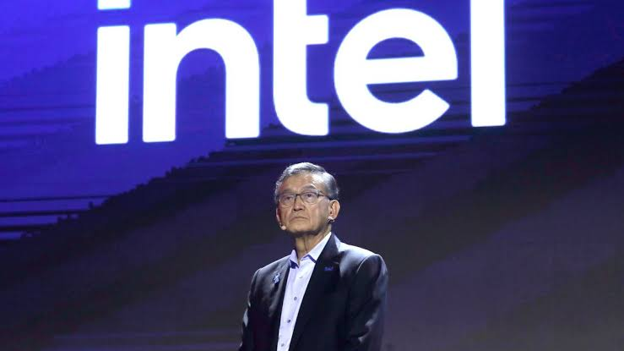
Individually, The Israel incident explains only a fraction of the shortfall. The gap between the guidance midpoint and consensus is about $1.5 billion, and if the plant shutdown was estimated to be responsible for a fifth of the gap, the rest would likely be based on dwindling PC markets and the server supply constraints.
The Market Fallout
The entire market witnessed the consequences of Intel's collapse. The Nasdaq Composite fell about 2.9% and the S&P 500 about 1.8%, both marking the worst days since June, while October became Nasdaq’s worst month in more than a year. At the same time, The VanEck Semiconductor ETF (SMH) dropped 9.1%, reflecting a round of pre-existing questions amongst investors with regards to returns on the company's heavy investment in the AI landscape. Nvidia, who also holds a significant majority of Intel shares, was also reported to have lost about $6 billion in value with Intel’s sell-off.
|
Market measure |
Friday, October 30 |
|
Intel (INTC) |
Down 28.6%, to $65.76 |
|
Nasdaq Composite |
Down about 2.9% |
|
S&P 500 |
Down about 1.8% |
|
Semiconductor ETF (SMH) |
Down about 9.1% |
|
Intel market value erased |
About $140 billion |
The US Government's Stake
In August 2025, the U.S Federal Government chose to invest and become a major shareholder for Intel while acquiring roughly 433 million shares, roughly 10% of the company. The sell-off in turn has reduced the value of the federal stake by about $11-$12 billion. Despite its drop in share value, Intel hasn't reported any sale of shares and continues to maintain its significant presence in the market. The government in 2025 had acquired Intel's shares at a purchase price of $20.47 per share, a valuation that still guarantees a gain of over $20 billion over the purchase principle amount making the government investment continue to remain a positive investment. Intel's plunge doesn't simply impact its market value and performance, but also carries political weight. In recent years, U.S President Donald Trump has repeatedly highlighted gain through Intel shares as a profit for the taxpayers, and the sharp fall raises questions about that claim, though the current price remains much higher than what the government acquired it for.
|
Item |
Figure |
|
Shares held by the US government |
About 433 million |
|
Average purchase price |
$20.47 per share |
|
One-day paper loss |
About $11 billion to $12 billion |
|
Remaining gain over cost |
About $20 billion |
Analyst Reaction
Intel's plunge generated a divided response across Wall Street. New Street Research placed Intel within the buy list while JP Morgan and Goldman Sachs cut their price targets but remained neutral about the stock rating. More concerningly, Bank of America, Roth Capital Partners as well as Seaport Research Partners all decided to downgrade the stock from buy to neutral categories, an indication of precaution for the stock's uncertain future. Analysts around Wall Street reported mixed opinions with analysts claiming that the sell-off had been overdone while others argued that tangible improvements in the near future towards its supply and distribution that will outline the path of correction for the stock.
Bull and Bear Cases
|
The bull case |
The bear case |
|
Data-centre revenue growing about 78%, demand at 15-year high |
PC market expected to shrink in both 2026 and 2027 |
|
Israel disruption described as temporary |
Gross margin guided down about six points in one quarter |
|
Strong cash position and improving 18A manufacturing costs |
Heavy capital spending and foundry losses keep cash flow thin |
|
Stock still up more than 70% this year |
Competition from AMD and TSMC continues |
What to Watch Next
The plunge might've worried investors around the world but they continue to look ahead, especially on three important signals that arrive in the near future: whether fourth-quarter gross margin lands at or above the 38% guided, whether the first-quarter 2027 outlook shows the Israel impact fading, and whether Intel secures named external customers for its advanced foundry capacity. Within the larger markets, investors and analysts would also closely follow Intel’s performance in the near future to assess whether the semiconductor sell-off spreads or stabilises.
Conclusion
Intel's collapse arrived with a sudden plunge that many failed to predict, yet it was a typical market reaction punishing a stock that had outstretched beyond its fundamental capacities. Intel must be soaring the success of its data-centre business but a comparatively softer PC markets along thin margins and plan distribution concerns were enough to wipe more than $140 billion from the markets in a single day. Now whether the fall continues until it reaches the hard reset mark or quickly recollects from being an overaction is bound to be proven in the coming days, especially by the influence of how quickly supply improves and how deeply the PC slowdown cuts into 2027.
Latest Posts