

Inside the Race to Stop a Mutating Ebola Outbreak in the DRC
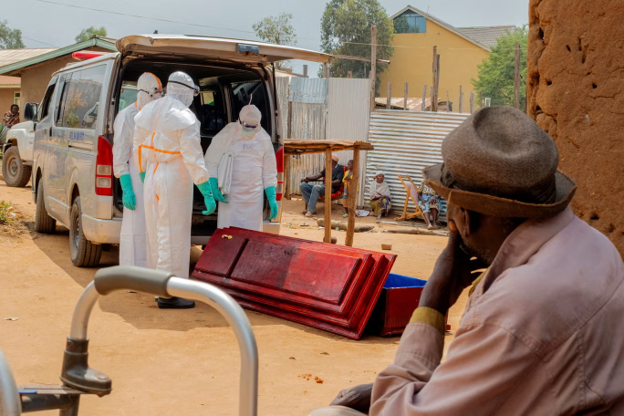
The country has already witnessed over 4,000 reported cases as health authorities continue to deepen their efforts to find infections within communities as well as track mutations and outbreak within the region.
The outbreak, caused by the Bundibugyo species of Ebola virus, was initially reported on May 15, but is reported to have been spreading since January. With the insurmountable pressure of rise in reported cases along with the deeply disheartening condition that the virus is resulting in, is a crucial indicator behind its $240 million in emergency funding and the gravity of the condition.
Table of Contents
- How It Began
- Why This Outbreak Is Different
- The Scale of the Crisis
- Where the Money Went
- Life Inside the Response
- How It Compares to Past Outbreaks
- Conclusion
How It Began
The initial cases within the DRC regions were reported from the town of Mongbwalu somewhere between January and February 2026, long before analysts could place estimates about the virus. It nearly took three months until Mid-May for researchers and labs in Bunia to determine the virus being Ebola and by then, the virus had already spread across homes, clinics and marketplaces across the Ituri Province. On May 15,2206, DRC’s Ministry of Public Health and Uganda’s Ministry of Health jointly declared an outbreak of the Bundibugyo virus disease, a rarer and understudied cousin of the Zaire Ebola strain most people associate with the disease.
Two days later, the WHO's Director-General declared it a Public Health Emergency of International Concern. Unfortunately, the recent outbreak marks DRC's 17th Ebola outbreak since the virus was first identified in the country in 1976, arriving just five months after the last wave.
Why This Outbreak Is Different
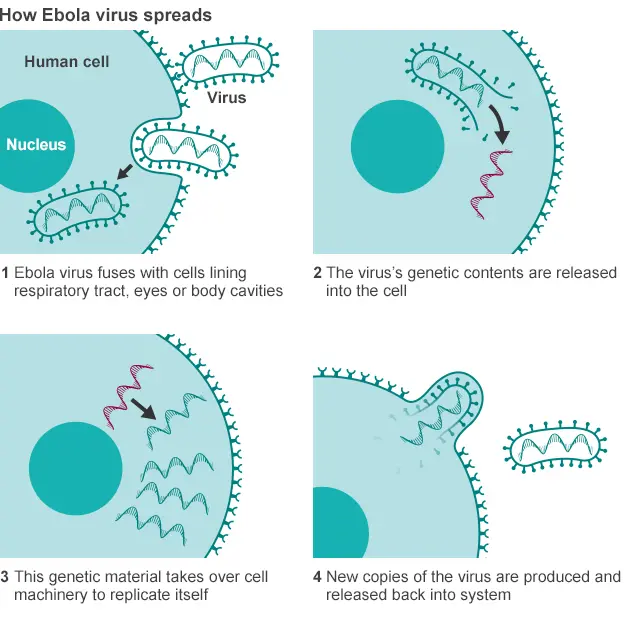
Scientists have been under constant distress and unease, not only because of the speed of the outbreak but also the virus in itself. Genoma sequencing from research teams, including groups at Dalhousie University, the University of St Andrews, and DRC's own biomedical research institute reported that this wasn’t a re-emergence of the Bundibugyo strains from the 2007 or 2012 outbreak, but a rather genetically distinct variant. And while the genome sequences are new, they’ve shown fewer mutations than the virus’s molecular clock would ideally predict, raising concerns about the medium of evolution for the virus, before it ever reached a host.
While there are various existing treatments and vaccines that have been developed as Ebola treatment against the Zaire strain, the new virus being similar to Bundibugyo has no presently approved or certified vaccine or treatment, with the most advanced treatments still being under the testing phases.
The Scale of the Crisis
|
Milestone |
Time to Reach 1,000 Cases |
|
2026 Bundibugyo outbreak |
~40 days |
|
2018–2020 Kivu outbreak |
~235 days |
|
Region |
Confirmed Cases |
Deaths (approx.) |
|
DRC (total) |
~3,970+ |
~1,800+ |
|
Uganda |
20 |
2 |
|
France (imported) |
1 (recovered) |
0 |
These numbers are the best representation of the speed of this outbreak and the concerns that it has risen in the process. The outbreak had already spread across 51 health zones in Ituri, North Kivu, South Kivu, Haut-Uele, and Tshopo provinces by early August, marking a case fatality rate hovering near 45%, much higher than previously reported rates of Ebola. Ituri has consistently remained the epicenter of highly reported cases, with a week in July experiencing the highest surge of the entire outbreak while noting 567 new cases and 296 deaths within a span of seven days.
Where the Money Went
Every time an emergency or outbreak emerges, money becomes a necessity and while it doesn’t contain the virus by itself, it’s crucial to equip with the things that could right from lab reagents and protective suits to fuel for ambulances and salaries for contact tracers walking door to door in areas where phone signal barely reaches. And for DRC, the funding had to involve multiple donors to contain the magnitude of infection:
|
Funder |
Amount |
Purpose |
|
Africa CDC & WHO joint plan |
$518 million (target) |
Six-month continental response, June–Nov 2026 |
|
U.S. Department of State |
$242 million (announced Aug 5) |
Emergency response, preparedness, humanitarian aid |
|
World Bank Group |
$243 million |
Existing and new financing across DRC and Uganda |
|
CDC Foundation |
Emergency Response Fund activated |
Mobilizing rapid global resources |
|
UK Government |
Up to £20 million |
Community support in eastern DRC |
The U.S government’s contribution donation pushed the Ebola assistance total well past $512 million in addition to the $350 million in broader humanitarian aid for the region, also marking it as the largest single financial contribution in response. And while the numbers might bring you relief, they also flagged a severe complication, the shrinking budgets for global humanitarian aid and the limitations placed on US AID’s operational capacity enforced stretching of these budgets to greater extents as compared to the previous outbreaks.
Life Inside the Response
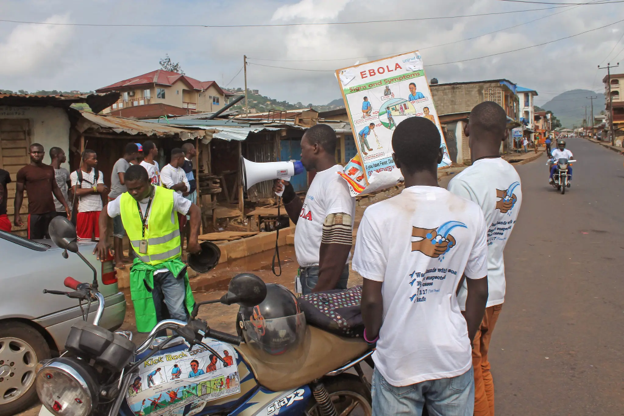
Far behind the tables of data and donors from offices overseas, are people who often go unnoticed during such situations. Doctors Without Borders has alone deployed more than 1,400 staff to the DRC, enabling it to sustainably run treatment centers while also training local health workers and ensuring uninterrupted delivery of supply to clinics that have never witnessed hemorrhagic fever before. At the same time. MSF's Elikya treatment center in Bunia has also been running a clinical trial testing remdesivir and an experimental antibody therapy called MBP134, hoping to find an effective solution to combat this strain.
WHO’s Emergency Committee is scheduled to reconvene on August 18 to reassess the outbreak's international risk status while DRC continues to witness a steep increase in reported cases. What initially began as a spillover event in the remote mining town of Mongbwalu has unfortunately become the largest Bundibugyo outbreak ever recorded, and one of the largest Ebola outbreaks of any kind in DRC's history.
How It Compares to Past Outbreaks
|
Feature |
2026 Bundibugyo Outbreak |
2018–2020 Kivu Outbreak |
|
Virus species |
Bundibugyo virus (new variant) |
Zaire ebolavirus |
|
Approved vaccine available |
No |
Yes (Ervebo) |
|
Time to 1,000 cases |
~40 days |
~235 days |
|
Primary complicating factor |
Novel strain, no treatment |
Active armed conflict |
|
Case fatality rate |
~45% |
~66% (early phase) |
Conclusion
It’s normal to feel taken aback by the growing numbers like $240 million and over 4,000+ confirmed cases, but somewhere in the DRC, this is a reality that we simply cannot undermine or deny. On the ground level, a contact tracer is going to a house he’s visited three times this week, while a nurse is suiting up for another extensive and exhausting shift while families await to see if their relatives' names are added onto a list that no one is looking to be on. From the financial involved to the responses and the genomic lab developments are not mere reactions but a part of the story that is likely to last over the next few weeks or months at the very least. And with the hope of a positive containment unlike Ebola’s previous strain counterparts, DRC hopes that their strugle comes to an end rather quickly this time.
Latest Posts