

Indias Youth-Led Protest Turns Violent In Capital Delhi The Jantar Mantar Protest Story
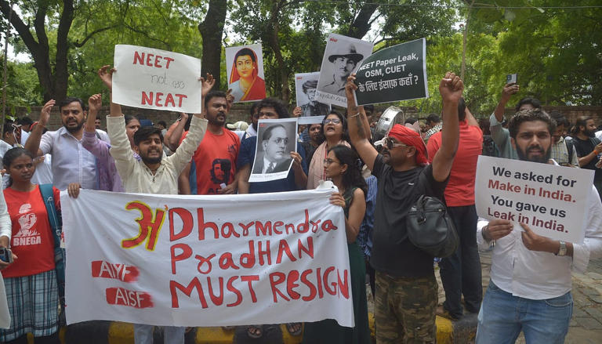
What began as a peaceful march seeking accountability and ownership of their mishaps, was met with barricades being laid on roads and protestors being dealt with tear gas and batons to disperse the crowd. With over roughly 180 individuals injured from the protest, including 60 protestors and 120 police personnel and security forces, an additional 70 protestors were also detained, marking it as the biggest and most violent youth-led protest that simply began from a joke, over two months ago.
Organized by the Cockroach Janta Party (CJP) and catalysed through the hunger strike held by Mr. Sonam Wangchuk, a renowned activist, environmentalist of India with the aim of making youth leaders meet the parliamentarians, and obtaining accountability for the over repeated leaks of medical entrance exam papers - NEET 2026 that also resulted in the suicide of over 20 students who felt they were failed by the country’s education system. And the matter continues to escalate making international headlines, not because it's one of domestic unrest and protest, but because it fits a larger pattern observed in the past two years - disappointed youth, orchestrated through virtual channels, and quickly evolving from a single grievance to larger questions holding the government accountable!
Table of Contents
- The Events of 20th July
- The Ignition To The Fire
- The Student’s Plea
- The Government’s Response
- Where Things Stand Now
- Conclusion
The Events of 20th July
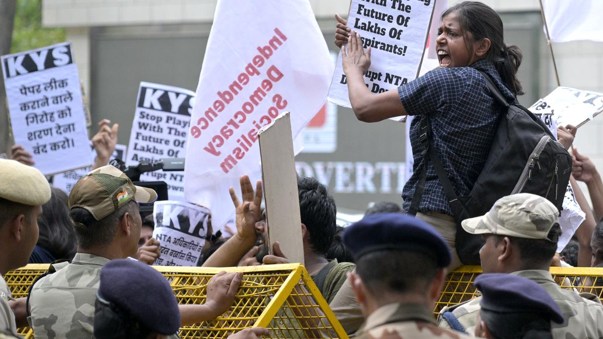
While the CJP protest and Hunger Strike have been ongoing at the Jantar Mantar - a historic protest site located in Central Delhi, thousands of demonstrators- mainly students gathered in large numbers on the site before proceeding to march towards the national parliament. The Delhi Police who successfully anticipated the protest spreading towards the parliament, were able to line roadblocks in order to resist the protest but had to resort to tear gas shells and cane charges in order to break the protestants. While majority protestors were made to run away or confined within a perimeter, many managed to sneak through smaller allies to reach the parliament.
Throughout the day, various clips emerged across social media platforms and news agencies, covering the protests while showcasing the Delhi Police’s use of brute force including strikes from batons, despite the lack of protestors initiating violence or any plans to attack or threaten the armed forces. The incident raised deeper and griever concerns over the country’s government as well as the leader’s sense of responsibility while police detained protestors, claiming to further prosecute them lawfully.
The Ignition to the Fire
Largely led and managed by the Cockroach Janta Party and its founder, Mr. Abhijit Dipke, the movement began over two months ago by a comment of India's Chief Justice, Surya Kant, addressing the youth of this country as “Cockroaches”, the movement gained traction due to its disregard for the youth. On the contrary, the movement gained rapid traction online, garnering over 350,000 sign-ups and over 20 million followers within the first few weeks of the party formation.
The Student’s Plea
The Protest is mainly centered on three specific demands from both the Cockroach Janta Party as well as the students:
- The resignation of Education Minister Dharmendra Pradhan over repeated alleged failure in preventing the Medical Entrance Examination papers from being leaked.
- Discharge from hospital and Transparency in the current condition and medical requirements of the hunger-striker Sonam Wangchuk.
- An opportunity of dialogue with the members of the parliament
The Government’s Response
While the entirety of the Indian Government and their social media channels have been silent and avoiding the issue at hand, the Delhi Police have responded on their behalf, redefining the protests as unlawful methods to reach the parliament, including threats of legal orders against those involved. At the same time, a public litigation was also filed at the Delhi High Court against the Delhi Police, alleging that the police were attempting to create confinements and environments of “intimidation” and it awaits to be heard.
Where Do Things Stand Now
The Peaceful Protest has experienced its own trajectory of highs and lows from peaceful pleas and demands of the protestors to the violent and nearly life-threatening approaches of the Police, against students simply seeking a fair assessment and accountability. While the protests will continue to persist and students will raise their voices to be acknowledged, CJP Leader, Abhijeet Dipke announced that there would be no large-scale marches but students would continue other forms of protest. At the same time, Sonam Wangchuk has persisted to continue his hunger-strike, fighting for the three basic demands that would provide the students with a sense of relief.
Comparable Youth Movements Elsewhere
Observers have noted similarities between the CJP's rise and other youth-led protest movements that have emerged in different countries since 2024:
|
Country |
Trigger |
Outcome so far |
|
India (2026) |
Exam paper leaks; judicial remark comparing youth to "cockroaches" |
Protests ongoing; minister's resignation demanded; hunger strike continues |
|
Bangladesh (2024) |
Civil service job quota system |
Government collapse; prime minister's resignation |
|
Nepal (2025–26) |
Social media restrictions; corruption concerns |
Major political upheaval; change in leadership |
|
Kenya (2024–25) |
Proposed tax increases; cost-of-living pressures |
Finance bill withdrawn; continued youth-led activism |
|
Morocco (2025) |
Public healthcare and education funding gaps |
Youth-led demonstrations ongoing |
Conclusion
The Peaceful-Turned-Violent Protest of 20th July can clearly be identified as amongst the most significant escalations to a protest, mainly in India, stemming from Internet Satire and becoming a major challenge for the Indian Government. The scale of the protests, the lives that have been scarred and the refusal from the government to take ownership and recover from the feelings, foreshadow the possibility of this becoming more than a single movement or short-story. What happens next will depend on two factors that remain unresolved: whether the government responds to the CJP's demands, and whether the movement can maintain momentum through methods other than street marches, given the risks that previous clashes have made clear.
Latest Posts