

India Becomes a Global Leader in Cervical Cancer Prevention
For businesses following the international health market, India's efficient execution and its cost disciplines should be studied closely to gain insight and form relationships.
India's Triple-Threat Strategy
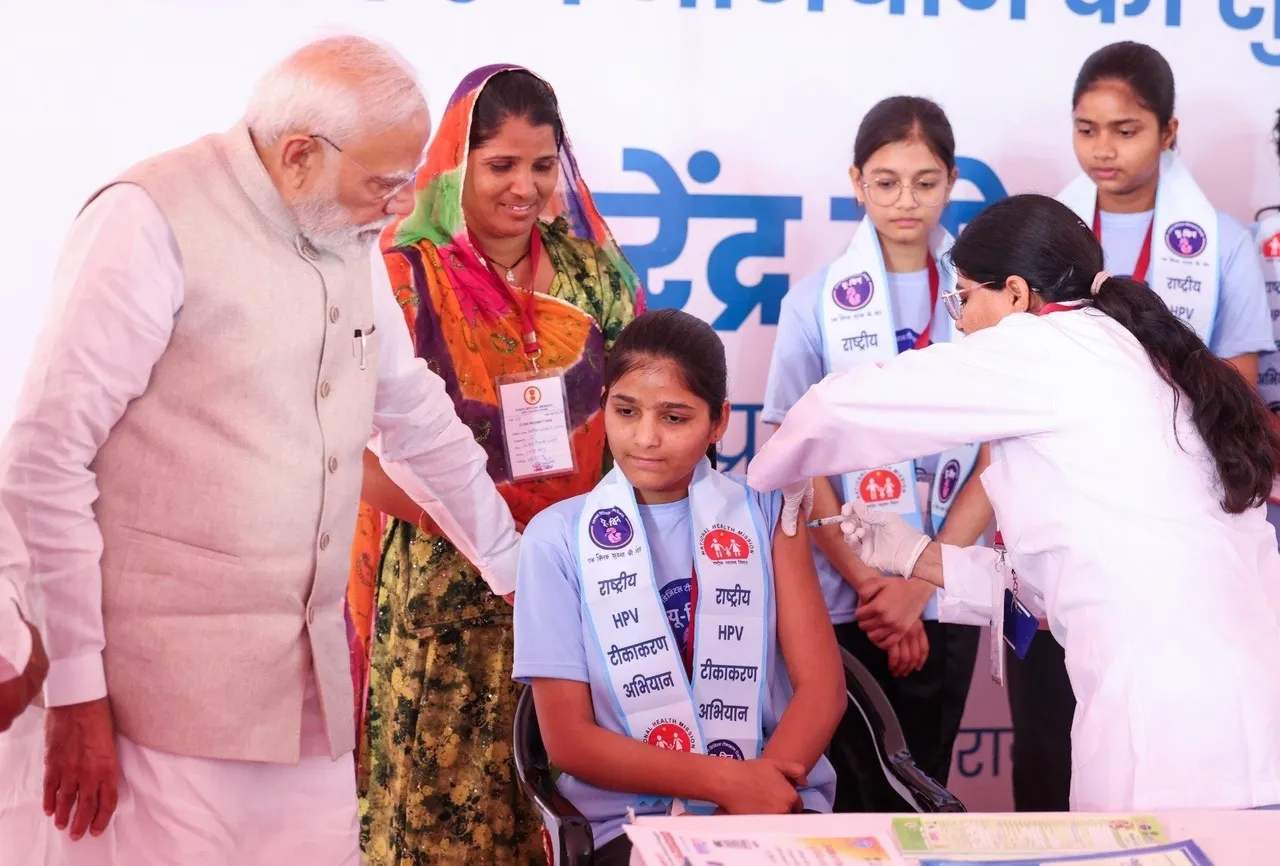
1. Universal HPV Vaccination Drive
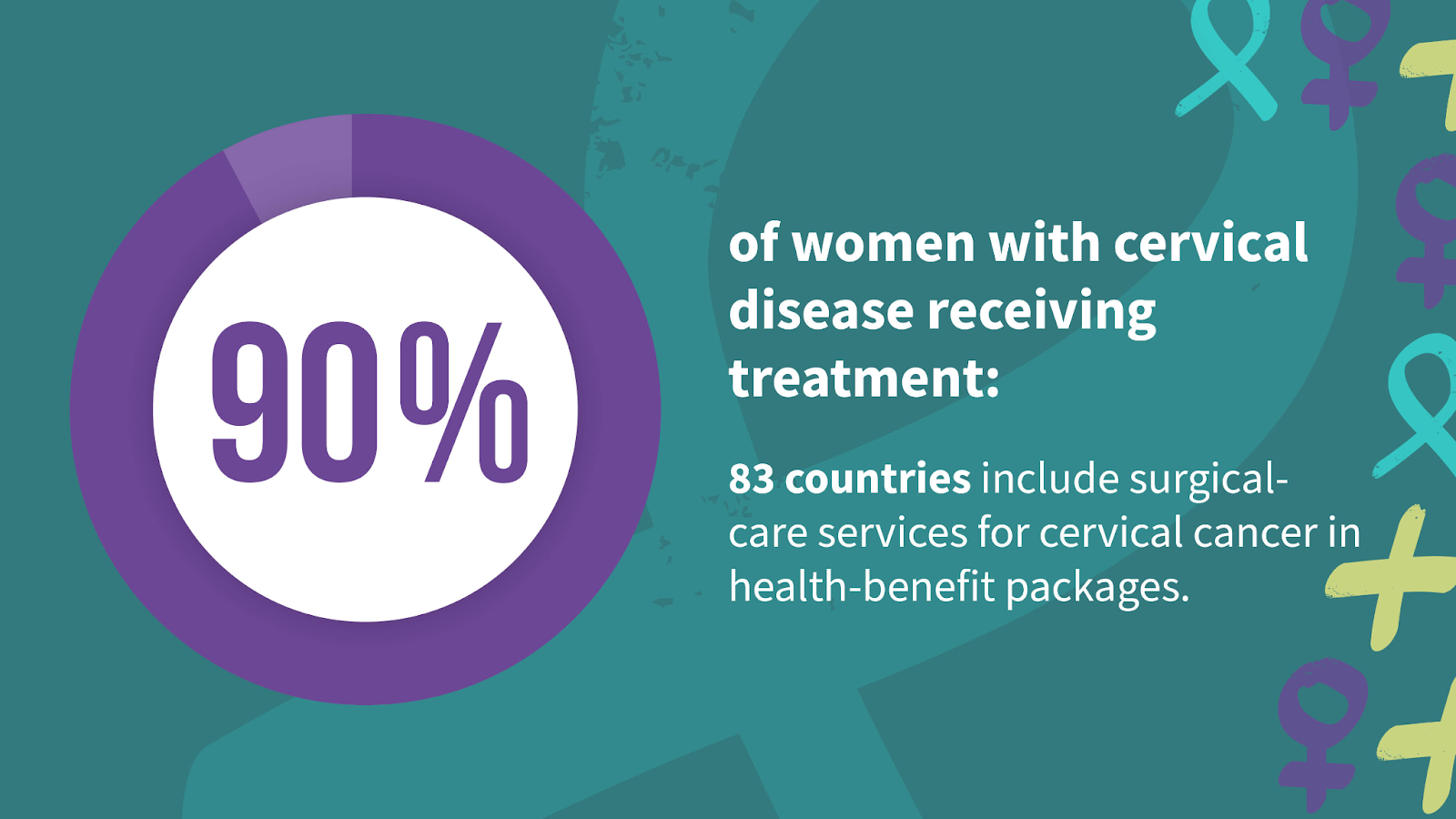
India has begun offering free quadrivalent HPV vaccinations called Cervavac through schools and Anganwadis to girls aged 9 to 14. The vaccine costs ₹200 for each dose per child (the Gardasil brand of vaccine costs $150 for each dose) but covers over 90% of high-risk strains of the virus and will be distributed as 250 million doses to 25 million adolescent girls.
Cervavac is available in addition to other childhood vaccines through private sector health facilities to parents in urban areas in Tier 1 cities. The company will also dramatically increase its production capacity via a $500M expansion at the company's manufacturing facility in Pune, Maharashtra, reflecting confidence in the HPV vaccine market by pharmaceutical manufacturers in India.
2. Nationwide Screening Scale-Up
The VIA (visual inspection with acetic acid) method of checking for cervical cancer by using acetic acid is reaching almost 50 million women annually through the ASHA workers. To assist these women, there will be 150,000 artificial intelligence (AI) powered colposcopy units deployed to healthcare centers around India by 2028. Trivitron's devices can be purchased for approximately INR 200,000 compared to 90 t o 1 million for other imported units.
Digital platforms, such as the ABDM, link screening results back to care pathways. The rates of early detection in pilot districts have increased from 18% to 42%.
3. Treatment Access Revolution
Cryotherapy machines cost ₹50000 each and are used to treat 90% of the early stage patients at the PHC level. The ICMR’s ”see and treat” at one visit has decreased the loss to follow-up from 65% to 12%. The government has purchased 50000 machines over 3 years.
The Business Engine Powering
- Vaccine Development: Serum Institute ramps up to 100 million doses per year. Panacea Biotec offers a two-in-one vaccine for ₹150/dose. Private facilities pair HPV vaccines with comprehensive health and wellness packages—estimated market worth ₹250 billion.
- Diagnostics Revolution: Trivitron, Wipro GE provide jan 30, 000 ai-enabled screening devices. Indigenous content is up to 75%--providing far less reliance on imported goods. Smaller regional facilities will act as access points for screening.
- Digital Health: Qure.ai's cervical A.I can accurately identify 95% of cases via smart-phone camera images. mFine's tele-health platform links 2000 rural areas with oncologists.

Global Benchmark: India's Cost Leadership
India provides cervical cancer treatment for $375 per patient compared to $12,000 in the U.S. and $8,500 in the U.K.; the World Health Organisation (WHO) has lauded the "largest cervical screening Programme on the planet." This cervical cancer’s elimination roadmap has outlined how the global cases of cervical cancer will be reduced by 90%, if the HPV vaccines reach worldwide by 2050.
This will provide the pharmaceutical companies with sufficient amount of information to demonstrate the ability to successfully implement these low-cost vaccines at population level. Also, 40% of the total HPV requirement in ASEAN countries is met by India.
Challenges India's Solving at Scale
- Cold chain: Only 75% of India's rural blocks have adequate i.e. 2-8 degree celsius cold chain capacity for vaccine storage/transportation. Solar refrigerators developed by IIT Madras can be produced for Rs 8,000 versus Rs 45,000 for comparable imported refrigerators.
- Follow-Through: Since baseline, 82% of screenings resulted in a confirmed diagnosis and 35% of new confirmatory diagnoses were made. ASHAs earn an additional 100 rupees for every test that it will perform.
- Stigma: There are still many misconceptions about the causes of cervical cancer, such as "sex equals cervical cancer." Community radio campaigns focusing on this message have reached an audience of 400 million people throughout India, in their native languages.
Business Opportunities Beyond Borders
- Cervavac has entered the export potential of $6/course into 18 Markets throughout Africa as well as Bangladesh, who has an annual import of 5 Million doses.
- Cervical colposcope exports from Trivitron have grown to $50Million with distribution to 25 countries with the benefit of PLI scheme from Local R&D.
- Digital Scale, Qure.ai has licensed throat scans for AI in Thailand and the Philippines, while mFine has captured a $200Million Series C valuation due to their success in using AI to identify cervical cancer.
The Indian Multiplier Effect
Investing a single rupee in the prevention of cervical cancer has resulted in a savings of ₹42 for treatment. There are 1.2 million additional healthy life years added due to the universal vaccination programme. The working population of women has gained 3.5 crore productive years because of this initiative.
As corroborated by India's experience, the playbook for global business leaders consists of delivering on population-scale execution through indigenous innovations, government procurement, private-sector delivery and the utilization of a digital backbone.
With the work done so far, the time is ripe for India to position itself as an export-ready, cost-effective and clinically validated health-tech market. Now is the time for global partners looking to create emerging market scale to engage, as the first-mover advantage will go to those without engagement.
Not only is India preventing cervical cancer but they are also rewriting the way in which the world delivers public health at 1/30th the cost.
Latest Posts