

Global Medical Associations Fight Funding Cutbacks Inside the Battle Over Research Grants
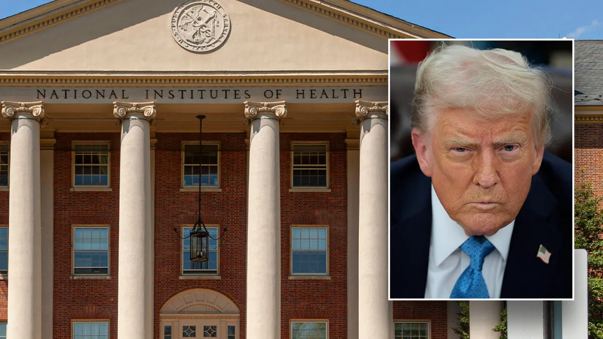
It’s not just a disagreement or quest of superiority, but dozens of staffing, hundreds of grants and billions of dollars all subjective to funding that may or may not materialize from one fiscal year to the next.
Neither is this a matter of sheer allowance or limitations nor does it have a clear beginning and an end - it’s an enduring tussle between the mammoths of U.S Administration managing allowances for the National Institutes of Health (NIH) and National Science Foundation (NSF) and a collective of associations, universities, and scientists worried about their years of dedication and hard work to the field of research. And perhaps it’s not even limited to the U.S, but a growing global concern as the World Health Organization's own budget has been trimmed by U.S and other major donor governments.
Table of Contents
- A Quick Dive Into The Dispute’s Timeline
- The Global Ripple Effect
- Where the Legal and Political Fight Stands
- Proposed Cuts by Agency, at a Glance
- What This Means Going Forward
- Conclusion
A Quick Dive Into The Dispute’s Timeline
The issue dates back up to February 2025, when NIH announced it would cap "indirect cost" reimbursements, meaning funding that covers lab infrastructure, administrative support, and overhead at 15%, down from rates that averaged around 27.5% and ran as high as 60-69% at some major research universities. Soon after, judges were quick to issue a temporary restraining order and consequently a permanent injunction which made this cutback “arbitrary and capricious”.
While the fight has been ongoing ever since, over 7,800 NIH and NSF grants have been cancelled or suspended over the course of 2025, according to the watchdog group Grant Witness, with roughly $1.4 billion still frozen or cancelled as of early 2026. Recently, with its FY2026 budget proposal, the administration sought a 40% cut to NIH's research budget and a 56% cut to NSF's total funding, cutting federal science agencies funding by roughly 22% overall. In April 2026, the administration also removed all members of the National Science Board that oversees the NSF, and the agency closed its social science research directorate as well.
Despite the heavy cuts by the President’s administration, Congress rejected the majority of proposed cuts and restored funding for specific programs. Even so, uncertainty and delayed grantmaking have continued into 2026, with NIH reportedly on pace to make roughly 25% fewer grant awards than in comparable years from 2021–2024, even as the agency raced to spend its budget by mid-year.
The Global Ripple Effect
As a ripple effect, the funding fight has spread further than simply within U.S Universities. While the WHO had an initial budget projection of $1.79 billion within its 2026-2027 budget, it was reduced to roughly 1.05 billions, mainly after withdrawal of funding from the U.S, which accounted for nearly a fifth of the total budget.
- The WHO’s global workforce is projected to shrink by 22% between January 2025 and June 2026 as a result of funding cutback from over seven major donors.
- Germany was amongst seven major donors, while curling its humanitarian assistance budget to 47% as compared to 2024 levels. It also reduced 19% of its funding to the Global Polio Eradication Initiative.
- Separately, the administration's FY2026 budget proposal called for a 62% cut to State Department global health funding, including a 30% reduction to PEPFAR, the major U.S.-led HIV/AIDS program, and elimination of U.S. funding for Gavi, the vaccine alliance.
- China, meanwhile, has pledged an additional $500 million to the WHO between 2025 and 2030, partly in response to the U.S. withdrawal.
Proposed Cuts At A Glance
|
Agency |
Proposed Cut |
Status as of Mid-2026 |
|
NIH (research budget) |
~40% reduction proposed for FY2026 |
Congress rejected the steepest cuts; indirect cost cap blocked by courts |
|
NSF (total funding) |
56% reduction proposed for FY2026 |
Board members removed; social science directorate closed |
|
NASA Science |
47% reduction proposed |
Would be the largest single-year NASA cut in history if enacted |
|
State Dept. Global Health / PEPFAR |
62% / 30% reductions proposed |
Ongoing budget negotiations |
|
WHO overall budget |
~$1.05 billion shortfall (revised down from $1.79B) |
Workforce reduced by roughly 22% |
Implications For The Future
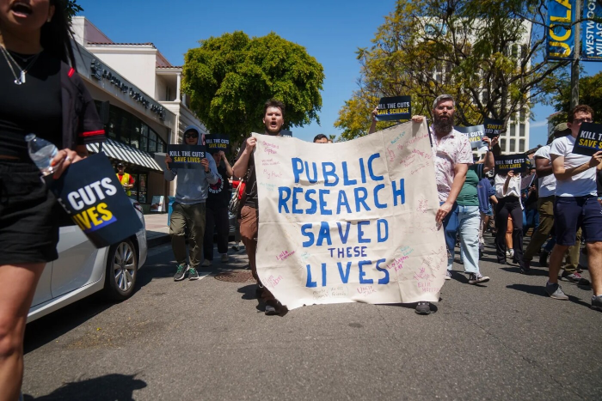
While there has not been a significant movement in the field of research due to minimal practical effect, the researchers and research institutions are regularly subject to sustained uncertainty extending from delayed grants, fewer awards of grants despite the funding being present and dramatic halts on fast moving research. For global health, the U.S funding withdrawal has seemed to influence others as major European donors have also begun reducing their donations in the same time period impacting WHO and global investment and researches alike!
Conclusion
The cutback on the global medical research’s funding hasn’t reached a favourable resolution for either of the parties but has clearly established itself as a question that is bound to have ripples for the future of medical and scientific research and practises. Whether you believe that the administration pushing for its efficiency reforms is righteous in its chosen path or the medical and research community are crucial and rightfully protesting to ensure global welfare, the debate has begun to shed light on major underlying disputes that pose far greater threat! What’s evident at the moment, is the impact of decisions made within the confines of brick walls - loss of valuable staff and researchers, cutting expense and delaying ongoing projects as well as the enhanced competition and reduced scope of success, all ripples that are bound to crash back onto human existence, far ahead in a distant future!
Latest Posts