

Glasgow 2026 Commonwealth Games Open Athletes from 74 nations gather in Scotland for the 23rd multi-sport edition
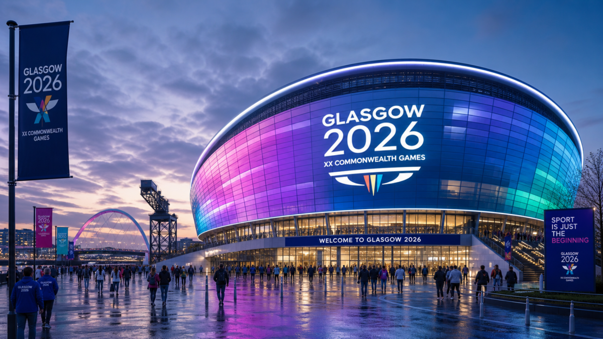
While the tiny detail was a small nod to Scotland’s place in pop culture, it was also the perfectly planned start to a festival of joy, hard work and sheer sportive jubilance.
Table of Contents
- A Glimpse Of The Opening Ceremony
- How Glasgow Saved the 2026 Commonwealth Games
- What's Different This Time
- What This Could Mean for the Future
- Conclusion
A Glimpse Of The Opening Ceremony
On a night that witnessed over 600 volunteer performers who alongside professional dancers and choreography from Emily Jane Boyle set the stage on fire, history was made in a unique way that would resonate for the years to come! For the first time in the Commonwealth Games 96-year history, the opening ceremony was staged entirely indoors within a Hydro unlike the sprawling stadium ceremonies of the past. Described as a “Clyde-Built Experience for the World”, the ceremony showcased the finest of music, dance and exuberance to set the games open with great zeal and enthusiasm.
Following the King and Queen’s playful entrance, the ceremony dabbled with wonderfully blended celebrations of Scottish Identity and Commonwealth unity. Athletes from 74 Commonwealth Games Associations participate in the Parade of the Nations with individually designed King’s Batons, each a symbolic representation of their nature’s culture before cultivating into a mass gathering on the stage. Amongst the vibrant cultural and sportive festivities, Team Samoa drew one of the loudest ovations of the night performing a traditional siva tau war dance, while the sole flag-bearer representing Saint Lucia was also welcomed with a warm reception from the crowd.
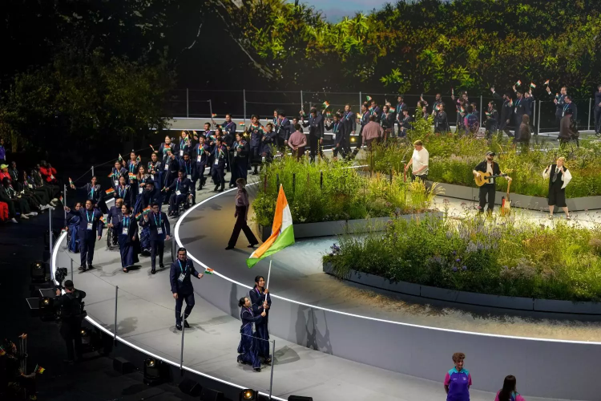
The night was headlined by Musical Giants, many renowned artists of Scotland and the world including the likes of KT Tunstall along with performances of Tom Walker, Callum Beattie, Nina Nesbitt, Nathan Evans, Saint PHNX, and the electronic folk duo Valtos, who performed during the Parade of Nations itself. As the festivities came to an end, King Charles III formally declared the Games formally marking the transition from Relay to Competition, as traditionally done in the previous Commonwealth Games.
How Glasgow Saved the 2026 Commonwealth Games
While to many the games have sparked the sporting and joyful spirits, it’s worth noting that the games were at risk of being held, as recently as in 2023. Originally, the 2026 games were awarded to the Australian state of Victoria, which withdrew hosting rights in the same year, stating that hosting costs would be in the range of AUS $6-7 billion, a figure described as “overstated and not transparent”, while also being roughly four times the original budget. Victoria ultimately paid AU$380 million in compensation to the Commonwealth Games Federation, a portion of which helped fund Glasgow's replacement bid.
The last minute withdrawal, nearly left the Commonwealth Games Federation in a panicky search for a host within the murky waters of decreased revenue, sponsor interests, broadcasting conflicts as well as real doubts over the competition being held at all! Glasgow which had hosted the Games, as recently as 2024, had some venues still available and was granted the hosting rights in September 2024, on the condition that the games would be different from its predecessors.
What’s Different This Time
As a result of being unexpected to host in Glasgow, the Commonwealth Games Federation has been forced to accept and oversee few notable changes in the 2026 Commonwealth Games:
- While Birmingham 2022 hosted over 19 competitions, Glasgow 2026 is only hosting a total of 10 sports across four venues that are still standing after the 2024 Games.
- Prominent sports that find themselves cut from the 2024 Games include hockey, cricket, rugby sevens, badminton, squash, table tennis, triathlon, beach volleyball, and diving, among others.
- Athletes and staff are staying in hotel accommodations rather than a purpose-built athletes' village, and organizers relied almost entirely on existing infrastructure rather than new construction contrary to the Commonwealth’s Traditional Approach.
- Consequently, Glasgow 2026 has been run on roughly £150 million, a starkly contrasting figure as compared to Victoria's abandoned multi-billion-dollar plan which could’ve taken the spectacle to a grander stage.
Utilizing the setback as an opportunity, the Commonwealth Sport, the governing body over the Commonwealth Games is approaching the 2026 Games as a Games Reset- or an attempt to make the hosting model more sustainable and budget-friendly, in the hopes that less wealthy or smaller Commonwealth Nations could also be able to host the event in the future, rather than restricting it to handful of countries that can manage to absorb enormous costs.
What This Could Mean For The Future
The honest answer is this Commonwealth Game is very close to being an experiment. While those in favor of the reset would argue that this is a good measure, slightly edging the Games towards a more replicable and sustainable model that can ensure its sustenance over long term, it could clearly shut down the needs for an enormous organization like that of Birmingham 2022 or the planned Victoria 2026. On the contrary, skeptics claim that the reduction of major sporting events such as hockey and cricket, uncertainty over broadcasting and sponsor interests could not only mean a decline in interest of the format but also the dwindling relevance of the event as a whole.
While both things could be true at once too, the Glasgow 2026 Games are set to become a benchmark that either sets a new precedent - for future host cities to host fewer games with fewer venues and costs or a lower standard that could highlight the grandeur and poor adaptability of the Commonwealth Games. And as eye-opening as it may feel, the Commonwealth Games could preferably seek both of those outcomes at the same time.
Conclusion
Glasgow 2026 has become a spectacle - perhaps if not for its Grandeur as compared to the previous Commonwealth game but something arguably more interesting - a live test of whether a cheaper, smaller and more replicable version of the event could still hold and continue the glory of the Commonwealth Sports. And if you were to be judging by the reception inside the Hydro on an opening night - a crowd on its feet for Samoa's war dance, a full house cheering a lone Saint Lucian flag-bearer, and a King and Queen willing to be in on the joke about their own arrival, Glasgow might’ve arguably just pulled it off! Whether this sustains throughout the tournament and translates into a sustainable and more enticing pathway for the Commonwealth Games is the question not just for the event’s eleven days but also the years that will follow!
Latest Posts