

Federal Judge Temporarily Blocks Trump-Directed Postal Service Rule Governing Mail-In Ballots
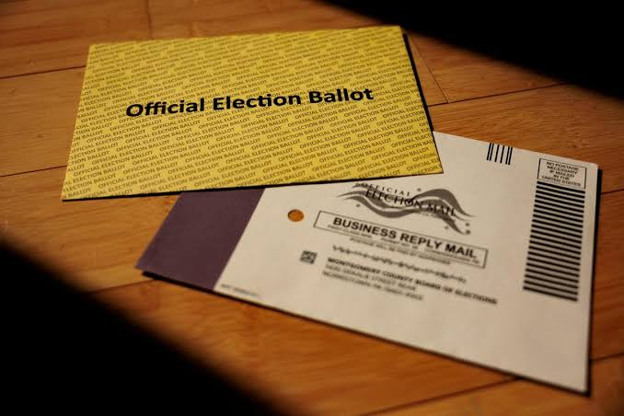
And somewhere in Boston, a single federal judge has read the fine print and placed himself as the last line of defense safeguarding the interests of millions of mail-in voters. And the fight between the judge and the administrator has knocked upon the doors of the Supreme Court thrice over the past month without a clear legal outcome while ballots have already begun going out the door in some states across the United States.
Table of Contents
1. What the Rule Actually Does
2. The Full Timeline So Far
3. Why the Judge Says It's Unlawful
4. The Administration's Case
5. Why the Clock Is the Real Story
6. Where Things Stand Right Now
7. What Happens If the Rule Takes Effect
8. Conclusion
What the Rule Actually Does
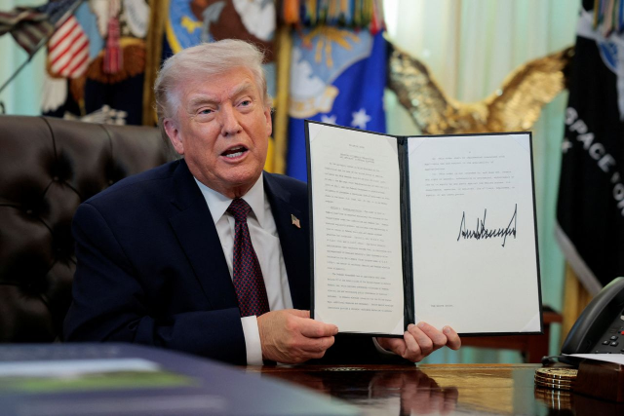
President Trump back in March 2026, signed an executive order directing the US Postal Service to insert itself into how mail-in ballots are handled nationwide. In practical implementation, the resulting USPS "Final Rule" requires election officials to submit their mail ballot envelope and return envelope designs to the Postal Service for advance approval, create accounts on a new USPS electronic portal, and upload each voter's information including name, address, and a unique tracking barcode before ballots can be mailed. Under the rule, USPS would refuse to deliver mail ballots for jurisdictions that haven't completed this process, regardless of state election deadlines.
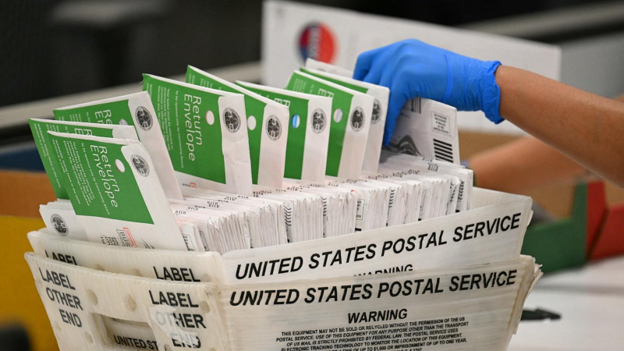
The Department of Justice has described the rule as an attempt towards standardization of the mail-in process and an anti-fraud measure, arguing it addresses "the risk that the federal mails will be used to perpetrate voter fraud." Voting rights groups and a coalition of Democratic-led were prompt to counter the move on the grounds that the order shifts the role of the Postal Service from being a mail carrier to an administrator controlling which ballots get accepted and included, a role that is traditionally assigned to the states by the Constitution instead of a courier service by the Federal Government.
The Full Timeline So Far
This case has moved through the courts with unusual speed, reflecting the hard deadline the November 3 midterms impose on everyone involved.
|
Date |
Event |
|
March 2026 |
Trump signs executive order directing USPS action on mail ballots |
|
June 2026 |
Judge Talwani blocks key provisions of the order for 24 Democratic-led jurisdictions, calling them unconstitutional |
|
Aug. 24, 2026 |
Supreme Court lifts Talwani's June injunction, ruling the challenge was premature since USPS hadn't yet finalized a rule |
|
Aug. 27, 2026 |
USPS issues its Final Rule; Talwani issues a 14-day temporary restraining order blocking it |
|
Sept. 4, 2026 |
North Carolina begins mailing ballots; Talwani converts her order into a preliminary injunction, again blocking the rule |
|
Sept. 6, 2026 |
Trump administration files a third emergency application asking the Supreme Court to intervene |
|
Sept. 8, 2026 |
Supreme Court has requested a response from challengers; ruling expected soon |
Why the Judge Says It's Unlawful
US District Judge Indira Talwani, appointed by President Obama and based in Boston, has now ruled against the administration twice on this specific rule. The judge has presented a strong core legal reasoning based on the Constitution's Elections Clause, which grants states and to some extent, Congress — the power to set the times, places, and manner of federal elections, not the president or its administration. "Unauthorized by the Elections Clause, the Final Rule clashes with Congress's statutory scheme, and is unconstitutional where it intrudes not only on Congress's Elections Clause powers but also that power left to the States," she wrote.
The judge’s ruling on September 4 also focused on the required timing of the policy implementation. The rule being issue only 70 days prior to the upcoming elections is bound to make voter disenfranchisement "practically inevitable,". The judge also wrote that states face "irreparable harm where they are required to comply with a likely unconstitutional regulation for which compliance is practically impossible" this close to the midterms. In addition, she also noted pointedly that the government's own court filings included "no evidence relating to fraudulent mail voting" to justify the rushed rollout.
The Administration's Case
The Trump administration has pushed back on every previous ruling and made attempts to escalate the matter to the Supreme Court three times in less than a month. In its most recent emergency application, Solicitor General D. John Sauer argued that Talwani's injunction "risks sowing confusion and chaos" by making USPS compliance steps voluntary rather than mandatory, while warning of a "grave risk" that states might mistakenly believe they have more time than they actually do, potentially disenfranchising their own voters as a result.
Sauer was also quick to downplay and push back on the notion that the rule federalizes election administration, describing it instead as imposing only "modest envelope-design and addressee-information requirements" for ballots sent through the mail. Sauer also emphasized upon the practical urgency of the matter and the need to seek interventions by the Supreme Court on accounts of practical urgency of the situation. North Carolina and Alabama had already begun, or were scheduled to begin, sending ballots to voters as early as September 4, and Sauer reiterated that once those envelopes enter the mail system, there's no retrieving them to make changes later.
Why the Clock Is the Real Story
While it's easy to be caught in the legal back-and-forth, the real pressure point in this case is simply time. Roughly one-third of American voters cast their ballots by mail, and election officials across multiple states have clarified that it's not possible to overhaul their entire systems as per USPS guidelines before ballots go out for the November elections. As things stand, the rule currently allows states to voluntarily adopt the new USPS system, something that not a single state has chosen to do.
Where Things Stand Right Now
As of this writing, Talwani's preliminary injunction remains in effect, meaning the USPS rule's envelope-design and voter-data-upload requirements are blocked. The Trump administration awaits their third application response in the Supreme Court, with a response required by September 8, and a ruling in the days that follow. And while the administration hopes to convince the Supreme Court, it's worth noting that the court has previously not addressed if the ruling was useful but simply focused on the procedural error of Talwani having acted before USPS had finalized its rules. And within the Administration’s proposal, while the USPS segment remains under discussion, a separate provision requiring the Department of Homeland Security to compile lists of "eligible voters" and share them with states continues in effect unaffected by the outcome of the ruling.
What Happens If the Rule Takes Effect
If the Supreme Court were to ultimately side with the administration and allow the rule to proceed, election officials and voting rights groups have predicted an inevitable and practical disruption to the next voting elections. Following the court ruling, states would be required to redesign ballot envelopes while also building a brand-new federal portal system with only weeks remaining until Election Day.
Conclusion
It's uncommon for the Supreme Court to witness three escalations within the same month, more on the same case and that in itself is a testament to the stakes involved in the new policy and changes. And somewhere between the Trump Administration and the Judge, this no longer remains a regulatory dispute but a fight to set the rules for how billions of Americans cast a federal ballot. And with envelopes already shipping across North Carolina, and states being reluctant to pick the new policy, the fight looks set to focus on the timeline as much as it focuses on the Constitution and the Supreme Court.
Latest Posts