

FIFA Faces Major Pushback Over 20 Billion Private Equity World Cup Plan European football governing bodies challenge FIFA's bid to monetize global tournament rights.
Everyone is aware of what could be coming, yet not sure of how the game would end. That’s roughly where the footballing world finds itself right now, except the game isn't on the field and the outcome isn’t simply a result or a trophy - but the future and sustainability of the sport itself!
FIFA President Gianni Infantino has proposed selling a slice of the World Cup’s commercial future to private investors. This commercial future involves all the business segment - including the broadcasting deals, the sponsorships, the ticketing and image licensing without affecting the matches or the trophy - just the money making segments of the billion dollar tournament. And while everyone could perceive the move differently, FIFA’s very own member federations are strongly divided over whether this is a good idea.
Table of Contents
- Everything We Know About What’s Happening
- The Parties With Stakes Involved
- How The Footballing World Is Focused On Pushback
- What It Could Mean for Fans and the Sport
- Conclusion
Everything We Know About What’s Happening
Earlier this week, FIFA announced its plans to create a new commercial subsidiary - FFE, The Fifa Forward Enterprise. It emphasized that the idea is to combine all the commercial segments of FIFA’s tournaments, starting with the World Cup and sell up to a 20% stake of the FFE to private investors. It also announced that it has drawn an initial venture assessment with a value estimate around $20 billion and hopes to raise as much as $4.2 billion with the initial sale.
While FIFA set forth a clear plan and its intention, it awaits approval from FIFA's membership with a clear deadline - September 19. To ensure a smooth execution, FIFA is working with J.P Morgan for the deal, with Thrive Capital as the lead investor, a firm founded by Joshua Kushner - the brother of Jared Kushner, son-in-law of President Trump. Apollo Sports Capital has also reportedly been in talks to join the investor group in the near future.
The proposal to FIFA’s 211 members is also quite generous. If the plan goes through, FIFA’s funding towards each member federation could more than double, increasing from $8 Million to a whopping $20 Million a year. While that revenue increase might not entice the larger footballing nations, smaller football federations with limited budgets and poor footballing infrastructure might be drawn towards the possible developments that they could uptake!
The Parties With Stakes Involved
|
Party |
Position |
Stated Reasoning |
|
Gianni Infantino / FIFA |
In favor |
Calls it the "democratization of football," spreading World Cup wealth to smaller nations |
|
UEFA (Europe) |
Strongly opposed, threatening boycott |
Argues the World Cup "is not FIFA's to sell" |
|
AFC (Asia) |
Opposed |
Says it was blindsided, learned of the plan through media reports |
|
CONCACAF (N. America/Caribbean) |
Opposed |
Same complaint — no prior consultation |
|
Czechia's federation |
Supportive |
Sees it as a legitimate revenue opportunity |
|
Saudi Arabia's federation |
Reportedly supportive |
Close ally of Infantino; will host the 2034 World Cup |
|
Thrive Capital / J.P. Morgan |
Facilitating |
Structuring and leading the investment |
It’s important to assess this situation with all parties addressed because this isn’t a disagreement or dispute between two parties involved, but a tug-of-war with several hands on the rope. Diving into the numbers, UEFA, AFC and CONCACAF collectively represent 143 of the 211 FIFA member nations, a clear majority on paper and while the plan depends on a vote, the outcome remains unpredictable. FIFA hopes to be successful with the plan in the hope that smaller, less wealthy federations would focus on the attached financials and change their stances, overpowering the football powerhouses in the vote.
How The Footballing World Is Focused On Pushback
In its first statement following FIFA’s announcement, UEFA didn’t mince any words. Its blunt declaration - “The World Cup isn’t FIFA’s to sell” has sent the bells ringing with the confederation having announced emergency meetings with all of its 55 member associations to discuss a full-blown boycott - not just of the Men’s World Cup, but potentially from the Women’s World Cup and the Club World Cup too!
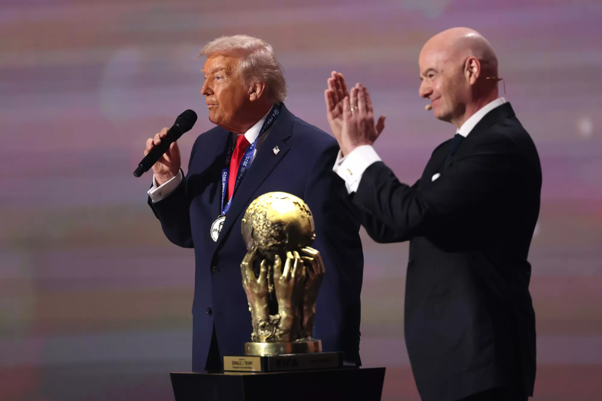
And the outrage isn’t purely based on the financials or inclusion of foreign investors. It emphasizes on the possible implications that external investor groups could implement in hopes for greater rewards - more matches, longer tournaments and deeper commercial windows in an already exhaustive calendar year for the players. The issue also sets fire to the sparks that rose from controversies and growing concerns over the ties between Infantino and the Trump family during the Men’s World Cup wrapped up this month in the U.S, Canada and Mexico.
As things stand, UEFA is racing to garner support and organize crisis talks to handle the situation while AFC and CONCACAF are busy airing their frustration about not being involved in these conversations from the start. FIFA, in the meanwhile, is awaiting the September vote with the hopes that their financial plans for smaller footballing nations would be enough to bring their plans to fruition.
What It Could Mean For The Fans And The Sport
For everyday fans and passionate fanatics, this could all seem very abstract - boardroom meetings, equity stakes and subsidiary structures but the ripple effects are sure to be felt worldwide. Throughout history, private capital investments chasing returns have only led to more matches, more sponsorship saturations and tournament hosting rights and schedules being driven by commercial values over sporting ones. And while everyone is left with the search for answers, there’s no predicting how financial interest conflicts could impact the beloved game in the future!
Conclusion
The noise of corruption scandals, boycotts and power struggles isn’t something new to the footballing world, in fact it’s a huge part of how it became the monumental sport that it is today. But this plan doesn’t quite feel the same, it's different because it doesn’t focus on who owns the game - but who owns a piece of it and could influence the outcomes. And somewhere in between FIFA's hope of a democratization of football and UEFA’s threats of the World Cup not being available for sale, we are left wondering what the sport could possibly look like in a decade.
Latest Posts