

FDA Approves Bayers Asundexian, First Factor XIa Inhibitor for Stroke Prevention

In adults who have recently had a mild to moderate ischemic stroke or a high-risk transient ischemic attack (TIA) not caused by a clot from the heart.
Addressing the grant to the public, the Agency reported that its decision to grant approval was firmly grounded in effective results of the large phase 3 trial which reduced risk of ischemic stroke by over 26% from once-daily tablets in addition to standard antiplatelet therapy. While certain regulators continue to highlight smaller concerns like bleeding signals that were observed in certain groups of patients, the approval is a giant leap for a field that has been bettered by slow progress of research developments and large-scale testing.
This article is for general information and is not medical advice. Anyone who has had a stroke should discuss treatment with their doctor.
Table of Contents
1. What the FDA Approved
2. Why a New Approach Matters
3. The OCEANIC-STROKE Trial
4. Bleeding Risk and Label Restrictions
5. Who the Drug Is and Is Not For
6. How It Compares With Existing Options
7. The Wider Picture: China, Rivals and Bayer's Bet
8. Conclusion
What the FDA Approved
The recently approved drug, Sunharbo by Bayer is a 50 mg tablet that is supposed to be consumed once daily along with antiplatelet therapy. The drug has been specifically approved for adults who’ve experienced a recent mild to moderate non-cardioembolic ischemic stroke, meaning a stroke not caused by a clot travelling from the heart, or a high-risk TIA. Sunharbo also became the first factor XIa inhibitor to receive approval in the United States, after having originally applied with a fast track designation and priority review back in May 2026. The approval also particularly excludes individuals with atrial fibrillation, a heart rhythm disorder that is treated differently.
Why a New Approach Matters
According to Bayer’s estimate, one in five survivors of a non-cardioembolic ischemic stroke experience a repeat stroke within five years, making strokes a rare one-off event. Traditionally, doctors have recommended antiplatelet medication with combinations of regular monitoring of blood pressure and cholesterol levels to provide protection from a repeat but further attempts like adding blood thinners or combining anticoagulants with antiplatelets have regularly failed with complications resulting in ineffective results or bleeding amongst test patients.
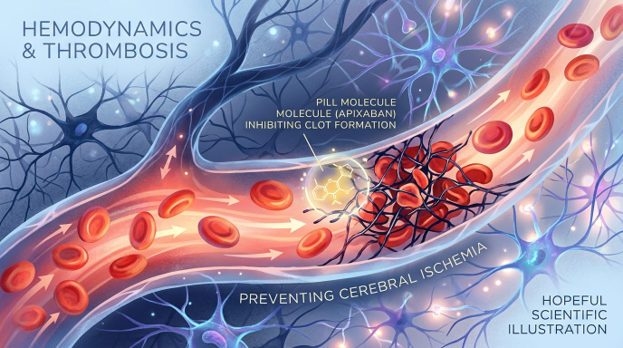
Bayer’s Asundexian solves that problem by focusing on the very root part of the clotting process. The drug acts as an inhibitor, blocking factor XIa from forming clots. Currently, existing anticoagulants such as Eliquis and Xarelto target a different protein, factor Xa which has resulted in treatment practices focusing on older blood thinners, an approach that could quickly change with Bayer’s new drug that can prevent harmful clotting altogether.
The OCEANIC-STROKE Trial
The approval for Asundexian was granted following the OCEANIC-STROKE trial - a multinational, randomised, double-blind, placebo-controlled trial run at 702 centres in 37 countries and published in the New England Journal of Medicine. The trial also consisted of 12,327 enrolled adults alongside randomised patients who had been randomised within 72 hours of symptom onset. Notably, during a second measurement, Asundexian also showcased lower risk of cardiovascular death, heart attack or stroke. However, contrary to research expectations, the drug did not largely impact the chances of ischemic stroke within the first 90 days, placing both drug and without drug values at 3.0% versus 3.5%, a significant discouragement for further research on the drug’s secondary goals.
|
Trial feature |
Detail |
|
Participants |
12,327 adults after a mild to moderate ischemic stroke or high-risk TIA |
|
Treatment |
Asundexian 50 mg once daily (6,162 patients) or placebo (6,165), both on antiplatelet therapy |
|
Median treatment duration |
14.2 months |
|
Ischemic stroke |
6.2% with asundexian versus 8.4% with placebo |
|
Hazard ratio |
0.74 (95% confidence interval 0.65 to 0.84), a 26% reduction |
|
Major bleeding |
1.9% versus 1.7%, a difference that was not statistically significant |
Bleeding Risk and Label Restrictions
Overall bleeding looked similar between the two groups, and rates of adverse events and serious adverse events were close, at 69.3% versus 70.1% and 19.2% versus 19.5%. But the FDA pointed to signals in specific groups. Major bleeding was more frequent with asundexian in patients older than 75 and during the first 90 days of treatment, and gastrointestinal bleeding occurred more often than with placebo. Diarrhea was the most common side effect, reported in at least 3% of patients.
|
Label point |
What it says |
|
Drug interactions |
Not recommended with drugs that are both P-gp inducers and strong CYP3A4 inducers, such as carbamazepine, which may reduce effectiveness |
|
Liver disease |
Not recommended in moderate or severe hepatic impairment |
|
Surgery |
Hold at least 24 hours before elective surgery or invasive procedures |
|
After clot-busting treatment |
Hold at least 24 hours after thrombolysis for acute ischemic stroke |
|
Excluded use |
Not approved for stroke prevention in atrial fibrillation |
Who the Drug Is and Is Not For
The approval applies to the group studied, adults with a recent mild to moderate non-cardioembolic ischemic stroke or high-risk TIA who meet the trial's criteria. It is not a general stroke-prevention pill, and it does not replace the blood thinners used for atrial fibrillation. Because of the age-related bleeding signal, doctors will weigh benefits and risks carefully in older patients. A separate analysis of the trial published on November 7 reported that the effect was consistent across low, intermediate and high vascular risk groups without more major bleeding.

How It Compares With Existing Options
|
Approach |
Target |
Typical use |
Main concern |
|
Antiplatelets (aspirin and others) |
Platelets |
Standard after non-cardioembolic stroke |
Residual stroke risk remains |
|
Factor Xa anticoagulants (Eliquis, Xarelto) |
Factor Xa |
Atrial fibrillation and clot prevention |
Higher bleeding risk when combined with antiplatelets |
|
Asundexian (Sunharbo) |
Factor XIa |
Added to antiplatelets after non-cardioembolic stroke or high-risk TIA |
Bleeding signals in over-75s and first 90 days |
The Wider Picture: China, Rivals and Bayer's Bet
The U.S FDA’s decision follows a previous round of approvals that had been granted in China in late October, marking the first grant for this class of drugs. While Bayer has successfully completed its trials and received the grant, other companies like Bristol Myers Squibb and Johnson & Johnson are also working on a similar factor XIa inhibitor approach with their ‘milvexian’ drug currently being assessed in clinical formulations. Bayer's earlier trial of asundexian in atrial fibrillation was stopped in 2023 after the drug proved less effective than the existing standard, resulting in the new approval being limited to a unique set of patients while also becoming a high-profile first-in-class launch that has revolutionary potential.
|
Pros of the new option |
Open questions |
|
A 26% relative reduction in ischemic stroke in a large trial |
Bleeding signals in over-75s and early treatment |
|
New mechanism with once-daily dosing |
Real-world results and long-term safety |
|
Overall major bleeding similar to placebo in the trial |
Cost, insurance coverage and launch timing |
|
Class may lead to further options, including rivals |
No benefit shown in the first 90 days on one measure |
Conclusion
Asundexian’s approval has set a benchmark criteria for a new class of stroke-prevention drugs, with a large, well-designed trial providing benchmark foundational evidence for the grant. The drug's 26% effective reduction in recurrent ischemic stroke is a significant reduction for those at risk of a subsequent stroke experience while bleeding continues to remain manageable overall. And while the drug’s effectiveness and significance are important to consider, it’s also important to note how bleeding warnings apply to older patients and early treatment and real-world experience continue to hold significant impact in preserving the drug’s impact. For patients and doctors, the drug adds an option rather than a replacement for current care.
Latest Posts