

Dune 3 Trailer The 17-Year Leap

A Trailer Built Around a Time Shock
The film is officially known as Dune: Part Three and is based on Frank Herbert’s second Dune novel, Dune Messiah. The story takes place after all of the events of Dune Part Two, which was set in the midst of an on-going Jihad that started with an inflection point in Paul Atreides’ life, when he became Emperor. According to Denis Villeneuve, the director, the story takes place about 17 years after Part Two ends, with Paul Atreides, Emperor of the Galaxy, and married to Princess Irulan.
The teaser trailer for the film emphasizes this contrast. The trailer opens with early shots of a young Paul (in his classic Atreides hair style), and culminates with a battle-hardened Paul (buzz cut) ready to go into battle, thus showing the physical manifestation/visual representation of 17 years of power and time. Additionally, the way that the teaser poses Paul and Chani referring to their future children that they discussed and the fact that they do this alone in the privacy of their home, cutting to complete chaos and war represent that the 17-year time jump serves as much to discuss how children and legacy are built through family and love, as they do through politics and prophecy of the galaxy.
From Epic Origin to Political Thriller
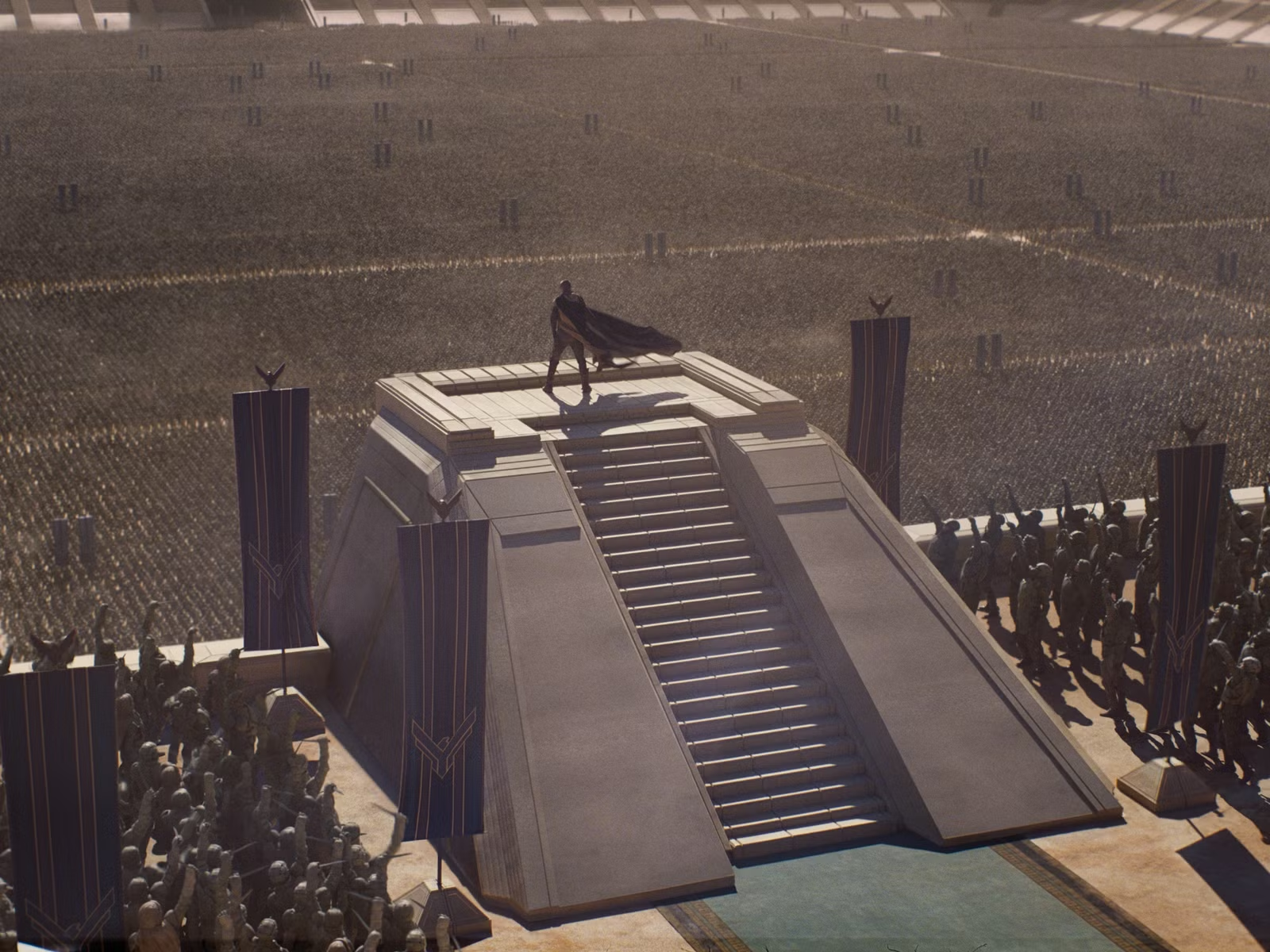
With Villeneuve's trilogy, the director has structured the three films in a variety of genres, but all in the same universe; part one is a thoughtful coming of age film, part two is a war film, part three is a “more muscular, action‑oriented and tense” thriller; examining what happens after a saviour has had a successful conclusion.
The additional 17 years between part two and part three gives the director an opportunity to change direction from the usual “chosen one” paradigm and instead examine Paul as an omnipotent leader who is trying to break free from a cycle of violence he has created, while others with their own agendas conspire against him. This represents a traditional second-act dilemma for any franchise, which is; how to transition from rise to reckoning without causing the viewer to lose interest? Based on the trailer for part three, it appears that the answer will involve getting (and using) the viewer's discomfort and embracing a political noir (which tends to be mysterious, dark, and full of suspense).
Robert Pattinson, Scytale, and Franchise Freshness
Decisions made by cast and character selection indicate that this franchise is continuing to revive its Intellectual Property without completely starting over. This trailer formally introduces Robert Pattington who plays Scytale, a shape shifting operative of the Bene Tleilax; therefore, allowing audiences to make their own assumption about which side he may actually be on, which is helpful with story lines becoming morally ambiguous instead of clearly defined as good or bad.
He also joins returning actors (Timothée Chalamet, Zendaya, Javier Bardem and Florence Pugh) as well as new cast members (e.g., Anya Taylor-Joy), allowing Warner Bros to advertise to an even broader demographic via social media. In addition, Jason Momoa's Duncan Idaho is returning, even though he died in the first film, creating another way to tie into the book for viewers and add to the overall theme of things not being simple.

The Business Logic Behind a 17‑Year Jump
This big-time skip that studios face presents a challenge for casual viewers; therefore, to make this work, they will have to accept the new political realities, the older versions of their characters, and most importantly the majority of backstory will occur offscreen. In terms of franchise economics, a very positive aspect for studios is unlocking new story space without a reboot or creating a different continuity.
By using the time jump from Dune: Part Two and setting Dune: Part Three nearly 20 years in the future, the creative team is able to establish new planets, factions, and visual language; this creates future opportunities for merchandise, video games, spin-off films, and streaming prequels through properties and themes introduced in the first Dune film. In other words, it allows Dune: Part Three to completely create its own form of live-action through continuing established adult-themed franchises by introducing new locations yet still concluding character development from Dune: Part One.
From a release standpoint, December 18, 2026 has been positioned as an end of the year, tentpole release, like it predecessors, aiming at Imax theatre releases as being filmed mostly on Imax film, using the same composer (Hans Zimmer), and adding a new director of photography (Linus Sandgren), the film is being designed for premium large formats that attract high ticket prices and extensions to the historical theatrical run time.

What This Means for a Business‑Savvy Viewer
The trailer for Dune 3, which will be released in 17 years following the part 2 trailer, is showing digital-first and industry-aware audiences what long-term IP management looks like as a test case. Their successful execution of this three-part franchise will strengthen the case for dense, expansive narrations at a long-term duration without the need for narrative recaps each time a film is released—especially because they will all be released multi-years apart and have a lot of content in streaming catalogues behind the original IP. However, a failed execution of the franchise will confirm that big budget movie franchises relying on monumental amounts of funding will only be able to sustain themselves with Marvel-style incremental continuity.
Villeneuve and Legendary are clearly placing their trust in the audience, regardless of the outcome. They're betting that those who journeyed to Arrakis in the first two films will embrace the third film's bold and unexpected approach.This time, it's less about fulfilling a prophecy and more about the consequences of that prophecy becoming a snare. In an industry often focused on playing it safe with sequels, this trailer, and the seventeen-year wait, should be taken seriously by those in the know, precisely because of its uniqueness.
Latest Posts