

Drone-Launch Platform Used in Attack on Saudi Oil Pipeline Seized By Iranian Authorities
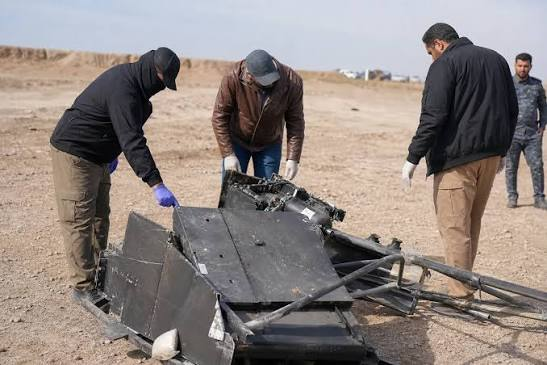
Days following the strike on the pipeline, Iraqi forces have found the equipment that led to the orchestration of the incident and while more details are awaited, this very discovery could quickly become another cornerstone in an already volatile region.
Table of Contents
1. What Iraq Found
2. The Attack That Prompted the Search
3. Where the Trail Led
4. Iraq's Response on the Ground
5. Why This Pipeline Specifically Matters
6. How This Fits the Region's Wider Conflict
7. What Happens Next
8. Conclusion
What Iraq Found
On September 13, Iraqi authorities announced that a joint intelligence and security task force had located and seized a drone-launching platform inside Iraqi territory, identified as the equipment used in the strike on Saudi Arabia's East-West oil pipeline days earlier. The seizure of the drone-launching platform was confirmed by Lieutenant General Saad Maan, head of Iraq's Security Media Cell, through the state-run Iraqi News Agency, with emphasis that the Iraqi task force had made "significant efforts" to track down and recover the platform. Maan said investigative work is continuing, including forensic examination and technical documentation, with the explicit goal of identifying who was actually responsible for the attack instead of simply identifying the origin and hardware of the attack. "Not only to seize the platform, but also through continued intensive field and intelligence efforts to identify those involved," he said.
The Attack That Prompted the Search
Saudi Arabia had recently, on Friday, September 12 announced that its East-West pipeline across the Riyadh and Madinah regions, had been struck by multiple drones that launched from Iraqi territory causing injuries and significant damage to its infrastructure. As a precaution, Saudi Authorities had also shut down the pipeline while the investigation continued and led to the seizure of the drone platform.
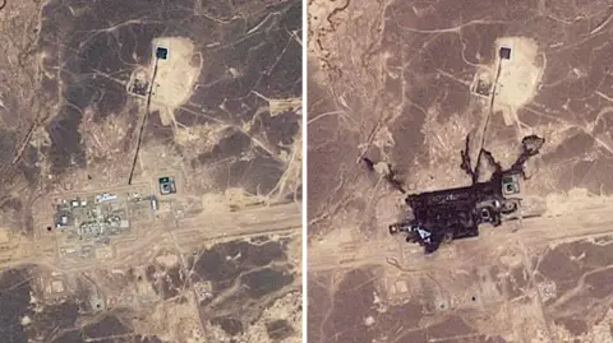
Al Jazeera correspondent Mohammed Rammal reported that the strike zones sat roughly 1,100 kilometers (684 miles) from Medina and 800 kilometers (497 miles) from Riyadh, distances Rammal said point to the use of "not tactical drones, but long-range, advanced ones," rather than the smaller, shorter-range drones more commonly associated with militia attacks in the region.
Where the Trail Led
Saudi authorities traced the drones' launch site to Maysan province in southeastern Iraq, a region near the Iranian border where Iran-aligned militias have long maintained a presence. Iraqi investigators subsequently pointed to the al-Tayeb border district in northeastern Maysan, near the Sheeb crossing east of Amara, encompassing an area around the Duwayrij River and Tayeb Island, as the likely specific launch point. The borderzone of the attack is also significant, for it has been under repeated scrutiny for militia activity, especially with it being directly adjacent to Iran, which has also in turn shaped the diplomatic response.
Iraq's Response on the Ground
Iraqi authorities have been proactive in their response across multiple fronts. Iraq's army spokesman, Sabah al-Numan, said security and intelligence agencies were continuing operations to "track down and arrest all those involved" in the attacks. Iraq's commander-in-chief also approved a request from Iran to join the investigation and review its findings, an important note since Iran-aligned militias are commonly suspected as the orchestrators for attacks originating from Iraqi border territory.
Iraqi Prime Minister Ali al-Zaidi reshuffled military commanders in the affected border regions, including Maysan province itself. Al Jazeera correspondent Samer al-Kubaisi reported that both the Maysan operations commander and the provincial police chief were among those dismissed, with a broader group of security commanders in the province now under investigation. Iraqi authorities also temporarily closed several border crossings with Iran, including Shalamcheh, Chazabeh, and Mandali, for security inspections, and only opened them partially to ensure movement of humanitarian traffic.
Maan framed Iraq's overall posture around what he called a principle of "preventive sovereignty", meaning that it wasn't simply focused on preventing attacks on Iraqi territory but also on ensuring that the territory wasn’t being used as a launchpad towards other countries or becoming the foundation ground for a proxy war. "Iraq adopts the principle of 'preventive sovereignty,' which means not only preventing attacks on our territory, but also not allowing our land to be a launching pad against any other country, or for Iraq to be part of a proxy war," he said.
Why This Pipeline Specifically Matters
Saudi Arabia’s East-West pipeline is crucial as it carries roughly 4 to 5% of global oil supply, and it also enables Saudi Arabia to move crude to export terminals on the Red Sea coast, without having to solely depend on the conflicted Strait of Hormuz. The pipeline is an important alternative to Saudi’s transport corridor dependence on the Strait of Hormuz, a region that has been under conflict for the majority of the year, and that’s precisely what makes these attacks as significant as it takes away some of the flexibility that Saudi Arabia has been depending upon amidst the broader regional conflict impacting its supply abilities.
How This Fits the Region's Wider Conflict
The attack on the pipeline is another attempt to damage the already sensitive state of Saudi’s Energy infrastructure. In the preceding days to the pipeline strike, Saudi had reported the lowest levels of Crude Oil production, levels as low as 1990, mainly due to disruption on its export capabilities and regional conflicts over both water channels, the Strait of Hormuz and the Red Sea corridor being the Bab el-Mandeb. The latest strike, further aims to damage the ability of Saudi to use the alternative route and extends the damage on Saudi’s Oil supply abilities not being limited to its ports or supply channels but also internal infrastructure, with attacks being launched across international borders.
What Happens Next
The situation currently sits at a delicate situation with Saudi Arabia withholding retaliation in accordance to political diplomatic requests while Iraq continues to investigate Iranian involvement while Forensic experts focus on identifying the origins and management of the platform that they recently seized with links to the attacks. And whether the retaliation continues to withhold itself or results in another regional strain depends on the outcome of Iraq’s investigations as well as how convincingly Baghdad can demonstrate it's ability to prevent further launches from its own territory.
Conclusion
The Iraq government’s approach to the situation and using the phrasing of the incident requiring “preventive sovereignty” and not simply an arrest or retaliation is an indicator that the incident was never solely about a single intent or platform. The incident currently appears as a test of whether Baghdad can credibly police militia activity along its own border before Riyadh’s diplomatic patience gets exhausted. As things stand, both governments look to avoid further enhancement of tensions and hope to resolve the incident through cooperation over retaliation, but the results of the forensic assessment as well as Iraq's continued investigation could quickly alter their stances in the coming days.
Latest Posts