

Democrats Win Both Chambers of Congress, Flipping Seven Senate Seats Including Texas and Kansas for a 54-Seat Majority Trump Says Hell Work With Them but Veto Their Bills
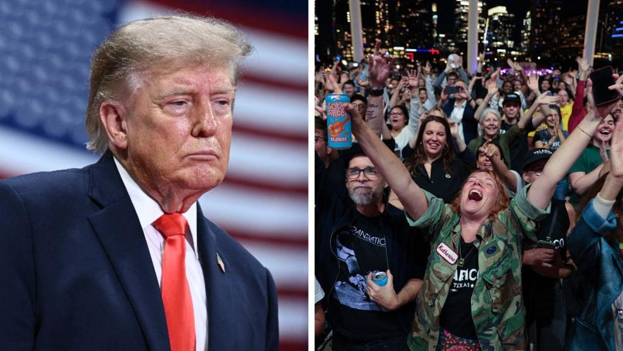
having flipped seven Republican-held Senate seats and caucusing with two independents. The U.S president was quick to express his surprise on the outcome and assured that he would work with the new majority, while also warning that he's likely to veto legislation he considers unacceptable, a battle that's likely to become the norm for the next two years.
Counts are projections by news organisations. Several races remain too close to call, and official certification is still to come.
Table of Contents
1. The Result at a Glance
2. The Senate: Seven Flips
3. The House: Democrats Take a Large Majority
4. Why Voters Moved: Cost of Living and the Iran War
5. Trump's Response: Cooperation and the Veto Pen
6. Reactions From Both Parties
7. What Divided Government Can and Cannot Do
8. Conclusion
The Result at a Glance
The election results quickly followed on the election night with various outlets beginning to claim that the Democrats had won the house before also confirming a likely senate flip, while reporting that the Democrats had indeed managed to achieve 51 seats that are needed for the majority. Prior to the election, the Republicans held 53 of the 100 Senate Seats while the Democrats held 45, with two independents caucusing with the Democrats, leaving four flips as necessary for a Democratic majority.The projected gains made this one of the most lopsided midterm performances in recent decades, giving Democrats their largest House majority in nearly two decades.
|
Chamber |
Before the election |
Result (projected) |
|
Senate |
53 Republican, 45 Democratic, 2 independents |
Democrats at least 54 with independents; two races unresolved |
|
House |
218 Republican, 214 Democratic |
Democrats between 251 and 268 seats (CBS estimate) |
The Senate: Seven Flips
Official records highlighted seven strong seats that the Democrats took from Republicans, in ruby-red states and battlegrounds alike.
|
State |
Outcome |
|
Texas |
Democrat James Talarico defeated Republican Ken Paxton, ending a Republican hold on the seat dating to 1988 |
|
Kansas |
Democrat Adam Hamilton won, in a state that has not elected a Democratic senator in nearly a century |
|
Ohio |
Democrat Sherrod Brown won |
|
Maine |
Democrat Troy Jackson defeated Republican Sen. Susan Collins |
|
South Carolina |
Democrat Annie Andrews defeated the Republican incumbent |
|
Iowa |
Democratic win in a seat won by a Republican in 2020 |
|
North Carolina |
Democratic win |
Democrats also held contested seats, including Michigan, where Abdul El-Sayed defeated Republican Mike Rogers, and Minnesota, where Peggy Flanagan won. Republicans held some targets: Pete Ricketts won in Nebraska, fending off independent Dan Osborn. Two races remained unresolved at the time of reporting, among them Mississippi, where Democrat Scott Colom was reported to lead Republican Sen. Cindy Hyde-Smith by only 65 votes, so the final Senate total could still change.
The House: Democrats Take a Large Majority
The Mid Term elections struck a surprise for the magnitude of change that they caused. The Democrats flipped more than two dozen Republican-held districts, including perennial swing seats and those that had been largely considered as safely Republican and are currently estimated to finish between 251 and 268 seats. Amongst other outcomes of the election, Rep. Hakeem Jeffries, the current minority leader, won re-election and is in line to become Speaker while House Speaker Mike Johnson informed that he would not run for minority leader, with Rep. Steve Scalise has expressed interest in the post, changes in the Congress that look set to take effect following the swearing-in ceremony in January.
Why Voters Moved: Cost of Living and the Iran War
The swing in voters from the Republican side to the Democratic has been significant, but not one of surprise. The shift is believed to have emerged largely from economic frustration over living costs, with Democrats campaigning on affordability and health care as the central issue. President Trump was also observed acknowledging that rising gasoline prices tied to the conflict with Iran probably contributed to Republican losses while Vice President JD Vance also believed war was the reason behind the party's losses. President Trump also claimed that perhaps the voters did not like the candidates that were contesting, while claiming that he would've won if his name had been on the ballot.
Trump's Response: Cooperation and the Veto Pen
Since the official result announcement, President Trump has delivered a sequence of mixed reactions that have presented conflicting inclinations on conciliation and warning at the same time. On election night, the President was quick to congratulate the Democrats while expressing his desire to collaborate and work towards the good of the country, while assuring party members for openness towards discussing immigration, and similar issues that could benefit America in the longer run. Soon after, Trump also posted an image on the platform Truth social depicting a red cap with the word “Veto”, while also speaking to Fox News and iterating that Democrats would send over bills he considered insane and that he would veto them.

Notably, the Veto is not an absolute tool and can be overridden with two-thirds majority in both chambers, a number that the Democrats might not have at the moment, but could surely achieve in the future.
Reactions From Both Parties
|
Figure |
Position |
|
Donald Trump |
Will work with Democrats; will veto bills he calls insane; says gas prices linked to the Iran war hurt Republicans |
|
Hakeem Jeffries |
Says Democrats will deliver change and hold wrongdoers accountable |
|
Chuck Schumer |
Addressed supporters after the Senate flip |
|
John Thune |
Said Senate Republicans would not stand idly by while the Democratic Party's far-left wing tried to unwind their work; said they would work with Trump to stop it |
|
JD Vance |
Blamed the Iran war for Republican losses |
Both Democrats and Republicans have since described the election results from two contrasting perspectives. The Democrats claim that the outcome portrays a repudiation of Trump and of Republican control, while the Republicans believe they've been assigned to ‘check’ the far left, despite presidency and the veto as significant remaining sources of power
What Divided Government Can and Cannot Do
With a comfortable grasp over both chambers, Democrats have now gained complete controlling committee agendas, subpoena power and the pace of legislation. The Democrats are now more likely to work brokering deals, negotiating their plans for restoring enhanced Affordable Care Act subsidies, reversing cuts to Medicaid and changes they say would lower health costs. Notably, while the Democrats have achieved a total of 54 seats, Senate rules require 60 votes for passing of a legislation, an outcome that if achieved, still holds the risk of being vetoed by the President.
|
What Democrats can do |
Where limits remain |
|
Set committee agendas and issue subpoenas |
A Trump veto can only be overridden by two-thirds of both chambers |
|
Pass bills through the House and, with 54, the Senate |
Most Senate bills need 60 votes unless rules change |
|
Control spending bills and the budget process |
Government funding deadlines create shutdown risk |
|
Confirm or block nominees in the Senate |
Executive actions need no congressional approval |
Conclusion
The 2026 midterm results presented a surprising account on multiple fronts. Both chambers of Congress were subtle in changing hands while Deep-red states turned to Democratic Senators as the parties were left trying to unravel and accept a verdict that came as a surprise. For President Trump, the final two years of his term now look set to be spent in constant contest with the opposition and bargaining with the Congress, a conflict that could widely shape America’s future and the likelihood of legislation passing and being vetoed by the White House.
Latest Posts