

Colombia Shifts Political Course as Abelardo de la Espriella Takes Office
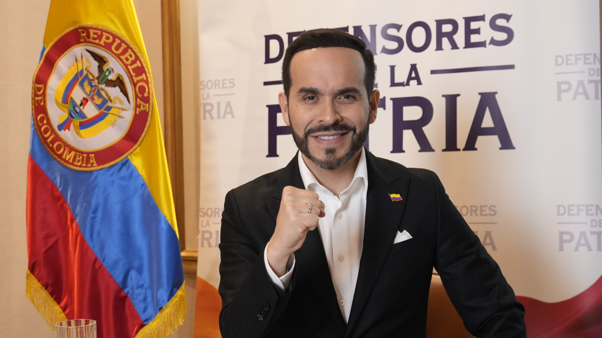
not in the halls of the capital city but on a university stage in Cali, a city that has withstood the worst of Colombian conflict in armed groups and the mere choice of the inauguration location spoke volumes of the administration that is about to take over!
Abelardo de la Espriella, the new 48-year-old Colombian president began his crucial four-year term following the ceremony, transitioning from being a conservative lawyer and political outsider in Colombia to the country’s 36th President. De la Espriella’s supporters and majority of Colombian civilians are framing his term as a much-needed break from the leftist government and the outgoing President Gustavo Pedro, while his critics continue to remain at incredible unease.
Table of Contents
- What Happened at the Inauguration
- Why Cali, and Why It Matters
- How He Got Here
- What De la Espriella Has Promised
- The US Relationship
- The Colombian Reaction
- Conclusion
What Happened at the Inauguration
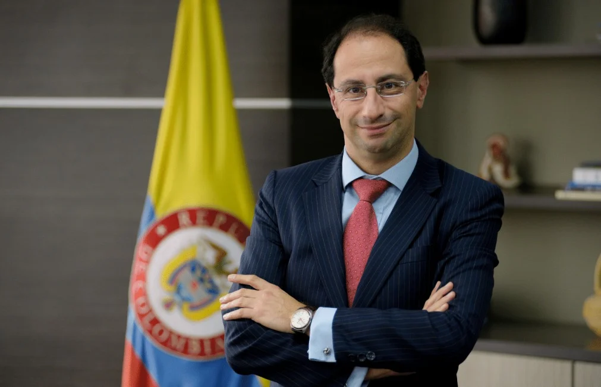
The ceremony was held at the Arena USC amphitheater of the Universidad Santiago de Cali and was attended by Spain’s King Felipe VI, for the first portion. More than 60 ambassadors along with multiple Latin American heads of state were also present for the Presidential Oath ceremony. De la Espriella undertook the presidential oath and received the presidential sash from Senate President Honorio Miguel Henríquez Pineda, following which he also swore-in Vice President José Manuel Restrepo.
Following the ceremony, the new Colombian president traveled to the nearby Pichincha Battalion military base to formally assume supreme command of the armed forces and deliver his first speech as president — a symbolically loaded choice of location, given that Petro, in his final weeks as commander-in-chief, had barred De la Espriella from holding any part of his inauguration at a Colombian military or police establishment. In his remarks, De la Espriella told the assembled security forces he intended to be "an essential part of the miracle country," and pledged that by the end of his term "authority will be felt in every corner" of Colombia. He also stated that "nobody will be persecuted for his opinions," a line widely read as an attempt to reassure critics wary of his hardline rhetoric.
Why Cali, and Why It Matters
The decision to choose Cali over the traditional Bogotá has definitely sent shockwaves across the world and taken over the headlines of every major outlet covering the event, and yet its significance is much greater than a logistical choice. Cali is amongst the most volatile and sensitive regions of Colombia's southwest, being commonly affected amidst the country’s conflict with armed groups. De la Espriella’s choice to be sworn-in there, sent a message to those armed groups, even before day one had begun or even a single policy had been signed. Something being widely regarded as bold and assuring amongst Colombian supporters.
How He Got Here
De la Espriella on his path to become the president, has to overcome Iván Cepeda, the candidate of Petro's Historic Pact coalition during the country’s runoff election on June 21, 2026. De la Espriella won the elections with a significant 49.6% majority of the votes, as declared publicly by The National Electoral Council of Colombia on June 25. And if records are to be emphasized, this election also marked Colombia’s highest even voter turnout in the country’s presidential election history. De la Espriella holds a notable reputation of being a political outsider, a lawyer and a businessman rather than a typical career politician, making him the the second Colombian president in a row to hail from Córdoba department, following Petro himself.
What De la Espriella Has Promised
The new president's stated agenda, laid out both during the campaign and in his inaugural remarks, centers on several sharp departures from Petro-era policy:
1. A focus on minimalizing control and disarmament of armed groups, replacing Petro's strategy of negotiated peace talks
2. Cutting government spending by as much as 40%
3, Reviving Colombia's oil and gas industry
4. Aggressively eradicating illegal coca plantations, which he described as a "national priority"
5. Restoring historically close relations with the United States and Israel, both of which had grown strained under Petro
6. Strengthening existing free trade agreements and pursuing new ones
While doubts continue to remain about the actual ground-level and effective implementation of these policies as well as the reality - assurance gap in these commitments, the Colombian Congress will play a significant role in how much of this agenda actually moves forward and the final effective outcome that De la Espriela will be capable of bringing in.
The US Relationship
Another important development that followed the swearing-in ceremony didn’t come from Cali or Colombia but rather Washington. Pending US congressional approval, The US State Department announced plans to pledge $1 billion in security assistance to the new government, after also personally endorsing De la Espriella's campaign in the past. The $1 billion package would focus on providing support for the fight against organized crime and drug trafficking, along with economic, trade and mining development in the region. De la Espriella also began his presidential actions by announcing Colombia’s decision to join the US-created “Shield of the Americas” alliance.
The Colombian Reaction
Colombia has experienced a difficult transition with De la Espriella’s appointment as the President. In the final days of his administration, outgoing President Petro publicly alleged fraud allegations regarding the election results, though no substantial evidence has been presented since to sustain those claims. Pedro also further warned that if De La Espriella was to be sworn in, “civil wars” would break out in the region. On the other hand, De la Espriella has also been alleged to have paramilitary ties, for which a criminal complaint has also been filed while the Colombian President continues to deny it. And while all accusations await verification and substantial evidence to proceed into criminal or court proceedings, for now it remains as mere allegations to smudge the new president’s image.
Conclusion
An inauguration ceremony, especially those of government and political leaders, holds a multitude of significance, for it bears the first real signs of the vision, the direction as well as the expectations that can be aligned with the new regime. De la Espriella's conscious choices from being sworn-in in Cali to announcing the US security package as well as putting the foot down against armed groups of the region, are indicative of hope for the future, but also fear for those living in those conflict-affected regions. And whether these promises materialize into actual change or simply remain a facade of hope in Colombia’s history, is a story awaiting to unravel in the coming weeks.
Latest Posts