

CDC Confirms Third US Measles Death of 2026, Matching 2025's Total, as Confirmed Cases Reach 4,410
A confirmation that equals its previous 2025 death count. Similarly, the CDC has also confirmed cases climbing to 4,410, nearly double of 2025’s confirmed tally total, with the outbreak showing poor signs of slowing down and becoming the worst Measles outbreak in United States History since decades.
Table of Contents
1. What the CDC Announced
2. The Numbers at a Glance
3. Why the Death Counts Don't Match
4. Pennsylvania: The Center of the Outbreak
5. Why Measles Still Matters
6. How to Protect Yourself and Your Family
7. Conclusion
What the CDC Announced
The CDC on Tuesday, October 20 confirmed through their website that they had officially recorded a third death in the United States that could be accounted for from the Measles outbreak for 2026. The agency had previously recorded two deaths in September while avoiding specific details of which states were witnessing the deaths. During their announcement, the Department of Health and Human Sciences confirmed that the National Center for Health Statistics (NCHS) had received a report of another Measles-related death and after due diligence had correctly identified measles as the underlying cause of death. Additionally, the CDC website also states that the number could continue to increase or change as further reviews are completed in the near future.
The Numbers at a Glance
|
Measure |
2025 |
2026 (as of Oct 15) |
|
Confirmed cases |
2,289 |
4,410 |
|
CDC-confirmed deaths |
3 |
3 |
|
Hospitalizations |
Not cited in sources |
451 |
|
States affected |
Not cited in sources |
45 states plus Washington, D.C. |
Within the confirmed cases tally, roughly 330 cases have been detected solely in the last week and largely over 96 percent of people infected this year were either found to have been unvaccinated or those whose vaccination status was unknown.
Why the Death Counts Don't Match
The death count tally across the Measles outbreak is slightly debated, a significant portion of which stems from conflicting reporting figures and sources. The CDC has officially confirmed three deaths associated with the Measles outbreak while state health officials have reported higher counts. Pennsylvania in itself has officially reported five measles-associated deaths, all of them from unvaccinated people while some outlets also consider a sixth reported death that has been alleged by the county coroner but continues to remain under review by the state authorities.
A major underlying reason behind the gap in count can be associated with the counting method which recently changed in September with the CDC beginning to use Mortality data from the NCHS to account for Measles death instead of depending on State Health Departments. State Health Departments and Officials tend to account a death as measles-associated based on the presence of the virus, without additional assessment on whether the virus was the immediate cause of death while the NCHS requires Measles to be verified as the underlying cause of death. Both approaches have garnered their share of approval and criticisms with regards to undercounting an actual toll while maintaining a stricter standard or simply valuing more consistent data and method of verification and accounting.
Pennsylvania: The Center of the Outbreak
Pennsylvania has quickly become amongst the hardest hit U.S States while having reported a total of 1,260 cases and 238 cases of hospitalization in 2026 so far. Amongst the states confirmed deaths, the first two were related to infants in Lancaster County occurring around the end of August, becoming the first measles related death in the United States in 2026 while also being the first Measles related death in Pennsylvania in over 35 years. In September, the state reported another death of a 40-year-old unvaccinated woman in Jefferson County which also prompted the CDC to promise additional support to the state in order to help investigate the outbreak and attempt to contain it.
Why Measles Still Matters
The Measles outbreak continues to emerge as an alarming concern for the contagious nature of the virus. Post infection, the virus produces early symptoms in the form of cold, fever, cough and a runny nose which is quickly followed by a rash. While vaccines and treatment programs aid recovery in majority cases, the infected period could quickly result in pneumonia, brain inflammation, triggering pre-existing health conditions and occasionally also resulting in death. Pennsylvania Health Department has also clarified and advised civilians to avoid undermining severe illness and remain extremely mindful of complications occurring at any age. Additionally, the Measles had once been successfully eliminated in the United States, a confirmation that meant it had entirely stopped spreading across the country which further makes the server impact of Measles more alarming for the country.
How to Protect Yourself and Your Family
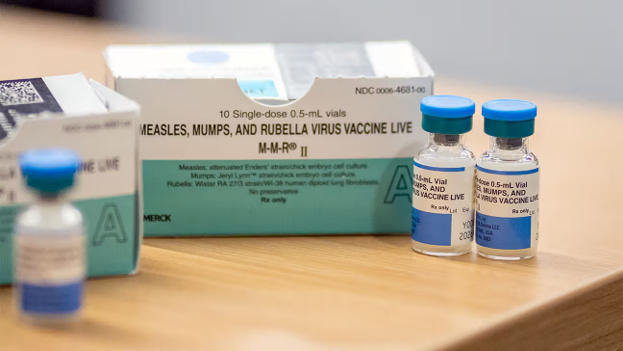
Amongst the most effective protection measures is the Measles, Mumps and Rubella (MMR) vaccine which has empirically shown 97 percent effectiveness after two vaccination doses. Notably theMMR coverage in Kindergarten students had dropped from 95.2 percent in 2019-2020 to 92.7 percent in 2023-24, a significant drop that is being largely linked with the return of the Measles outbreak. Here are few more protective in addition to the vaccination doses:
1. Check your records. If you're unsure whether you or your children are up to date, ask your doctor or local health department. Adults without records of vaccination or prior infection can discuss options with a healthcare provider.
2. Know the symptoms. Fever, cough, runny nose, red eyes, and a spreading rash are warning signs.
3. Call ahead. If you suspect measles, phone your clinic or hospital before showing up so staff can prevent exposing others in the waiting room.
4. Pay attention to local alerts. Health departments publish exposure sites and outbreak updates.
Conclusion
Outbreaks, especially those of a magnitude as large as Measles outbreak affecting the United States in 2026 can quickly shift attention towards statistical numbers, yet behind those numbers lie lives that have been lost and families that are left grieving on their own. The CDC’s official tally of three confirmed deaths has currently matched last year's overall tally, and with cases rising every week and reports being reviewed continuously, the tally could well quickly change. And while debates continue regarding the official counts and recorded tallies, taking preventive steps and confirming vaccinations status while detecting symptoms early continues to remain the most important factors in minimizing the impact of the outbreak.
This article is for general information and is not medical advice. Consult a healthcare professional about vaccination and symptoms
Latest Posts