

Brazilians Vote in Tightly Contested Presidential Election Between Lula and Flvio Bolsonaro
With the election running throughout the day from 8 a.m. to 5 p.m. Brasília time, the results are set to be announced within two to three hours of polls closing, mainly due to Brazil’s electronic system that takes no time to declare the winner.
Table of Contents
1. The Candidates
2. What the Polls Showed Going In
3. The Issues Driving the Campaign
4. The Vorcaro Scandal
5. Trump's Shadow Over the Race
6. How 2026 Compares With 2022
7. What Happens Next
8. Conclusion
The Candidates
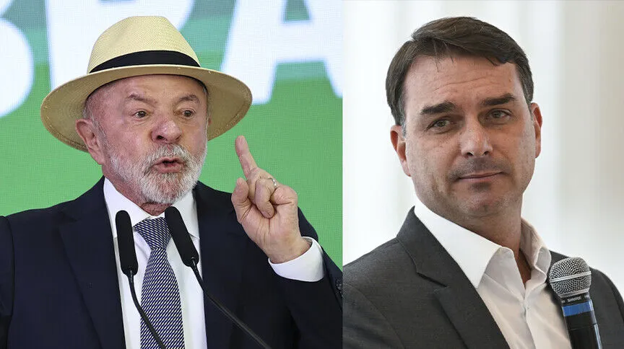
The Brazilian 2026 elections witnessed registration of over thirteen candidates for the presidential race, but only four qualified for daily radio and television advertising. Since the list was announced, two candidates have been leading the pre-election polls being :
1. Luiz Inácio Lula da Silva, 80, from the Workers' Party (PT), contesting the elections while seeking a fourth term after terms from 2003 to 2011 and since 2023. A more than 50% vote win would bring his total time in office to 16 years,
2. Flávio Bolsonaro, of the Liberal Party (PL), a sitting senator for Rio de Janeiro and the eldest son of former President Jair Bolsonaro, has positioned himself as carrying forward his father's movement while building onto his father’s policies in a more nuanced and modern approach.
While the candidate lists also included the likes of Governor Ronaldo Caiado of Goiás (PSD), Governor Romeu Zema of Minas Gerais (Novo), activist Renan Santos, and self-help author Augusto Cury, who reportedly gained more than 2 million social media followers during the campaign, None of the candidates had managed to secure more than single digit polls in the final pre-election surveys throughout the country, setting it as a direct contest between the experienced Lula against the motivated Bolsonaro.
What the Polls Showed Going In
While pre-election polls consistently maintained a tight race between the two contestants, their individual rating continued to vary amidst predictions of various platforms. A Datafolha poll published on October 1 placed Lula at the majority with 45% valid votes over Flavio Bolsonaro’s 40% while another poll by Quaest from late September showed Lula at 37% with Bolsonaro being predicted for the 33% mark. Across multiple outlets and surveys, Lula has majorly managed to uphold a narrow lead over Bolsonaro while certain runoff simulations have posited greater chances of at least the first round resulting in a tie.
|
Pollster |
First round: Lula |
First round: Bolsonaro |
Runoff: Lula |
Runoff: Bolsonaro |
|
Datafolha (Oct. 1) |
45% |
40% |
48% |
45% |
|
Quaest (late Sept.) |
37% |
33% |
41% |
42% |
|
AtlasIntel (Sept. 23) |
45.8% |
43.4% |
47.7% |
47.4% |
|
BBC/PollingData (Sept. 24) |
40.1% |
37.5% |
— |
— |
The Issues Driving the Campaign
Throughout the campaign duration, both the candidates made significant attempts to swing the campaign and public spotlight in their favour. Lula attempted to portray Flávio Bolsonaro as a willing partner in U.S. efforts to undermine Brazilian sovereignty while Bolsonaro on the other hand accused Lula of being involved in corruption while also being weak against punishing crime. Consistently across the pre-election polls, both candidates also uniquely carried significant rejections rates, with rejection figures being close to over 50%. Additionally, Bolsonaro has also made public statements claiming that he doesn’t believe in climate change while expressing a loose attitude towards environmental regulations while raising serious questions for Brazil’s forest protections as well as overall growth.
The Vorcaro Scandal
The campaigns by both the leading candidates were also affected by a financial scandal that involved banker Daniel Vorcaro, the owner of Banco Máster, who has also reportedly been linked with both the Bolsonaro and Lula campaigns. Separately, major outlets also discovered that Flávio Bolsonaro was under investigation for currency evasion, money laundering and corruption in a case connected to financing allegedly tied to Vorcaro, who was arrested on financial fraud allegations, a further weakening aspect that raises questions over the outcome of the result.
Trump's Shadow Over the Race
U.S President was recently observed on Thursday, October 1 claiming that he was “closely following” the Brazilian elections while terming them as being “very important”, despite him choosing to avoid endorsement towards any particular candidate. Notably, Flávio Bolsonaro had been observed meeting Trump at the White House in May 2026, following which he announced his plans of Brazil joining Trump's "Shield of the Americas" initiative, a security grouping that also includes Argentina and El Salvador, if he won the presidency.
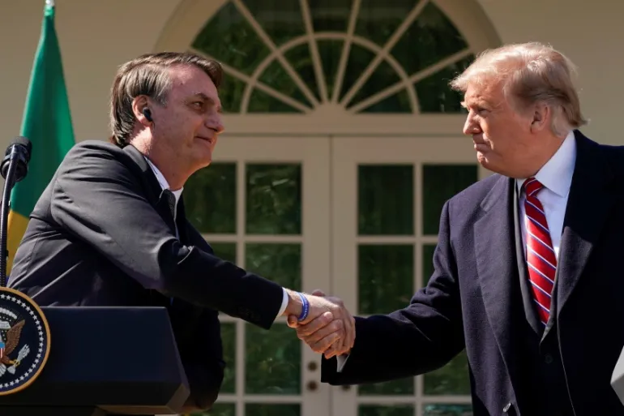
Within the region, the contest is also being perceived as a depiction of Trump's influence in Latin America's largest economy while also being followed for the implications it would carry over regional politics as well as global climate policy, categories that could pave the future for Brazil as well as the Amazon in itself. Additionally, the final days to the Brazilian elections were also marked with another controversy with Brazil's Superior Electoral Court ordering removal of over 1,125 social media posts across platforms including X, Facebook, Instagram, TikTok and YouTube for falsely linking Flávio Bolsonaro to a plan to strip Our Lady of Aparecida, Brazil's patron saint, of her status, an alarming claim that could significantly swing the election results in the final moments.
How 2026 Compares With 2022
The 2026 contest between Lula and Bolsonaro marks the second consecutive competition between the pair for the second consecutive election, simply with the Bolsonaro son replacing his father who suffered a close victory back in 2022. While Lula had managed to edge with 50.90% votes over his opponent Bolsonaro’s 49.10% votes, it remains to be seen whether the trend continues and Lula remains on top of results or rather tastes defeat during his second attempt for the office.
|
2022 (Lula vs. Jair Bolsonaro) |
2026 (Lula vs. Flávio Bolsonaro) |
|
|
First-round turnout |
79.05% |
Not yet available |
|
First-round result |
Lula 48.43%, Bolsonaro 43.20% |
Pending |
|
Runoff held |
Yes, Oct. 30, 2022 |
Pending; scheduled for Oct. 25 if needed |
|
Runoff result |
Lula 50.90%, Bolsonaro 49.10% |
Pending |
What Happens Next
Based on Brazil’s voting guidelines, if neither of Lula and Flávio Bolsonaro are successful to gather 50% of valid votes during the first round on October 4, the two leading favorites who’ve dominated majority pre-election polls will further head towards a runoff on October 25, 2026. In the meanwhile, Brazilian scholar Sanches has also raised concerns stating a narrow Lula win could result in questions from the Bolsonaro supporters, echoing concerns that were also raised following the previous 2022 elections. Despite Jair Bolsonaro's unsubstantiated claims pointing towards the electronic voting system’s susceptibility to fraud, Brazil's Superior Electoral Court, headed by Supreme Court Justice Alexandre de Moraes alongside International observers, have overseen past elections and will once again be in the midst of the discussions as the results are announced.
Conclusion
Brazil’s 2026 Elections that take place on Sunday define a campaign that has been defined by tight polling, significant rejection rates towards both leading candidates, questions about foreign influence, financial scandal as well as questions on the legacy of Jair Bolsonaro's presidency. Whether the country is able to achieve an outright winner on October 4 or continues onto the runoff on October 25, it is set to witness an outcome that will redefine the country’s economic policy as well as international relations and the future of its Amazon protections for the years to come.
Latest Posts